Sea of Life

Posted by

Sea of Life

  • Artist
    Penelope Green
  • Dates
    13—26 Nov 2026

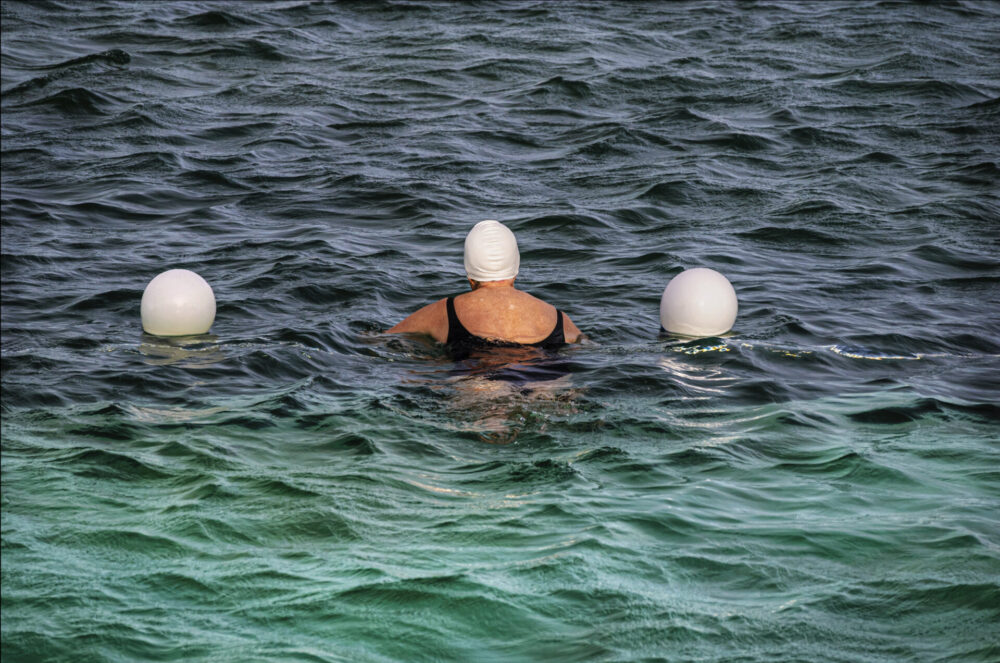
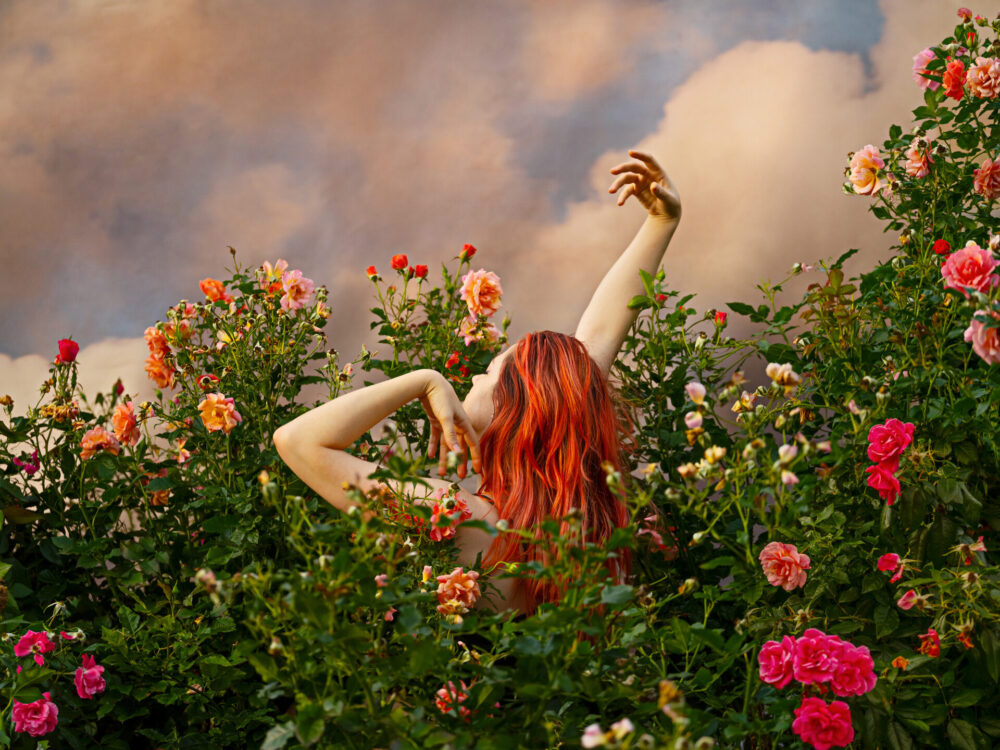
Michael Reid Northern Beaches is excited to announce Sea of Life – our first solo exhibition from the winner of the National Emerging Art Prize’s inaugural award for photography, Penelope Green. On view next month at The Garden Gallery in Sydney’s Royal Botanic Garden and now available to preview by request, Sea of Life was completed during a yearlong professional mentorship awarded to Green as part of NEAP’s $10,000 photography prize, now the Seed Prize for Emerging Photographers.

“Penny has that unique and enviable eye – a photographer with a painterly sensibility,” says NEAP’s curator and co-founder, Amber Creswell Bell. “A keen observer of Australian life in her Newcastle locale, she taps into something familiar and known, while also shining a light on details that we, the layman, perhaps overlook. I find her knack with compositions and colour particularly compelling.”

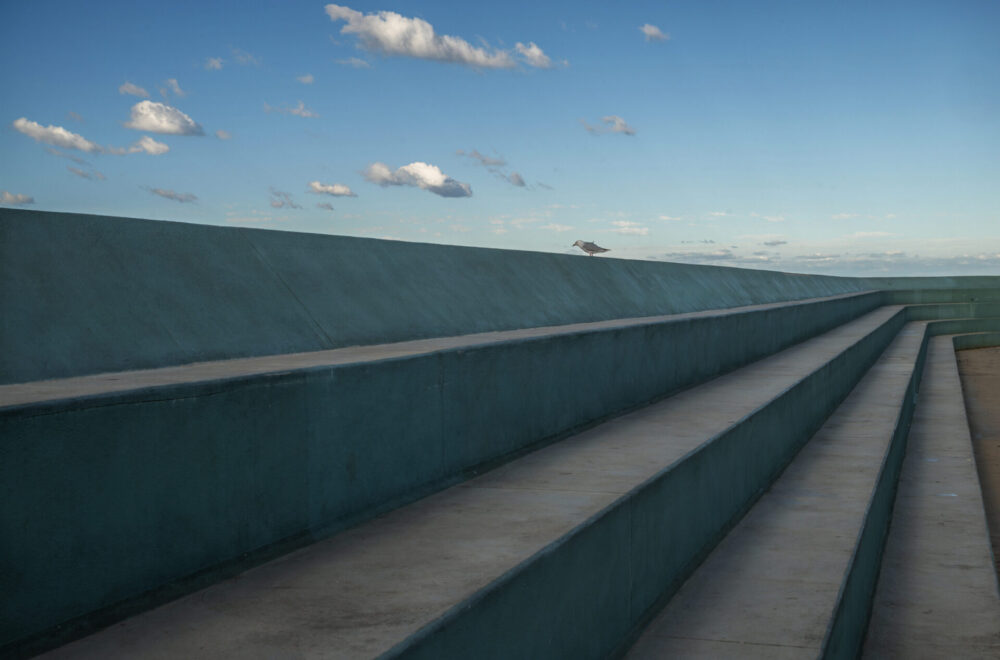
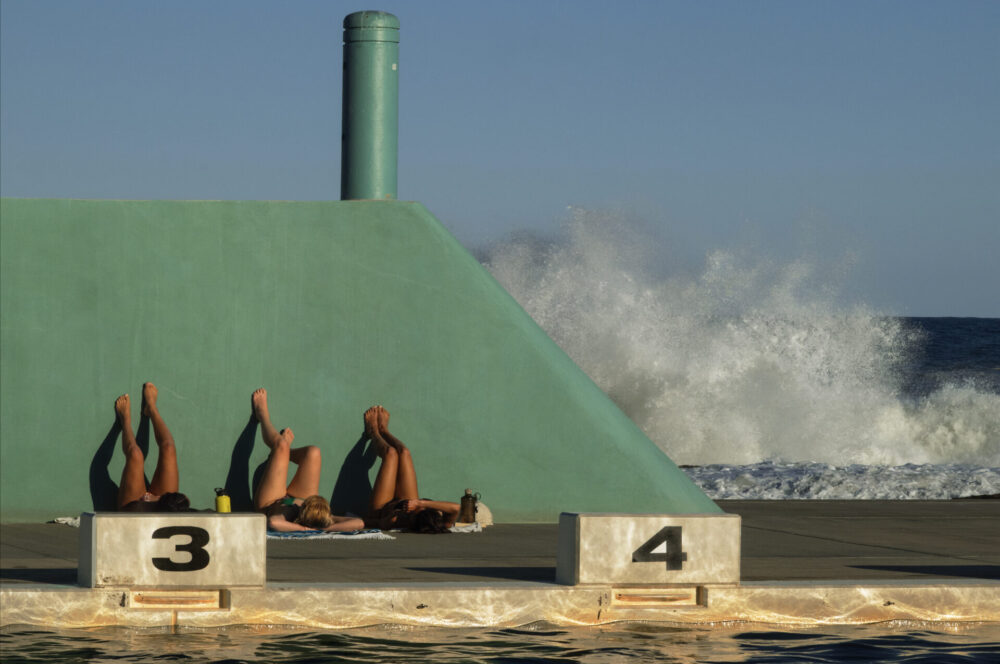
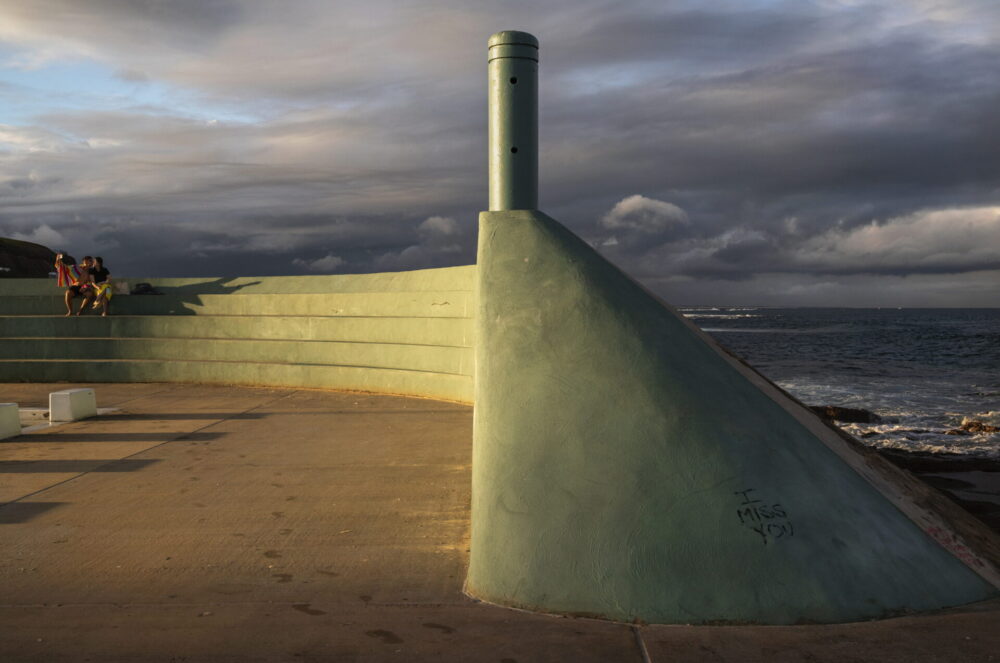
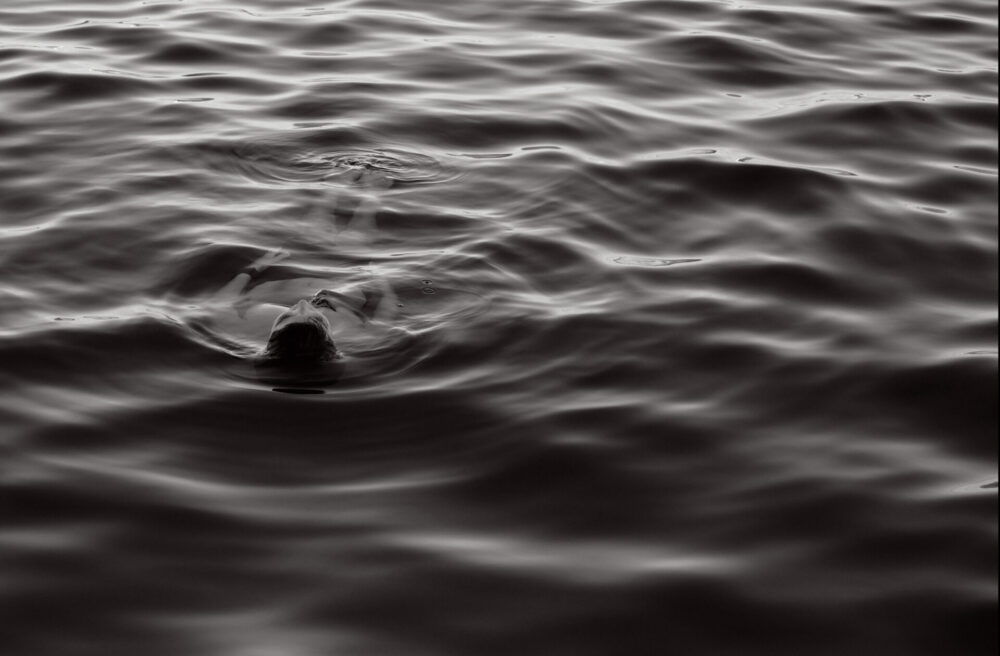
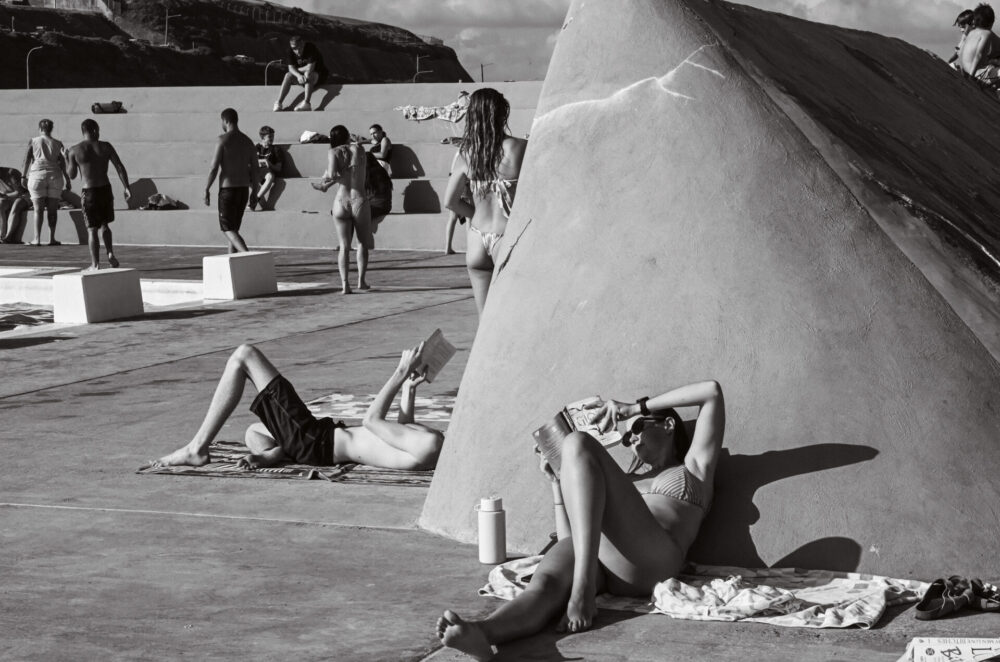
In Sea of Life, Green swims through scenes of sanguine oceangoers – women whose daily rituals at the Newcastle Baths and beyond the breakers have fostered a community bound by a collective yet solitudinous embrace of the elements. While serving as compelling works of social documentary photography from an artist deeply embedded in the milieu she depicts, Green’s images also transcend the everyday through arresting and disarming compositions that convey the freedom and bracing embodiment felt by those who live for the sea.

“For many of us, the ocean serves as a third space,” says Green. “A place where we go alone or with our favourite people to meet our need – or obsession – to simply be in the sea. My evolving practice, documenting sea communities and experimenting with abstract work, is performed on a nature-based stage. From the beach, ocean baths bleachers, or in a lap lane, I witness the interactions of all who, like me, have a compulsion to be beside the sea. Like every ocean swimmer, I understand the abandonment of self and bone-deep joy that immersion brings, and bear witness to the ocean’s role in wellbeing and community.”

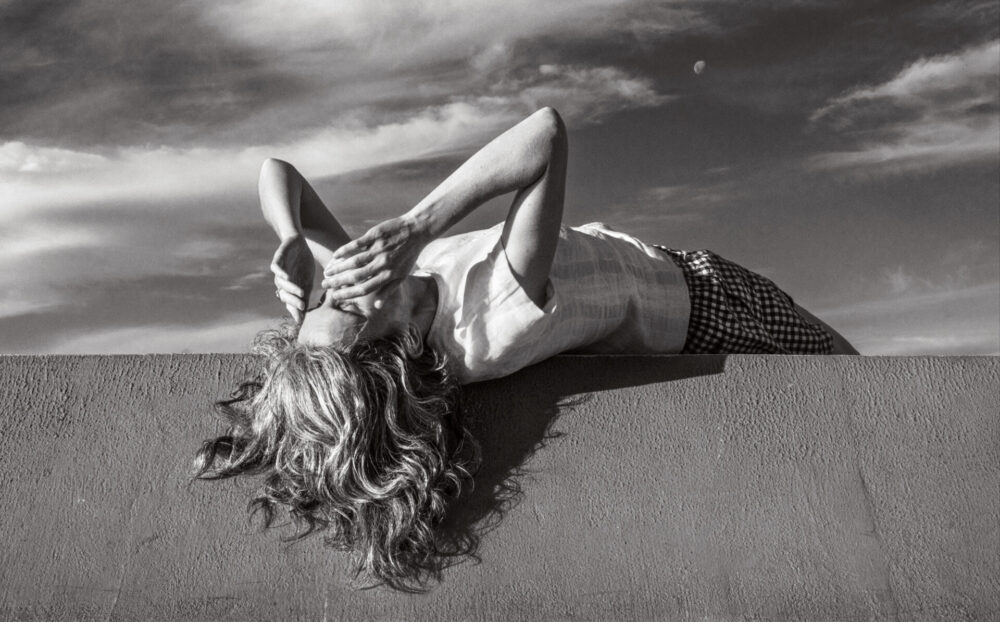
Green triumphed at NEAP with her work Gil and the Moon, which became the springboard for her new series and will form a centrepiece of her Garden Gallery show. Capturing a friend’s ecstatic embrace of the sun and sea at the Newcastle Baths, Green’s work recalls the iconic beach scenes of pioneering modernist Max Dupain, whose lensing of Australia at leisure helped crystallise a national self-image as one bound to the freedom, optimism and salubriousness of the outdoors. Gil and the Moon feels like a contemporary woman’s answer to those indelible pictures – an expression of female joy, unfettered autonomy and elemental rapture at the edge of the littoral zone.

“Buoyed by the women who join me, I find the courage to swim far beyond the surfers, into the open sea,” says Green. “It’s here that the strength and grace of the sisterhood truly reveals itself, and it’s this nuance I strive to capture in my images.” Returning to the same seaside settings most afternoons, Green sensitively observes her subjects – local friends and familiar strangers – and the play of light as it softens, shifts and reflects across the water and built forms. “In a permanent state of flux, the ocean is our metaphor for life: challenging and rewarding in equal measure,” says the artist. “What doesn’t change is what it represents: a place of refuge and solace, a place to connect with ourselves and one another and nature. A place where we are reminded that we are all simply specks in the sea of life.”

For enquiries, please email sophienolan@michaelreid.com.au
Auspicium

Posted by

Auspicium

  • Artist
    Alex Bebbington
  • Dates
    13—26 Nov 2026

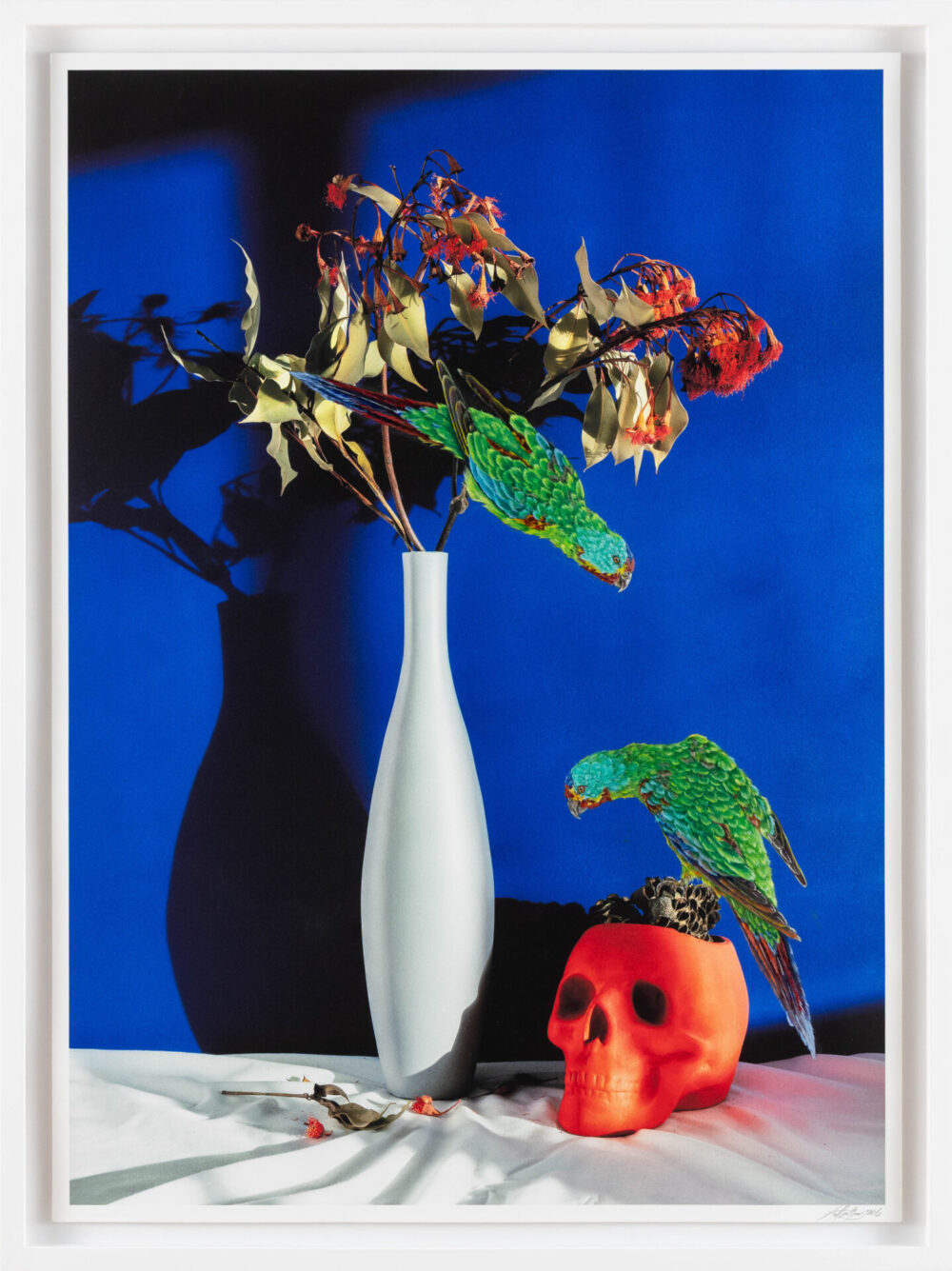
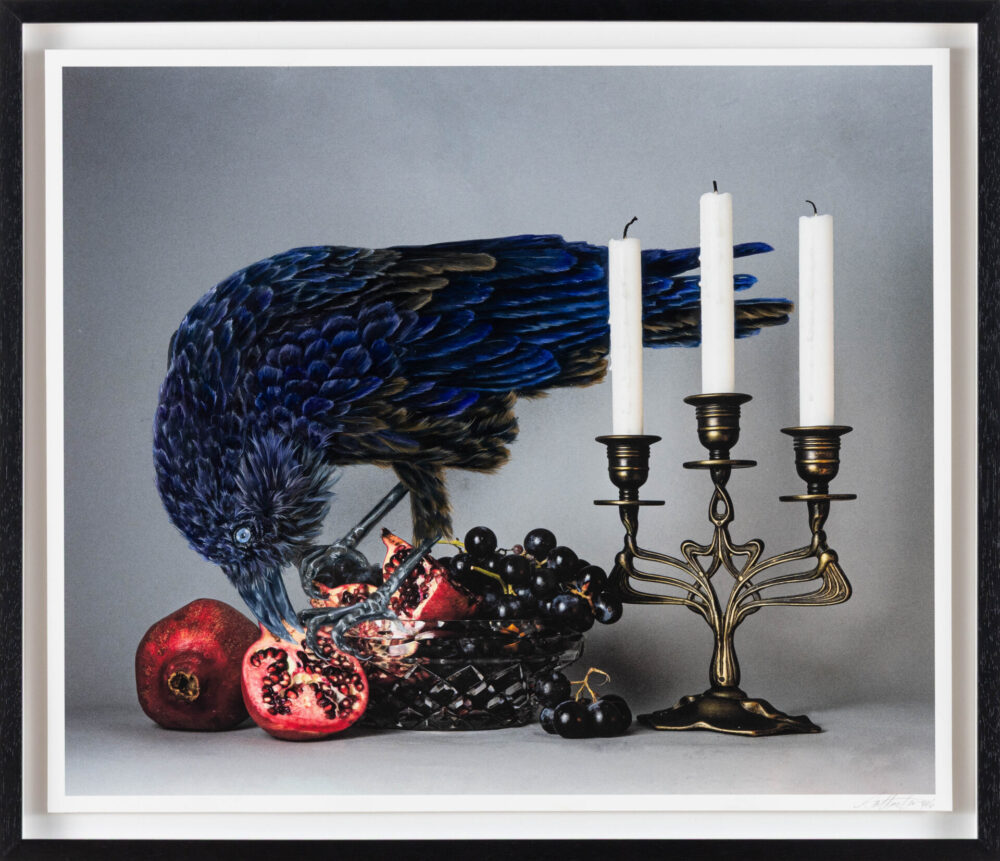
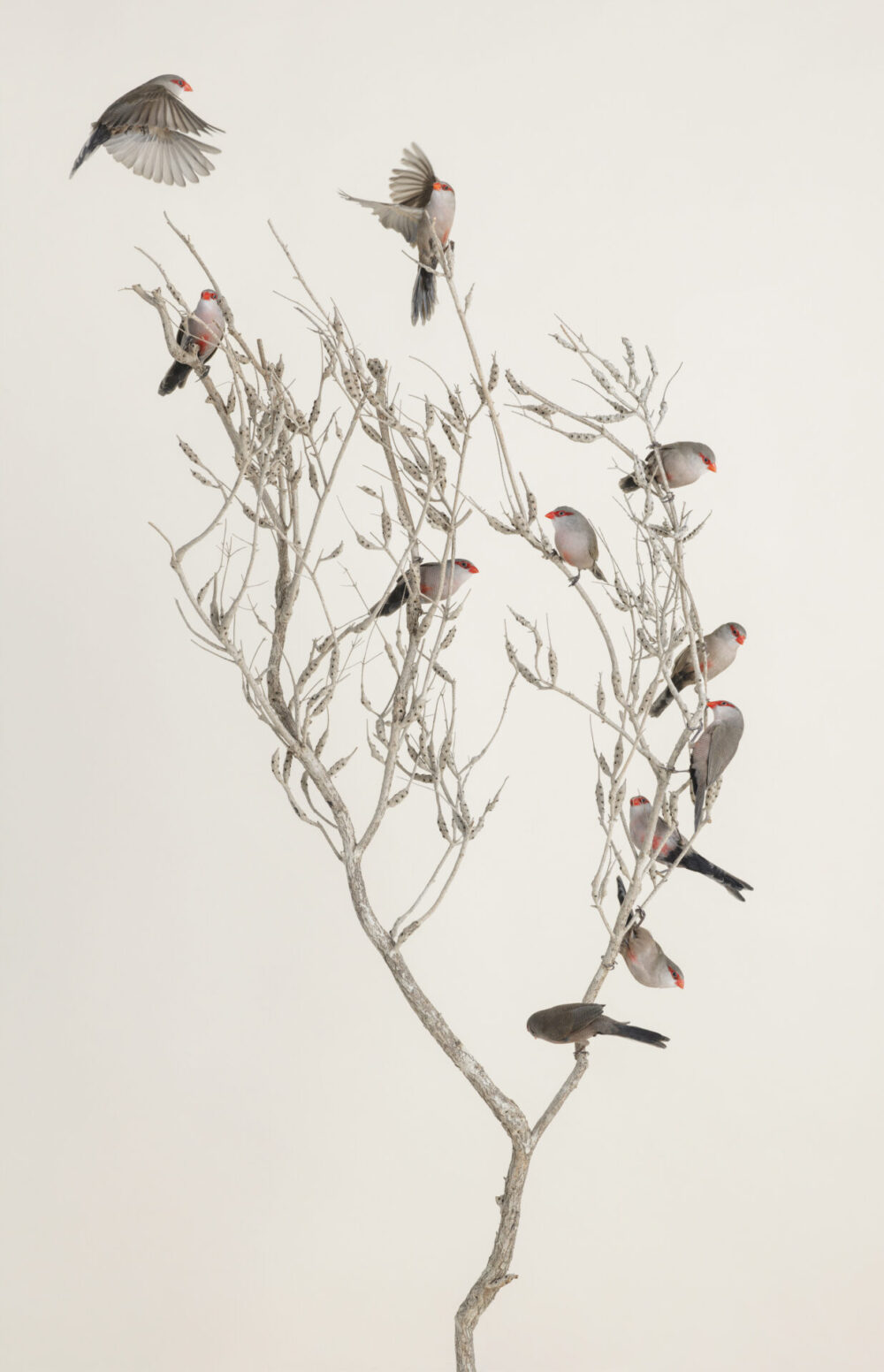
Michael Reid Northern Beaches is thrilled to announce Auspicium – the solo exhibition debut of 2025 National Emerging Art Prize winner Alexander Bebbington. Presented by Michael Reid Northern Beaches and available to preview by request ahead of its showing in November at The Garden Gallery in Sydney’s Royal Botanic Garden, Auspicium is the culmination of a yearlong professional mentorship that formed part of Bebbington’s suite of prizes when he claimed NEAP’s ultimate accolade, the $20,000 Morgans Financial Prize for Emerging Painters, for his work Little Pied Cormorant.

“Alex really caught the attention of the judging panel last year, with his unique take on fusing painting and photography in a way that tricks the eye as to where the photography ends and the painting begins,” says NEAP’s curator and co-founder, Amber Creswell Bell. “They are at once very fresh and contemporary, but also classically nuanced. Exciting to see this work develop!”

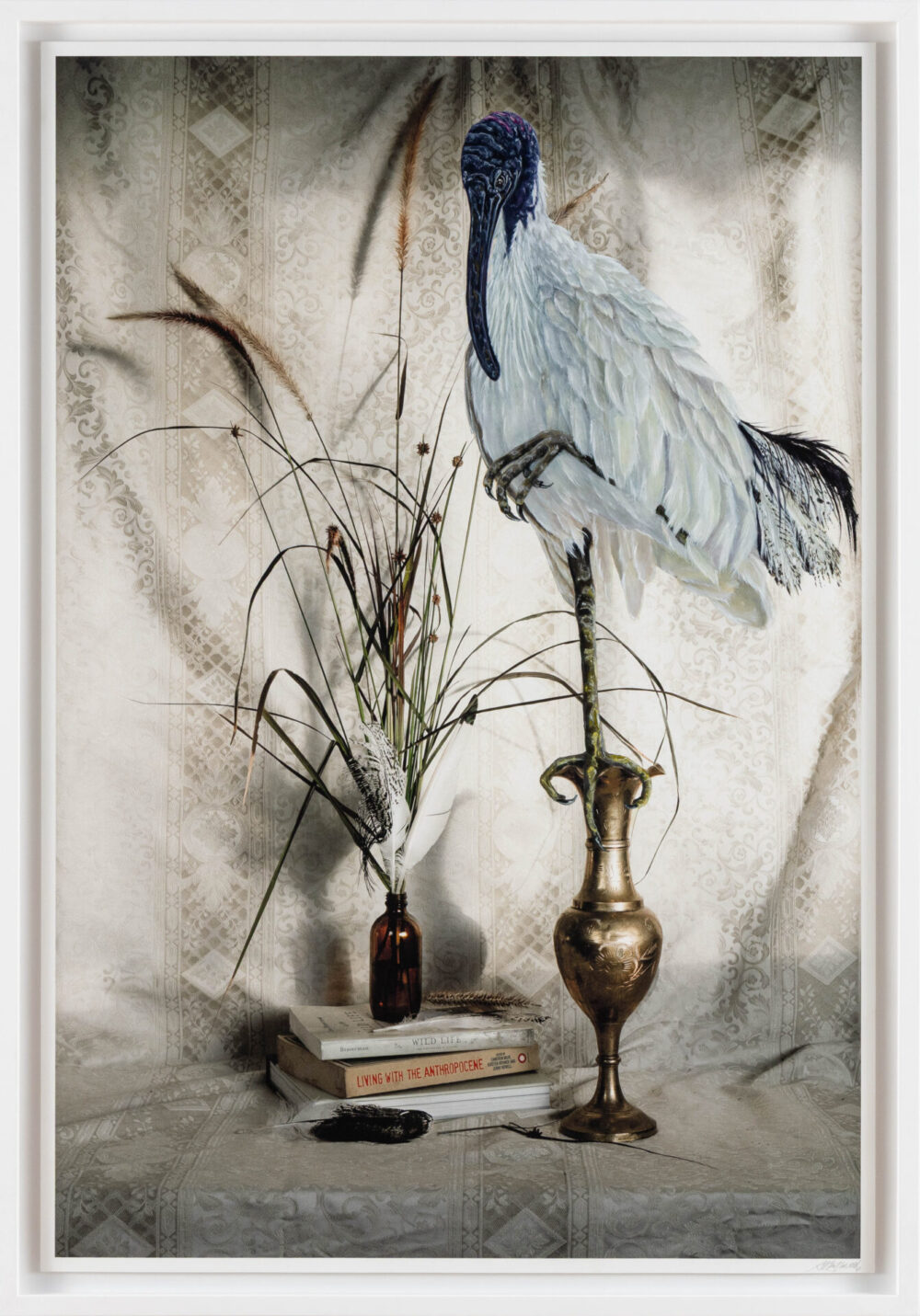
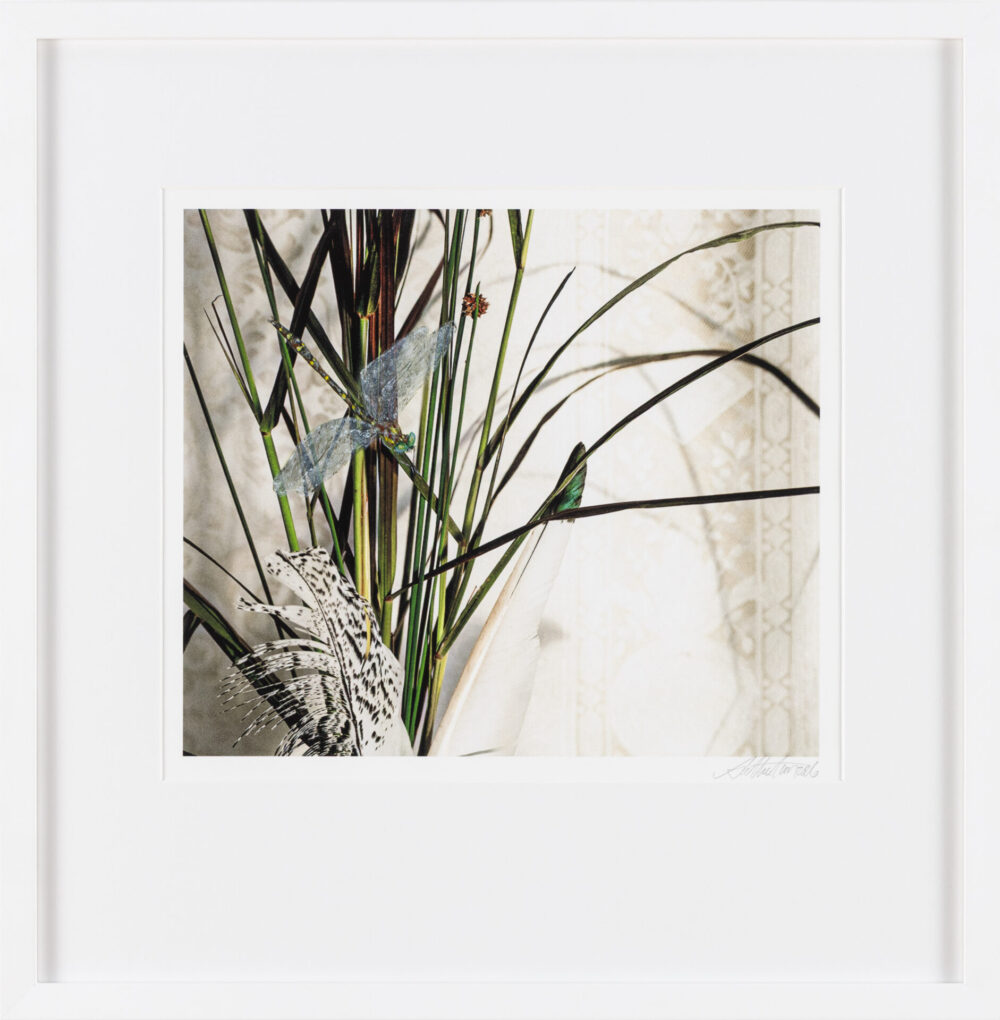
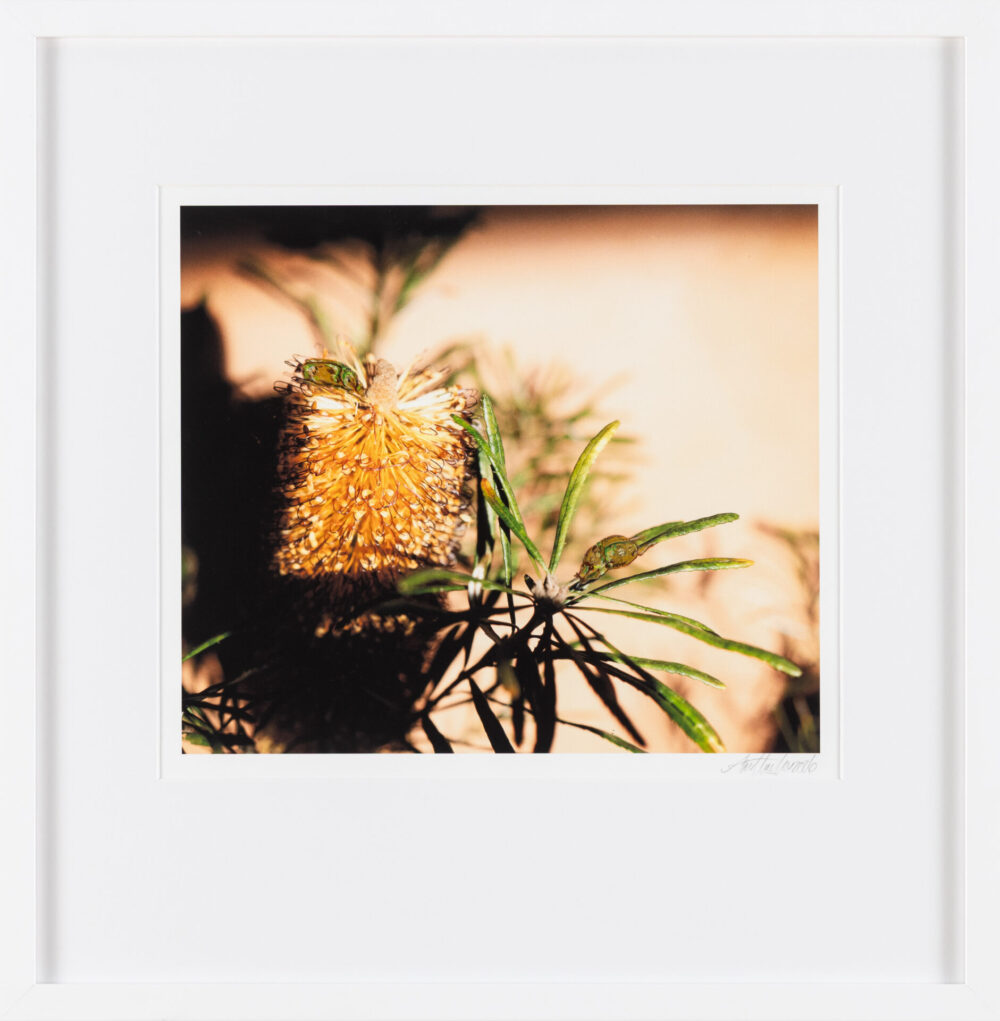
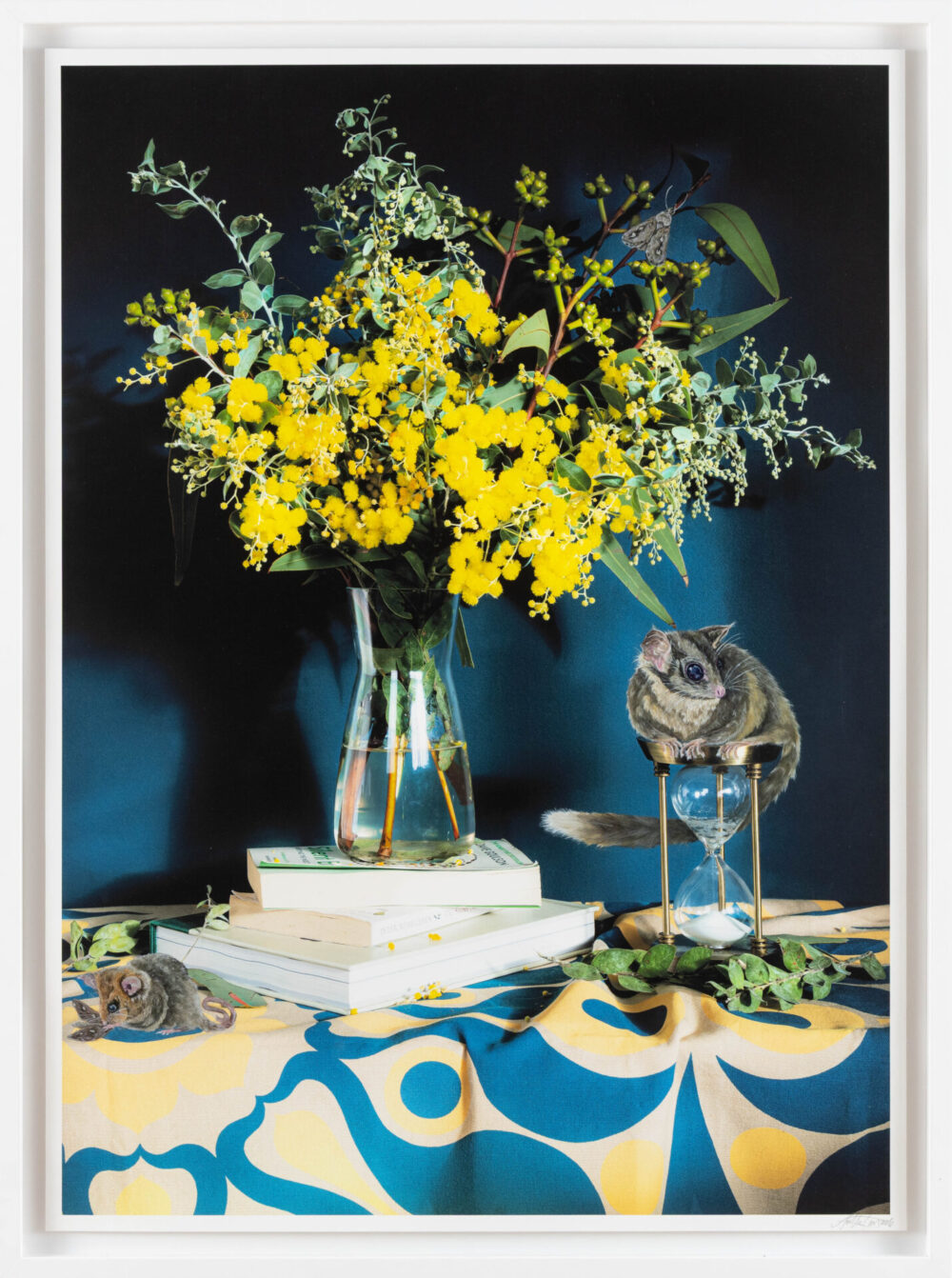
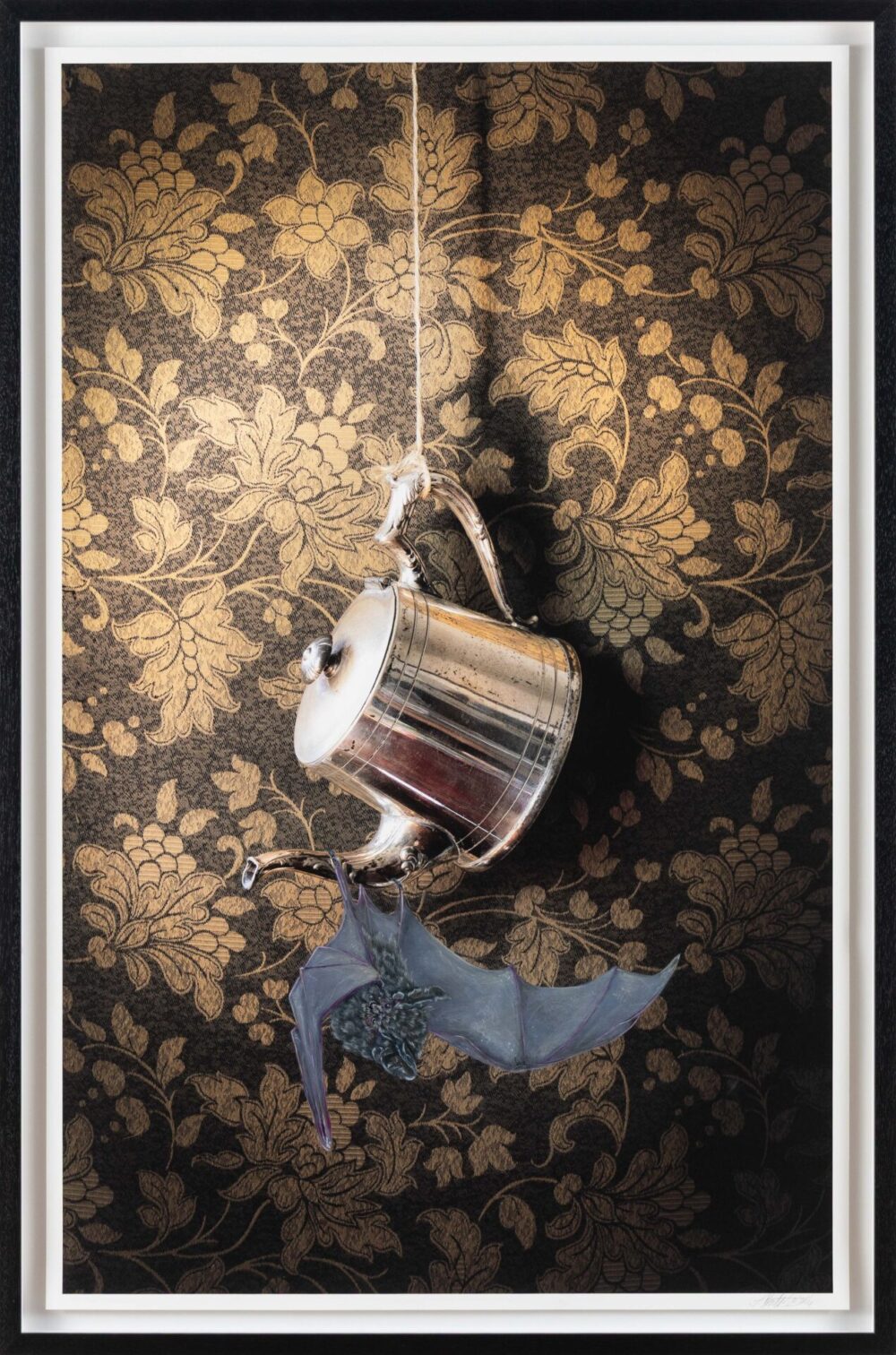
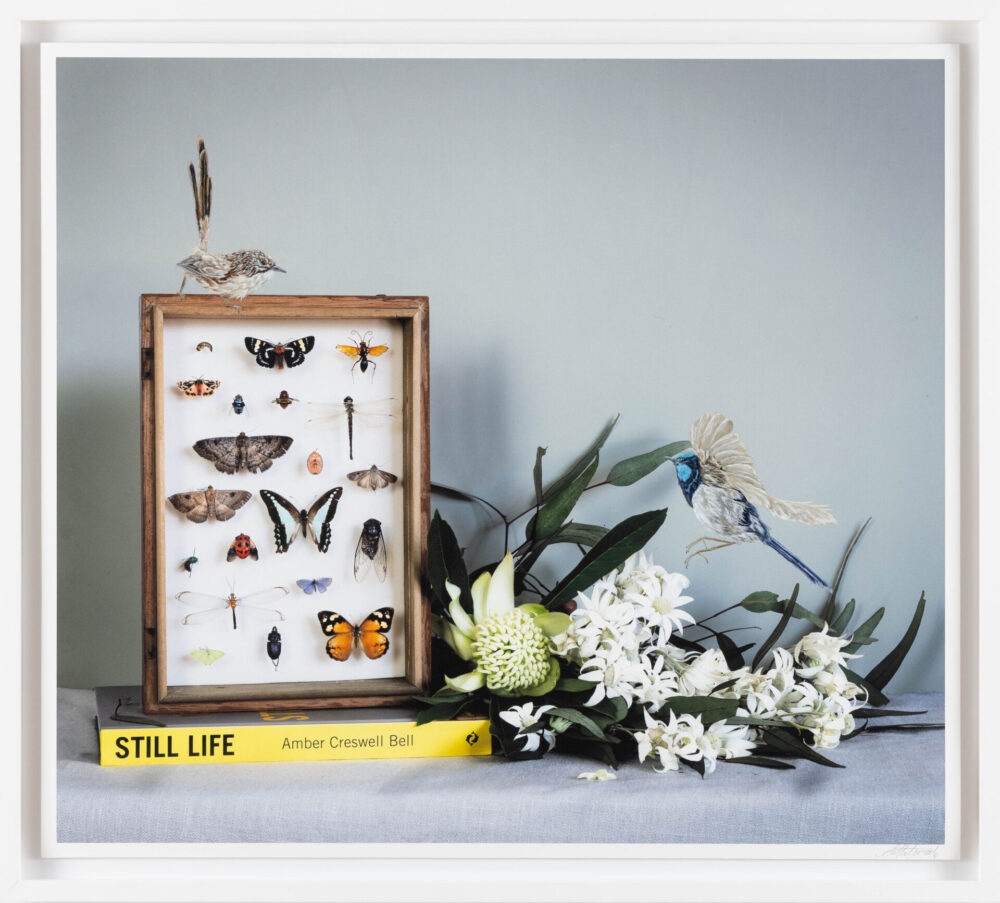
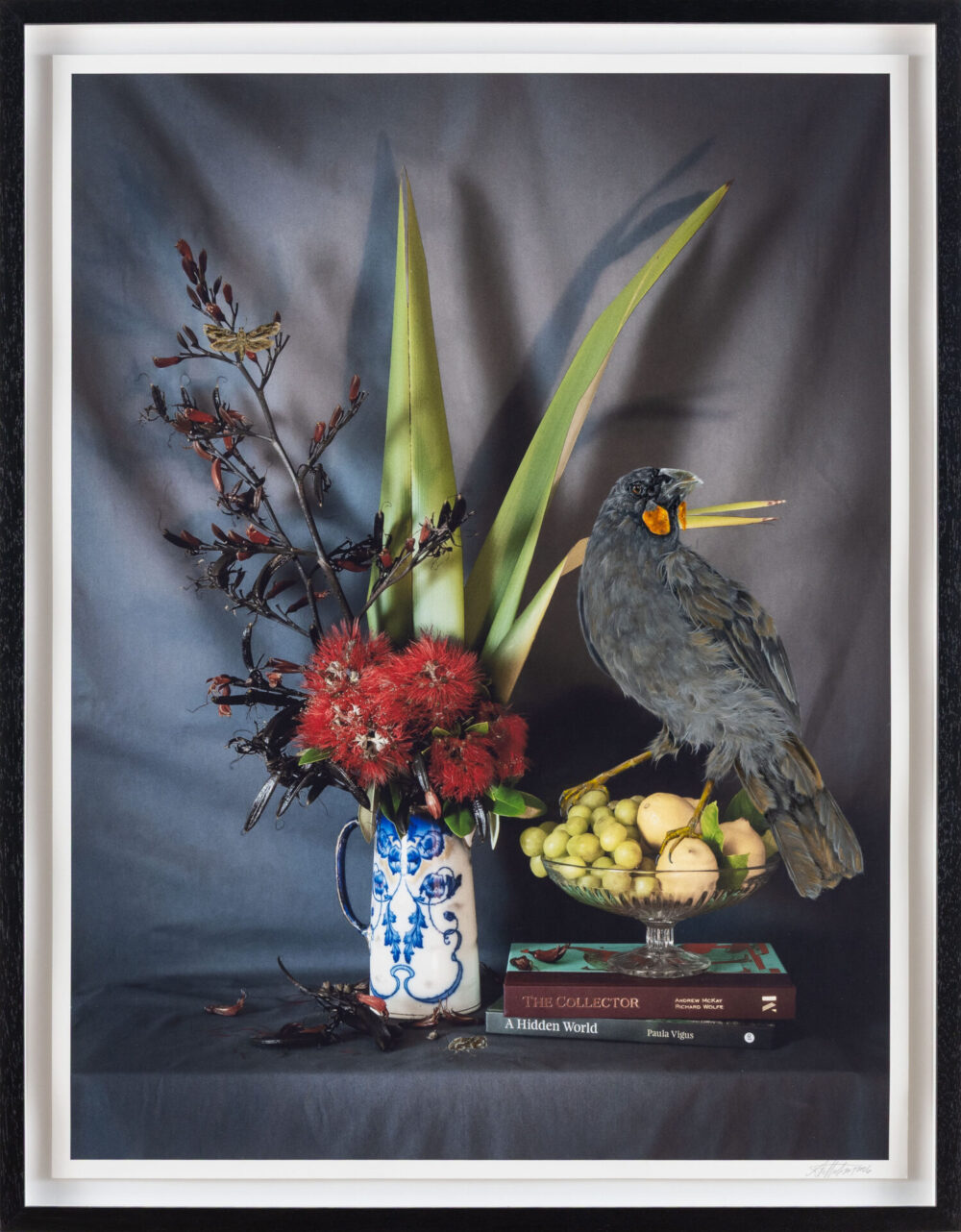
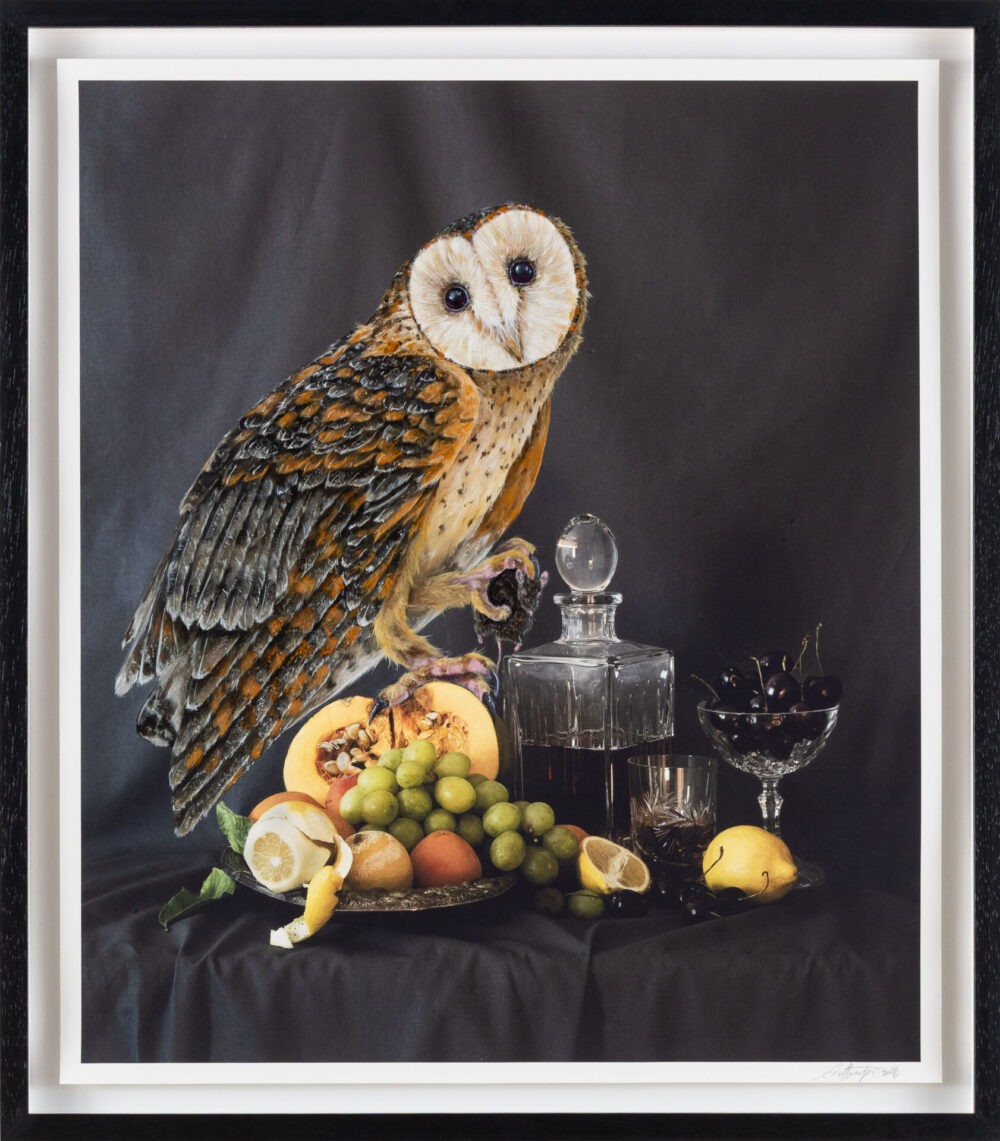
With Auspicium – subtitled Signs, omens and the natural world – Bebbington builds on the creative breakthrough of his NEAP work with a new series of mixed-media still-life vignettes. While invoking the conventions of museum classification, spectacle and display, each of his wunderkammer-like photographic scenes is inscribed with intricately painted critters – native birds, bats, possums and insects whose nested, vital presence upends any sense of scientific remove and brings the natural world roaring to life with expressive painterly verve.

“This series builds on the visual language I established in Little Pied Cormorant, particularly the combination of photography, painting and constructed still-life environments,” says Bebbington, who meticulously constructs his photographic tableaux before painting directly onto the printed surface. “I have continued exploring the relationship between natural history, beauty and loss, using birds, insects and collected objects to create scenes that feel both familiar and slightly unsettling.”

Bebbington traces the origins of this distinctive approach to his formative encounters with the natural history collections of Canterbury Museum in Christchurch, where he became fascinated by taxidermied birds arranged against painted backdrops of their native habitats. Reversing this convention, he began introducing painted wildlife into photographed environments, developing the hybrid visual language that defines his practice today. His work draws on the seductive theatricality of Baroque still-life painting and the rich symbolism of the classical vanitas tradition, recasting these historical influences through a distinctly contemporary lens attuned to ecological fragility and the consequences of human intervention.

Beneath the vivid colour and artifice of Auspicium lies a disquieting meditation on preservation and loss. Bebbington is drawn to the paradox of the natural history museum – a place dedicated to conserving and celebrating the living world, yet filled with specimens removed from the environments that sustained them. His compositions carry something of this contradiction, with their beguiling beauty shadowed by a sense of absence and the possibility that the creatures we seek to preserve might one day survive only as objects of study.

“There is something surreal and beautiful about these spaces, but that beauty is accompanied by a deep sense of sadness,” says Bebbington. “I think these spaces are fundamental to preserving our natural history and crucial to education, but we don’t want them to be the last place a species is held.”

The new series also marks a significant development in the scale and ambition of Bebbington’s practice, with larger, more commanding works that push the possibilities of his mixed-media process. Together, these individual tableaux form a richly layered reflection on the ways we encounter, interpret and value the natural world.

Taking its title from the Latin term associated with the ancient practice of interpreting omens through the observation of birds, Auspicium invites a different kind of augury – one in which the fate of the natural world might be read in the creatures surrounding us and in their enmeshment with our domestic habitat. Marking an auspicious beginning for Bebbington’s exhibition career within the Michael Reid fold, Auspicium heralds the arrival of a distinctive new voice, uniting technical ingenuity, visual exuberance and an urgent environmental consciousness.

For previews, please email sophienolan@michaelreid.com.au.

Northern Beaches Art Library

Posted by

Northern Beaches Art Library

  • Artist
    Regina Wilson, Ben Waters, Petrina Hicks and more
  • Dates
    9—29 Oct 2026

Waves of Emotion

Posted by

Waves of Emotion

  • Artist
    Caressa Gonsalves
  • Dates
    5—26 Nov 2026

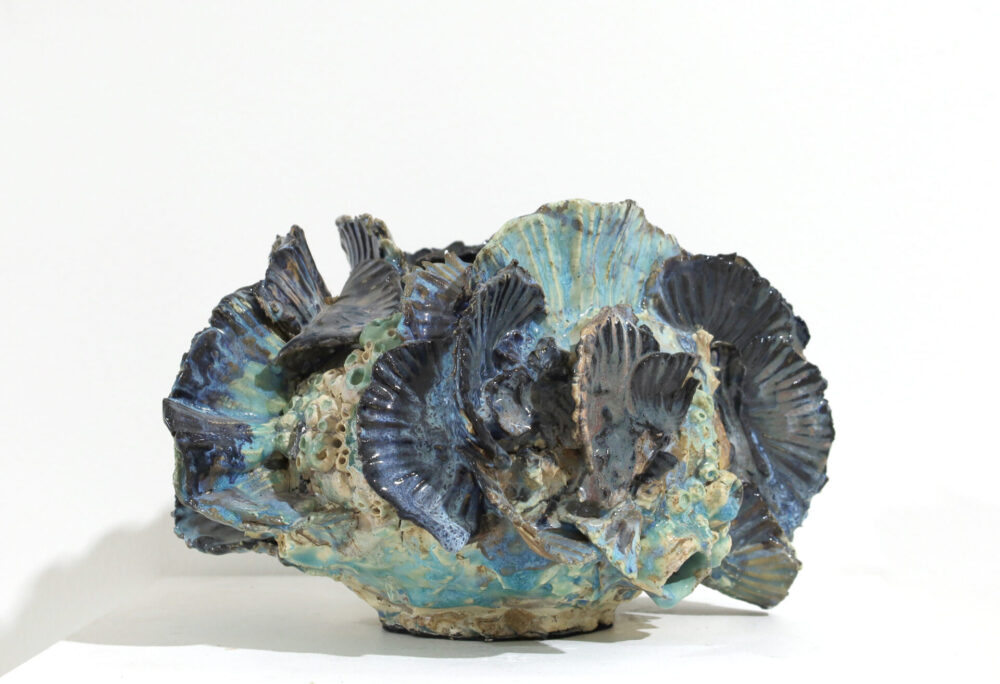
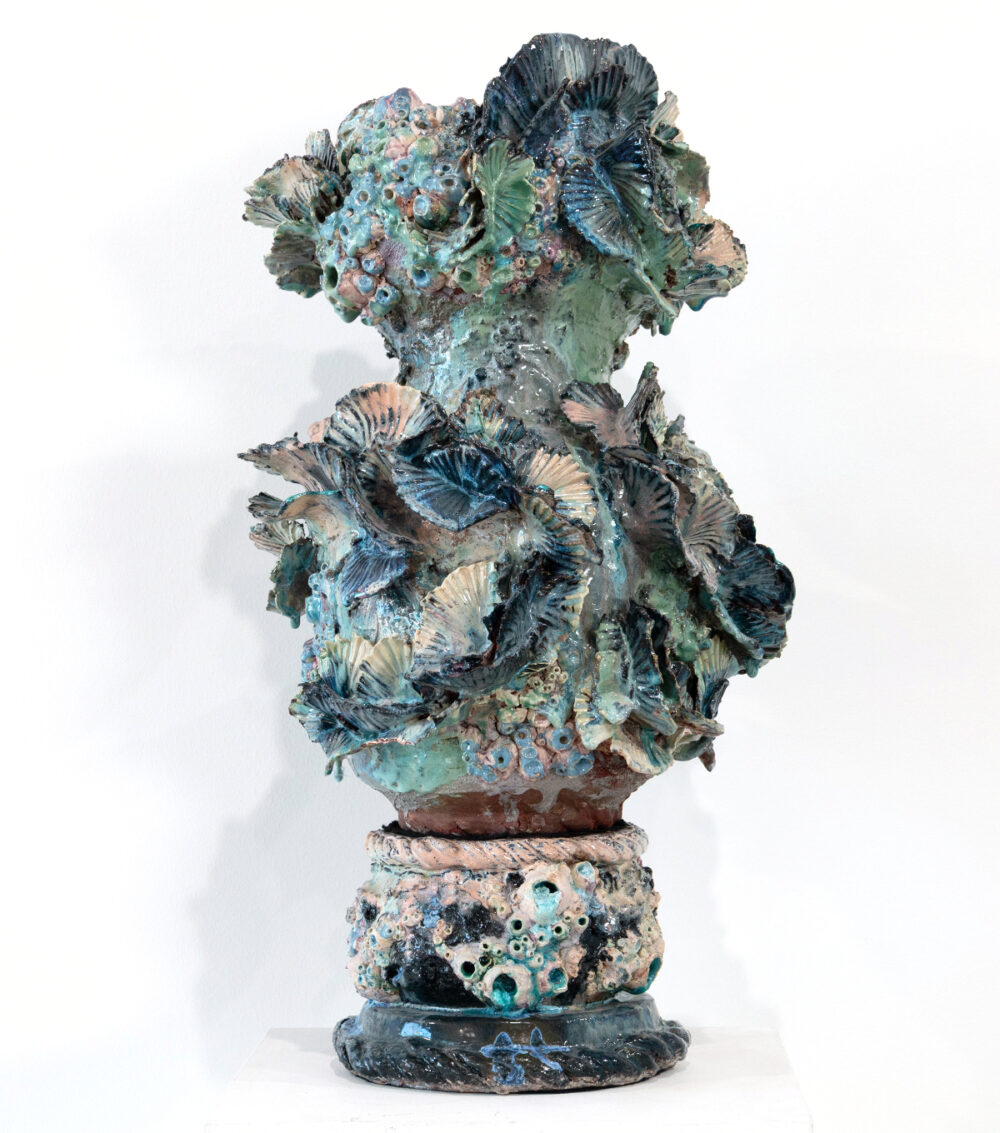
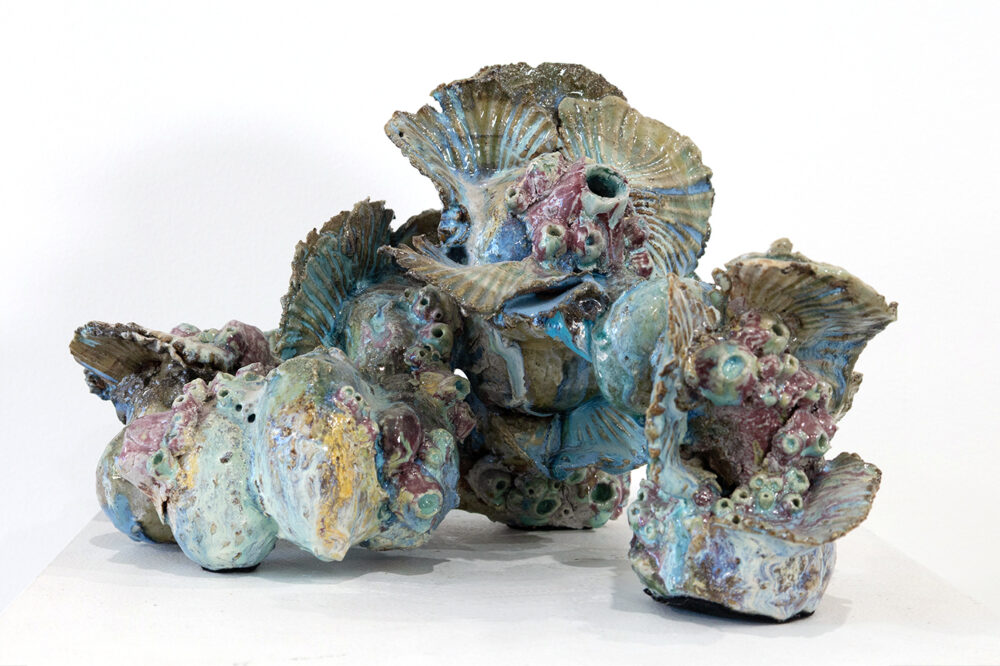
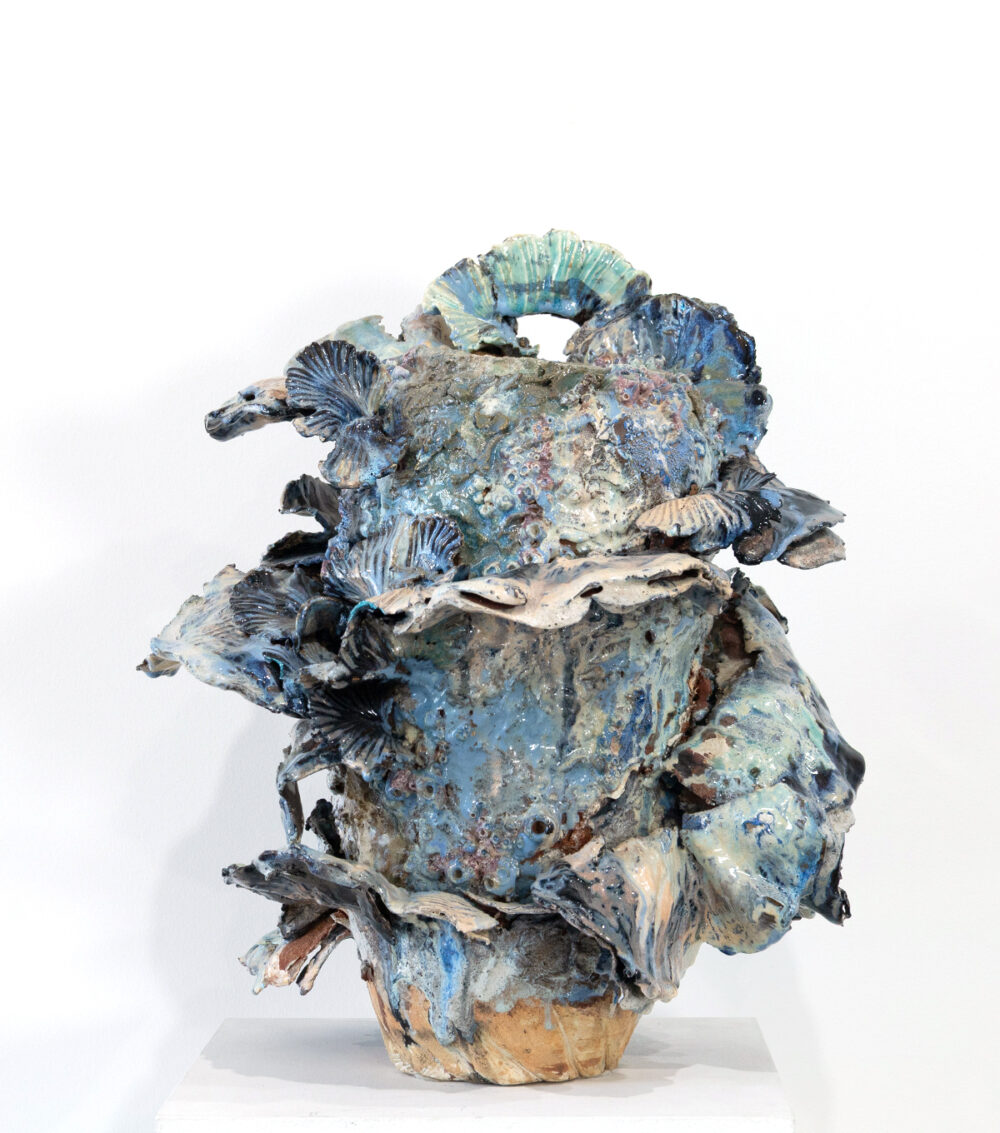
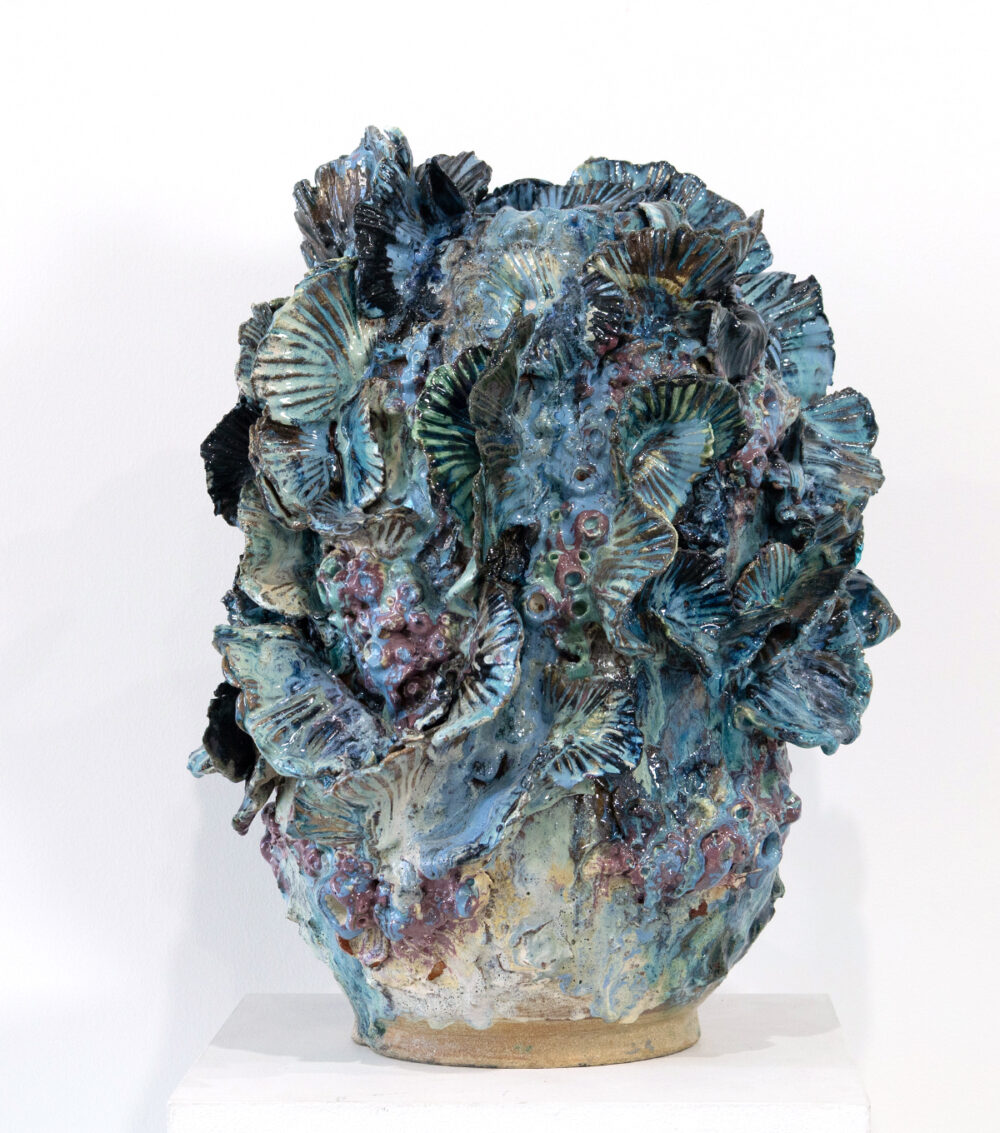
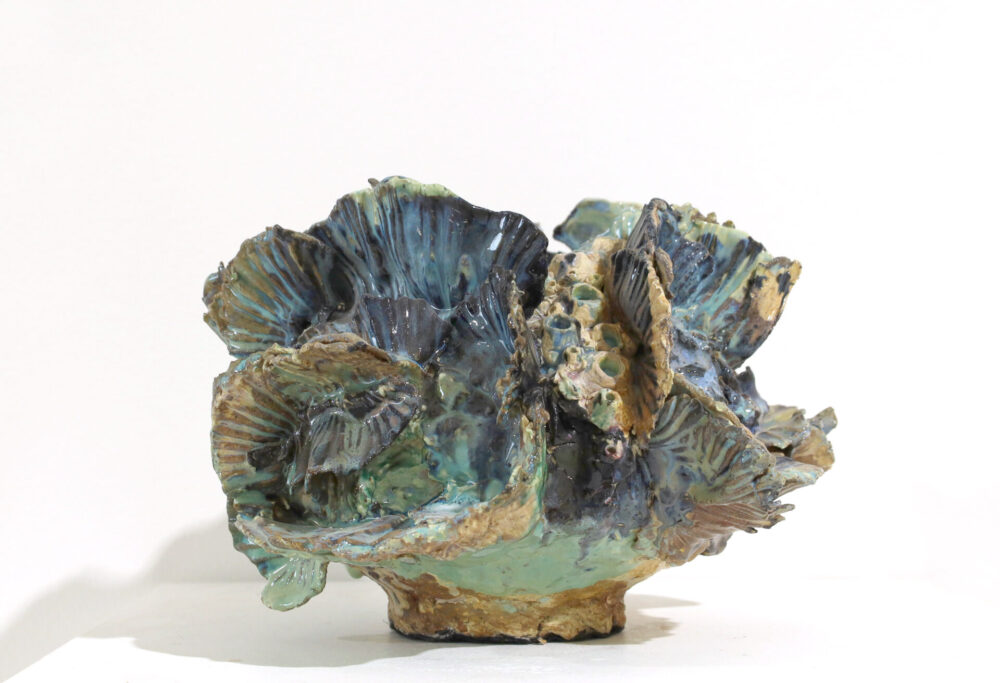
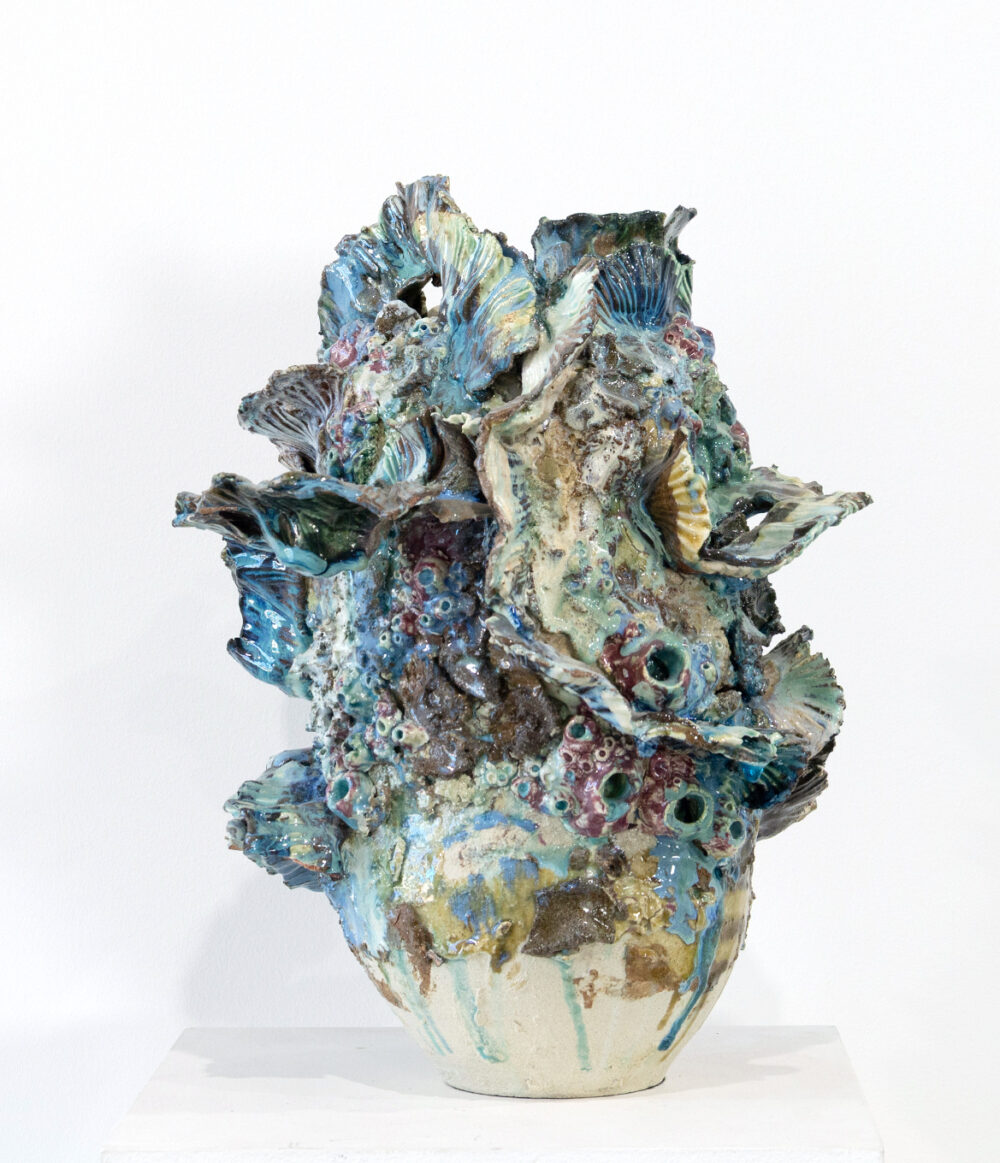
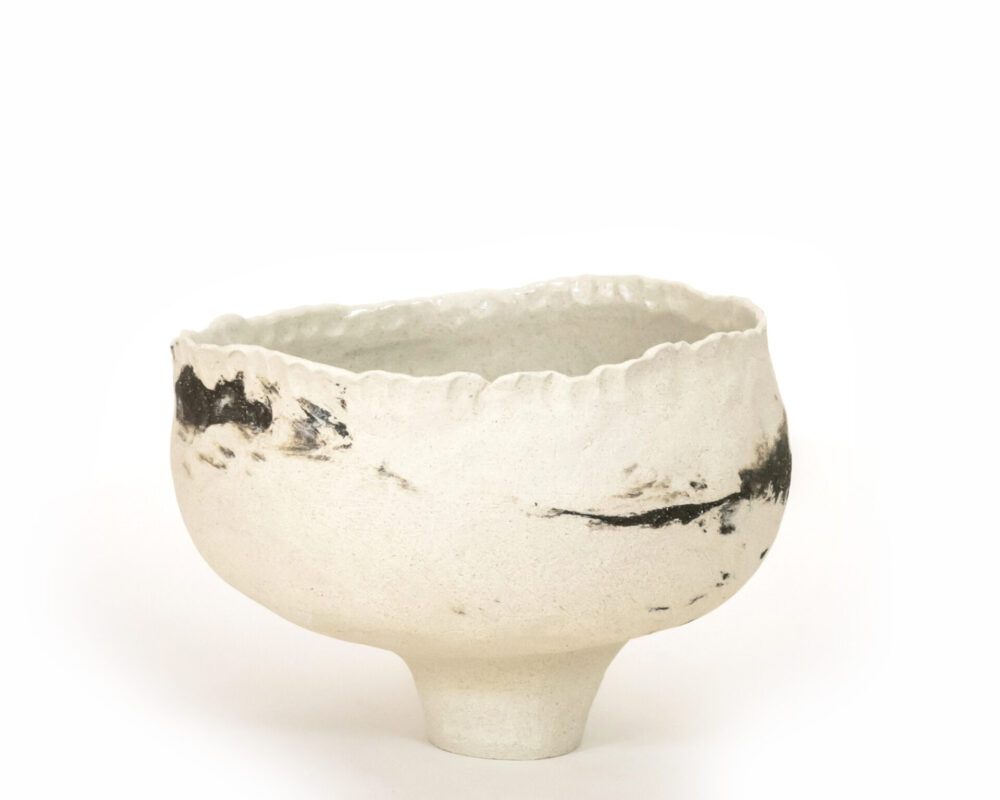
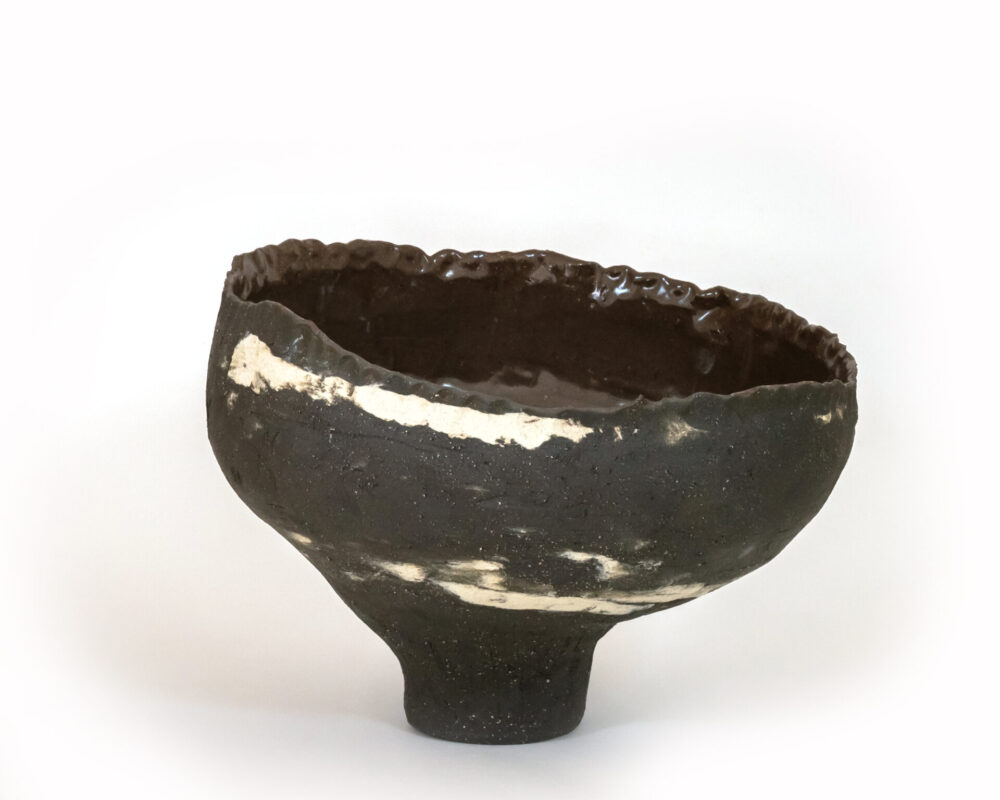
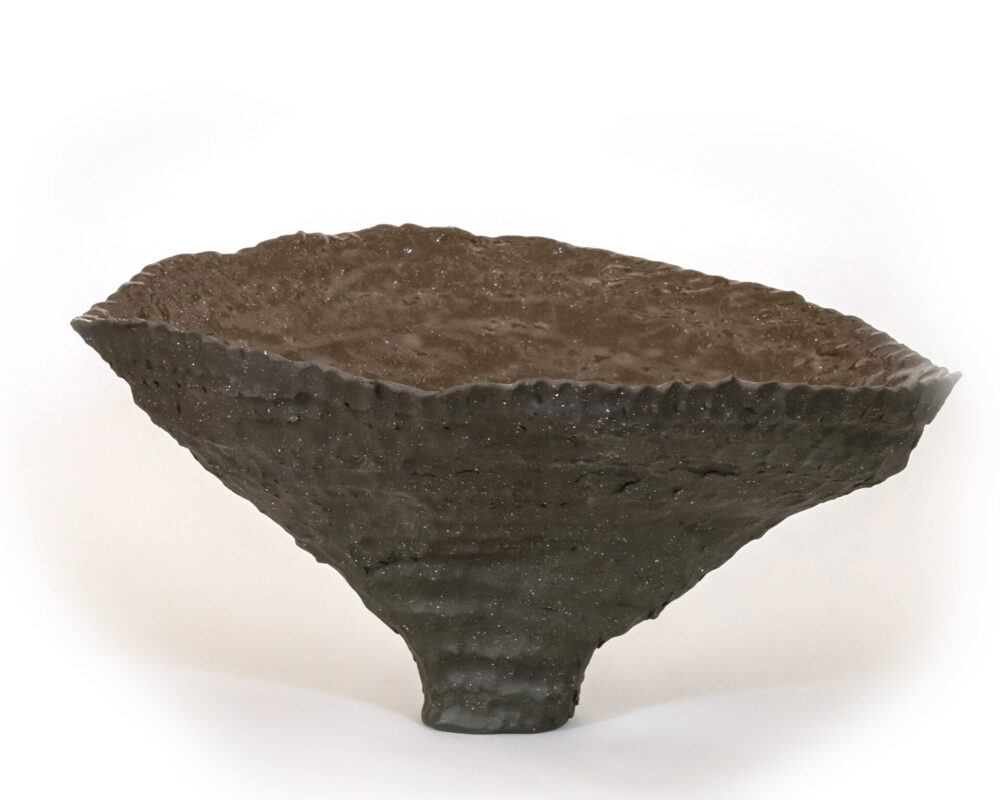
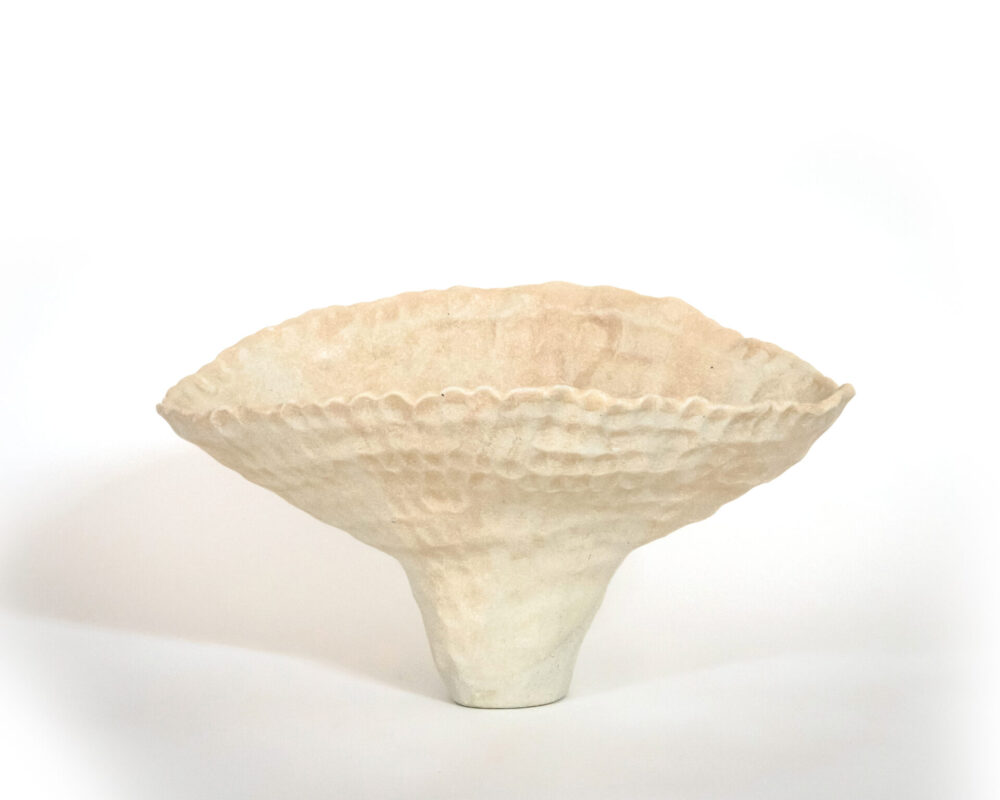
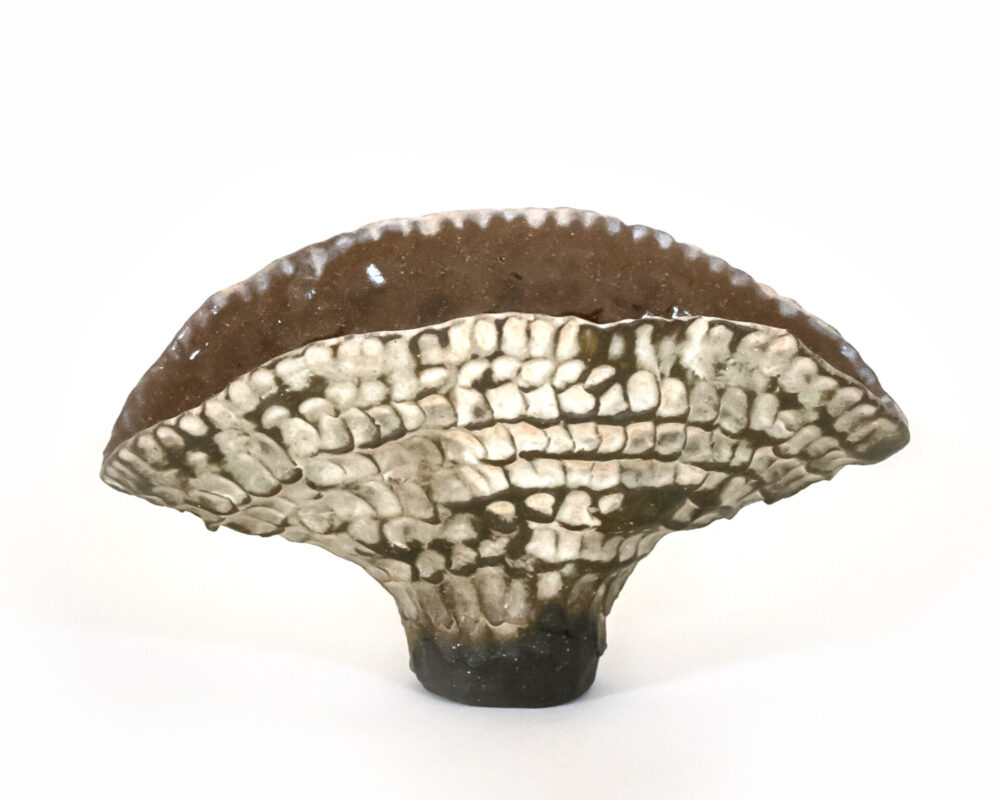
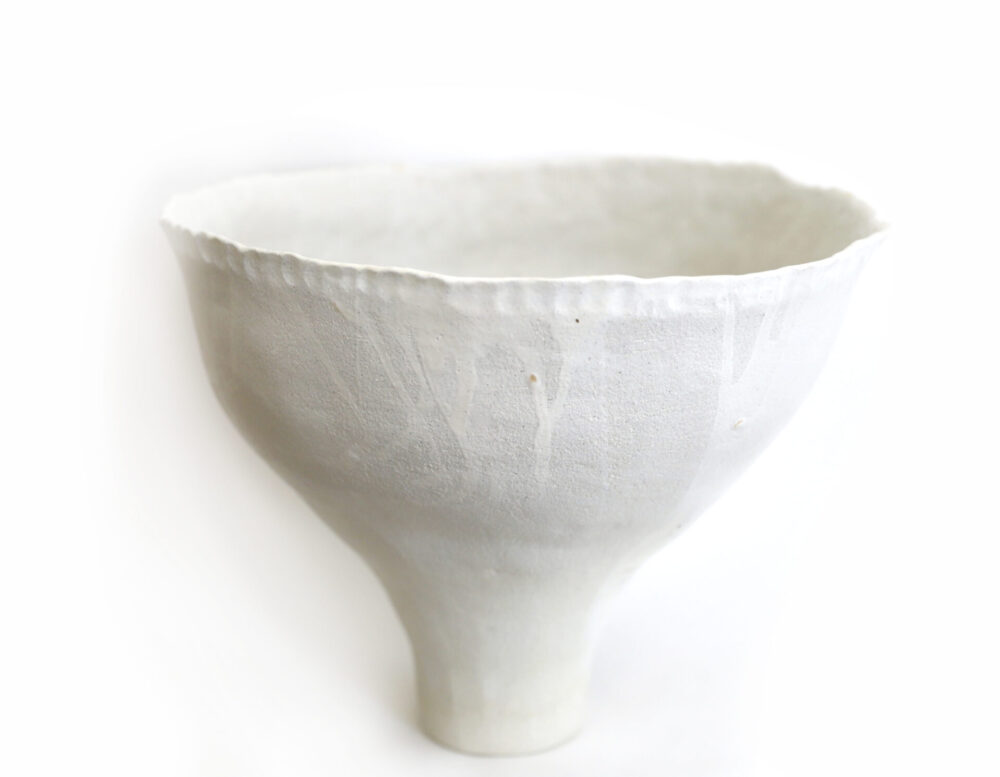
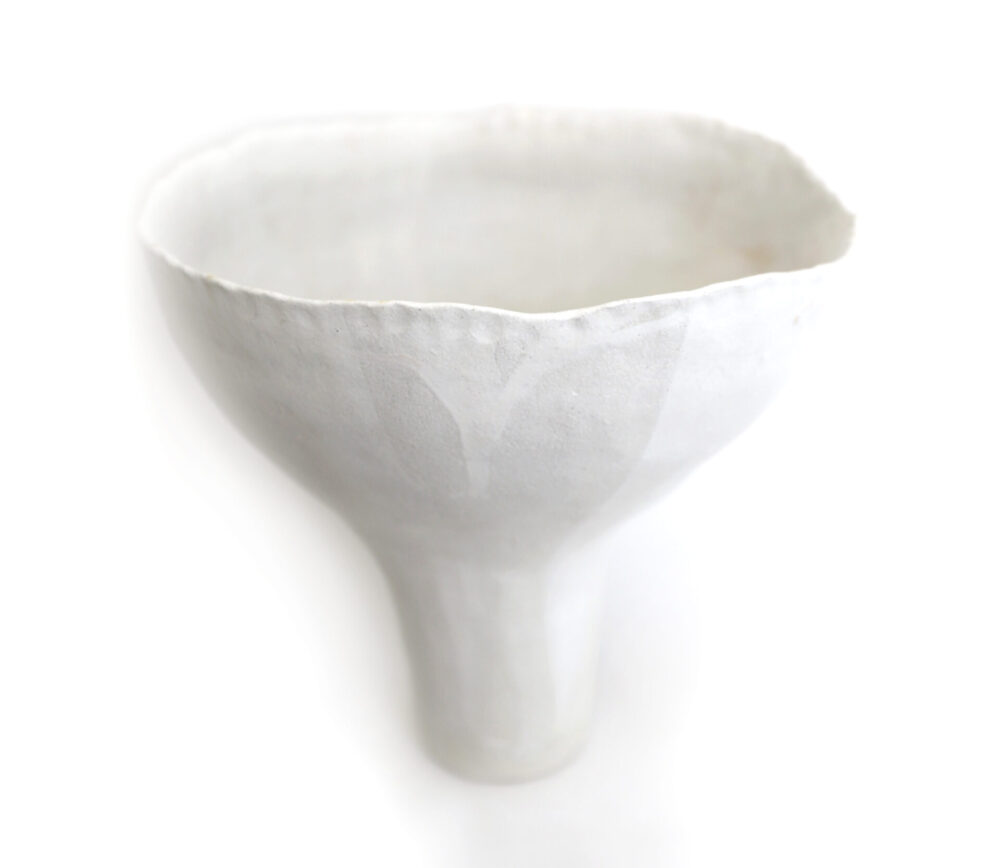
Caressa Gonsalves is a ceramic artist raised on the Northern Beaches, on the shoreline of Palm Beach. Her works are a mix of contemporary ceramic pieces, from sculptural vessels to vases, embracing natural imperfections and reflecting on handmade craftsmanship. She is inspired by the shoreline and her early years. Caressa’s works explore a contemporary vision that draws from the natural world, surrounding seascapes, found objects and ocean life, symbolic of her upbringing on the coastline of Australia.

“I was raised on Sydney’s Northern Beaches, growing up along the shoreline of Palm Beach. My family were the founders of Gonsalves Boat Shed, a little fisherman’s shack beside the ferry wharf, passed down through generations. Some of my most vivid childhood memories are rooted there, surrounded by the ocean, boats and the textures of the coastline. I have always had a deep connection to the ocean. After losing my parents at an early age, I spent many years avoiding grief and the emotions that came with it. Clay became a way of working through what I had kept stored inside me. I use the vessel as a canvas to explore emotion, memory and the movement of the sea. Working intuitively, I throw and hand-build curved forms, layering found clay slips, textures and moulds taken from the boat shed and coastline. Rope, shells, erosion and wave-like structures become embedded within the work. I embrace the natural imperfections of the clay, allowing the process to remain fluid and unpredictable. What began as a way of finding solace has become an ongoing exploration of memory, grief, place and my enduring connection to the ocean.”

Dwell

Posted by

Dwell

  • Artist
    Natalie Coates
  • Dates
    5—26 Nov 2026

Aluminium Edge

Posted by

Aluminium Edge

For Liam painting is a way of seeing what is right in front of him. A kind of looking, through a window or lens. An intuitive connection between eye, hand and surface. A ritual or sort of visceral dance that is played out within the studio. When painting Liam is interested in forms that resonate within; knife blades, carcasses and meat cuts. How we consume, how we survive. Liam also works as butcher.


Speaking on this most recent series, Liam explains how

Over time the butchers block becomes this surface of subtle, worn down gradients. You can feel them if you run your hand over it. A kind of wave in the timber that is pleasing to touch. This is done by a knives edge over time, repeated cutting and slicing motions. Akin to water slowly eroding the surface of stone. Visually these are the irregularities I’m interested in. 

Canopy

Posted by

Canopy

  • Artist
    Camille Manley
  • Dates
    5—26 Nov 2026

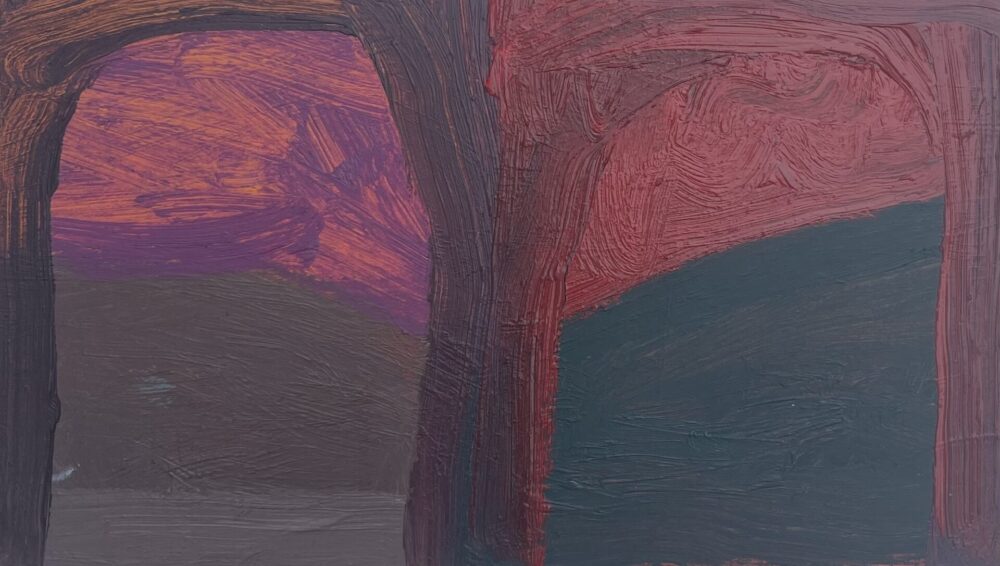
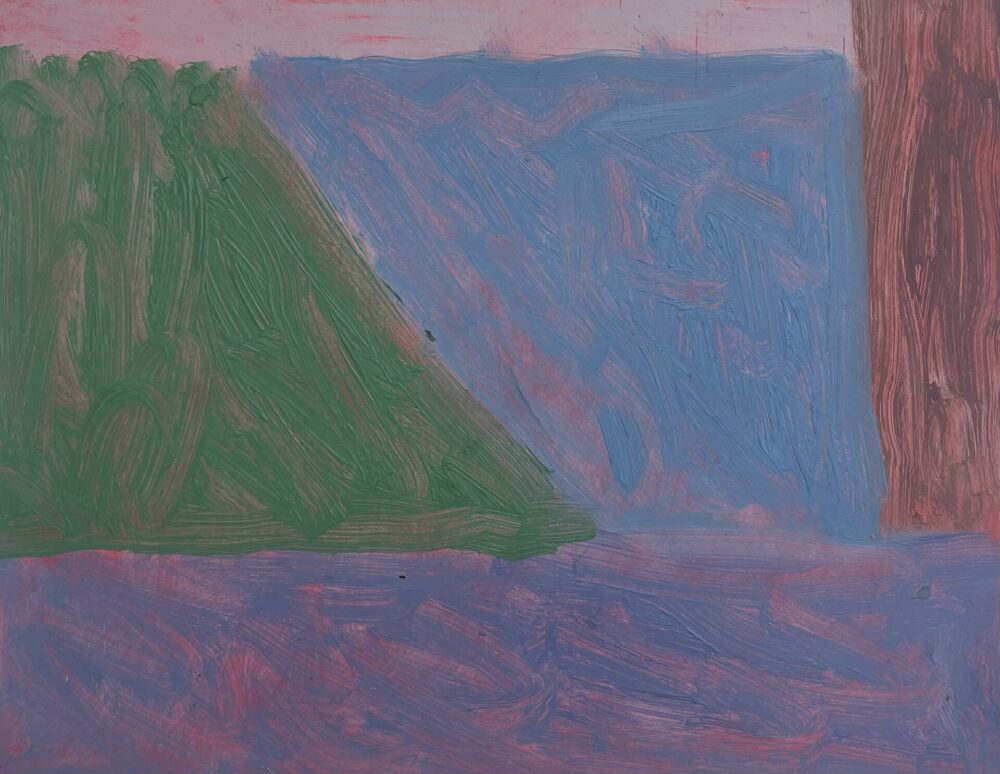
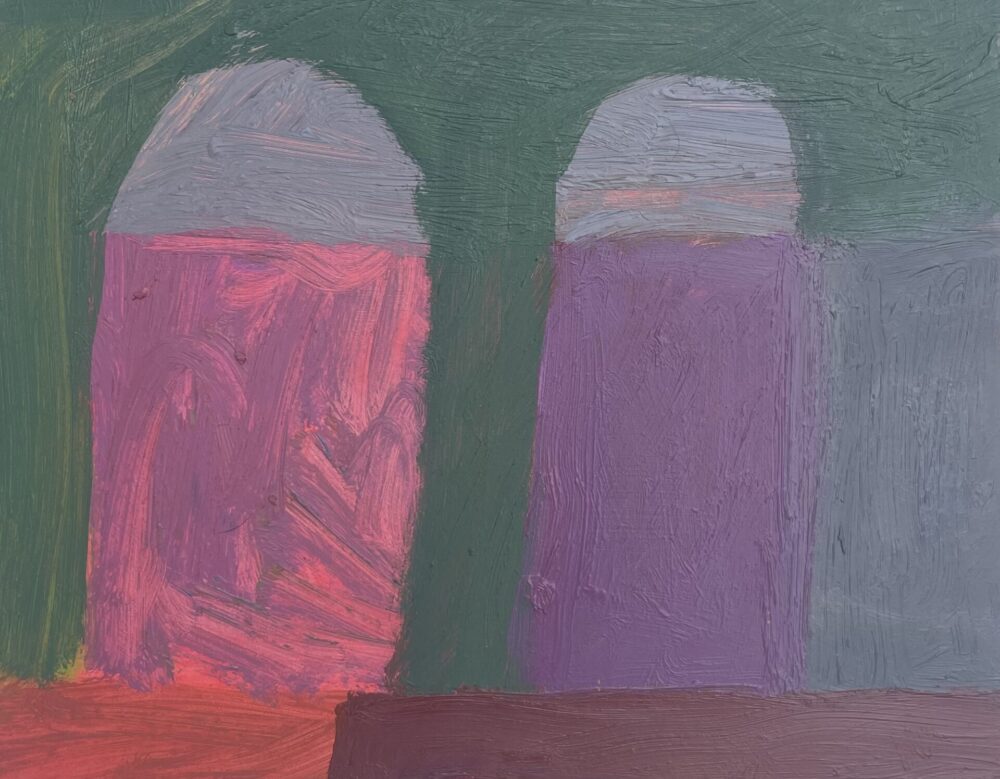
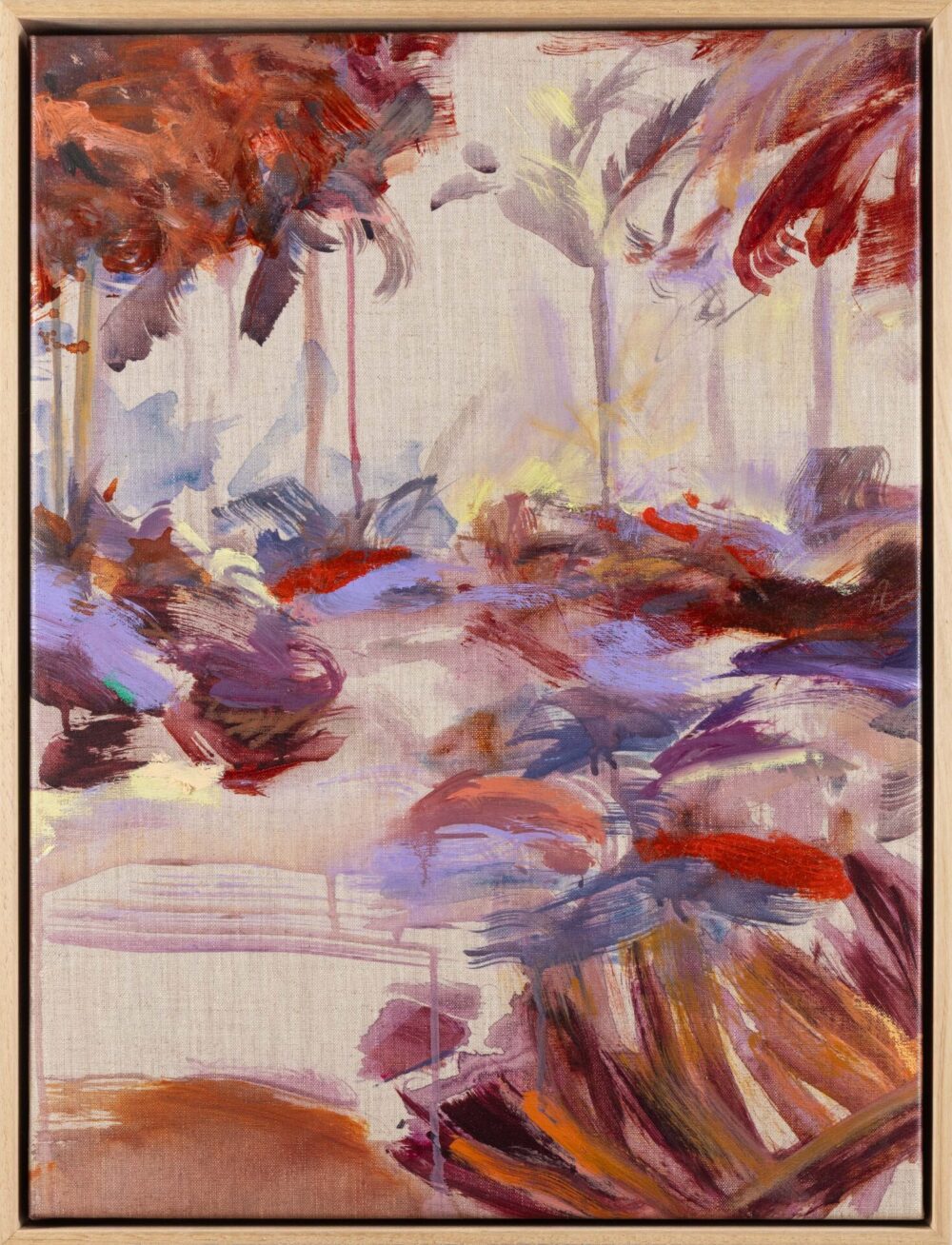
Camille Manley is an Australian painter based in South East Queensland, whose layered, gestural canvases translate the rhythm and atmosphere of place into fields of colour, mark and light. Raised on Ngunnawal Country, the bushland and Brindabella Ranges around Canberra still inform her visual language, shifting between open, atmospheric passages and more illustrative detail as she explores how we view ourselves within the landscape.

A COFA graduate who spent years in design in Sydney before returning to painting in recent years, she has shown across Queensland and New South Wales with solo exhibitions in 2021, 2024 and 2025. Camille has been a finalist in the Fisher’s Ghost Art Award, the Harden Art Prize, and her paintings are held in private collections nationally and internationally.

Esoteric Lore

Posted by

Esoteric Lore

  • Artist
    Miranda Hampson
  • Dates
    5—26 Nov 2026

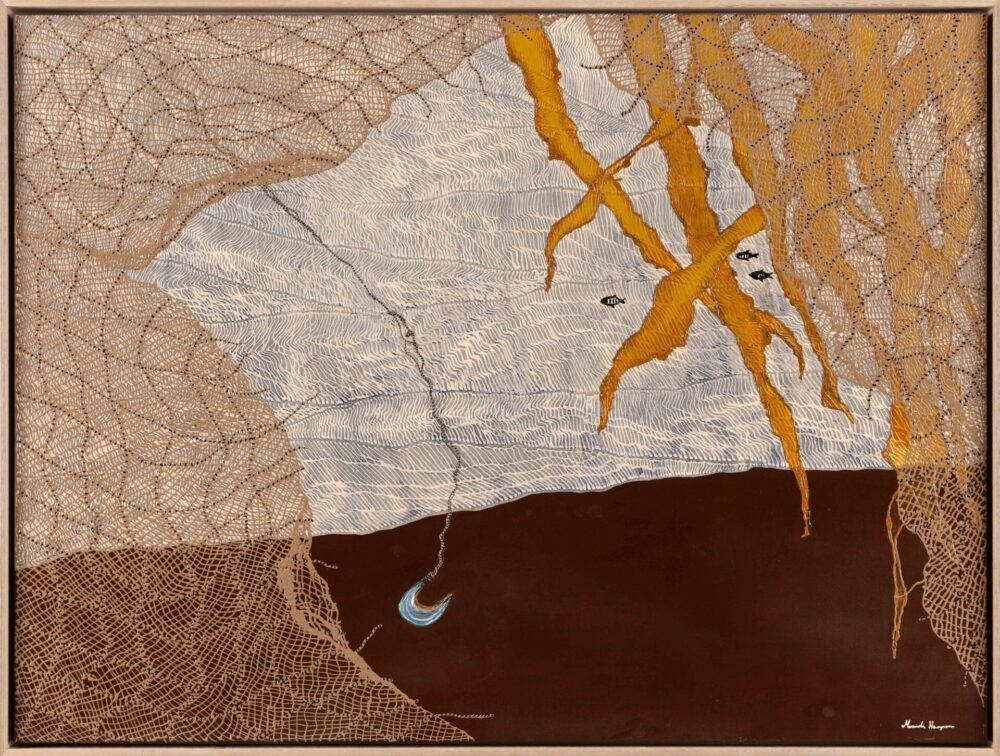
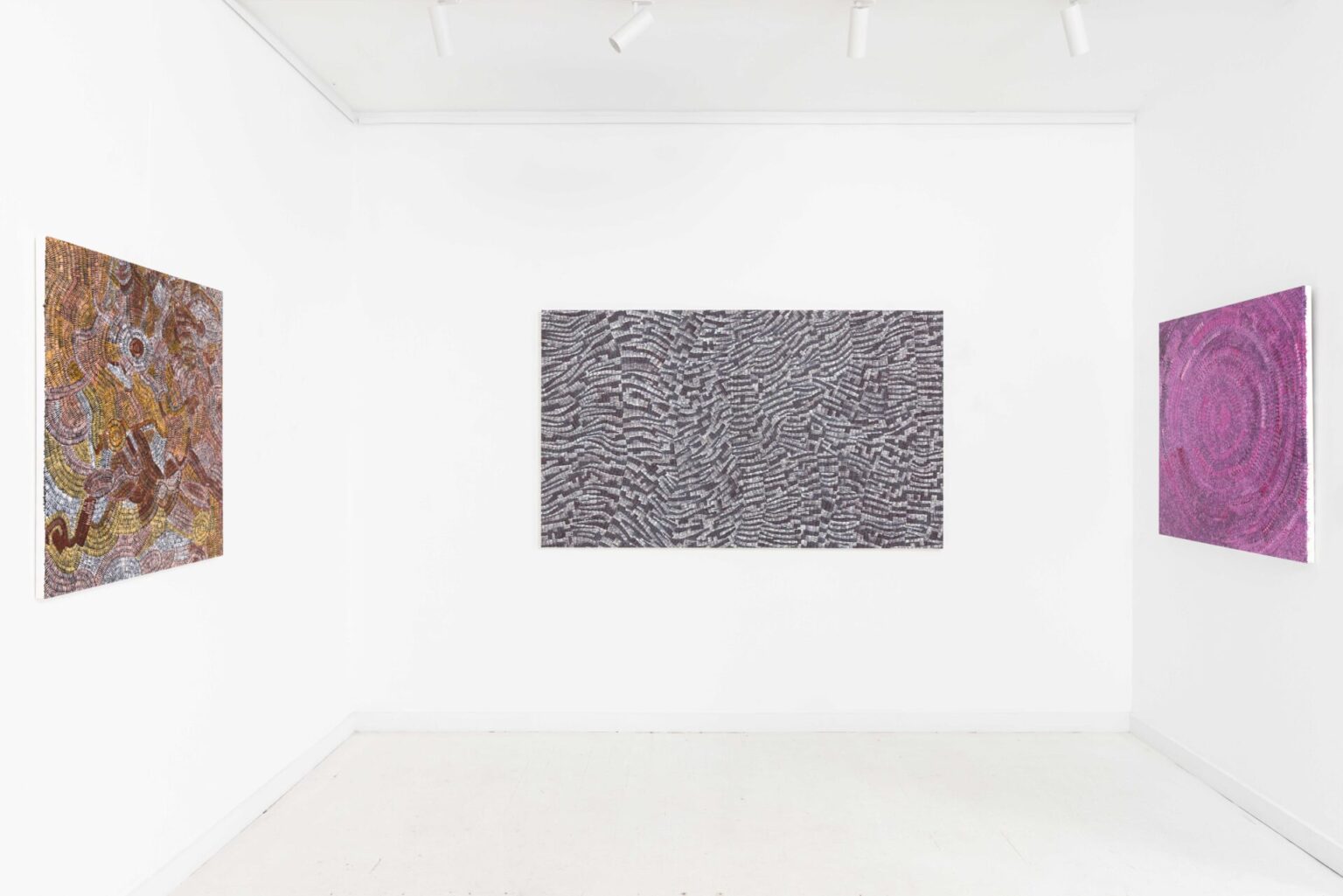
In the two years since Dharawal-based painter and Anaiwan woman Miranda Hampson appeared in the 2024 National Emerging Art Prize, her practice has gained remarkable momentum. In 2026 alone, she was selected as a finalist for the Hadley’s Art Prize, Mosman Art Prize, Goulburn Art Award and Fisher’s Ghost Art Award, receiving the inaugural Installers’ Choice Award at Mosman.

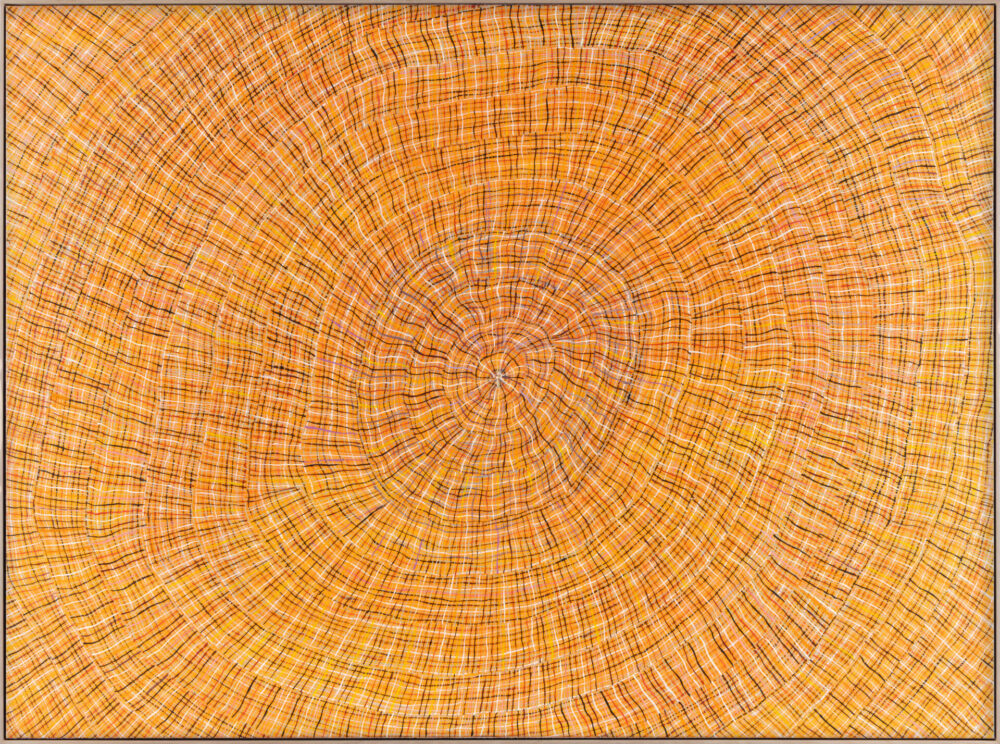
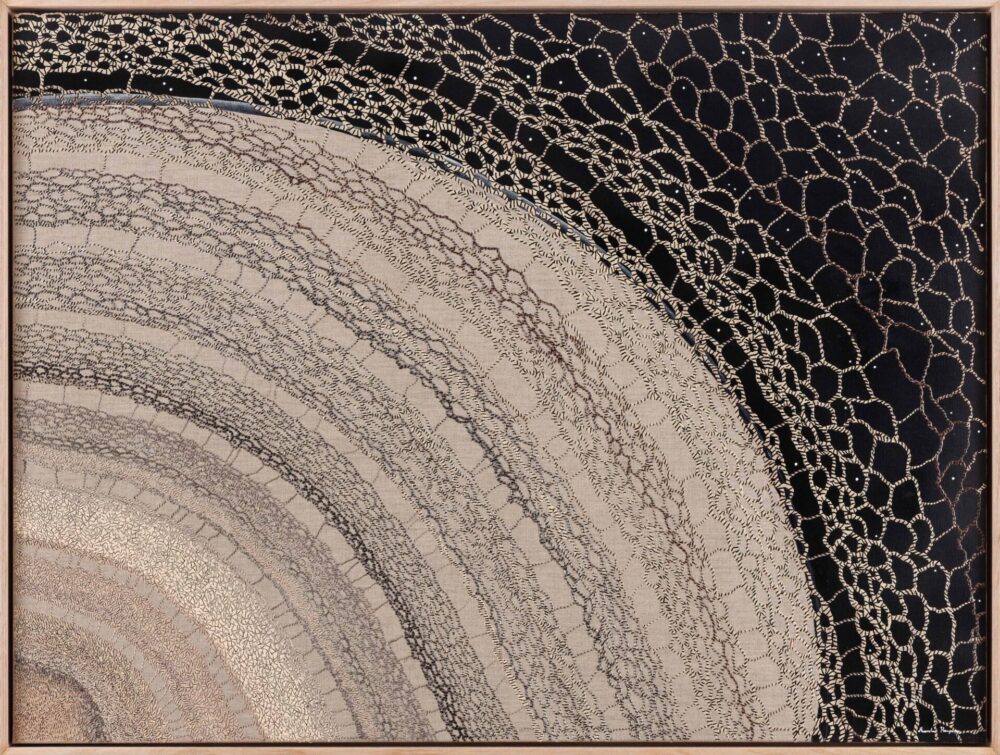
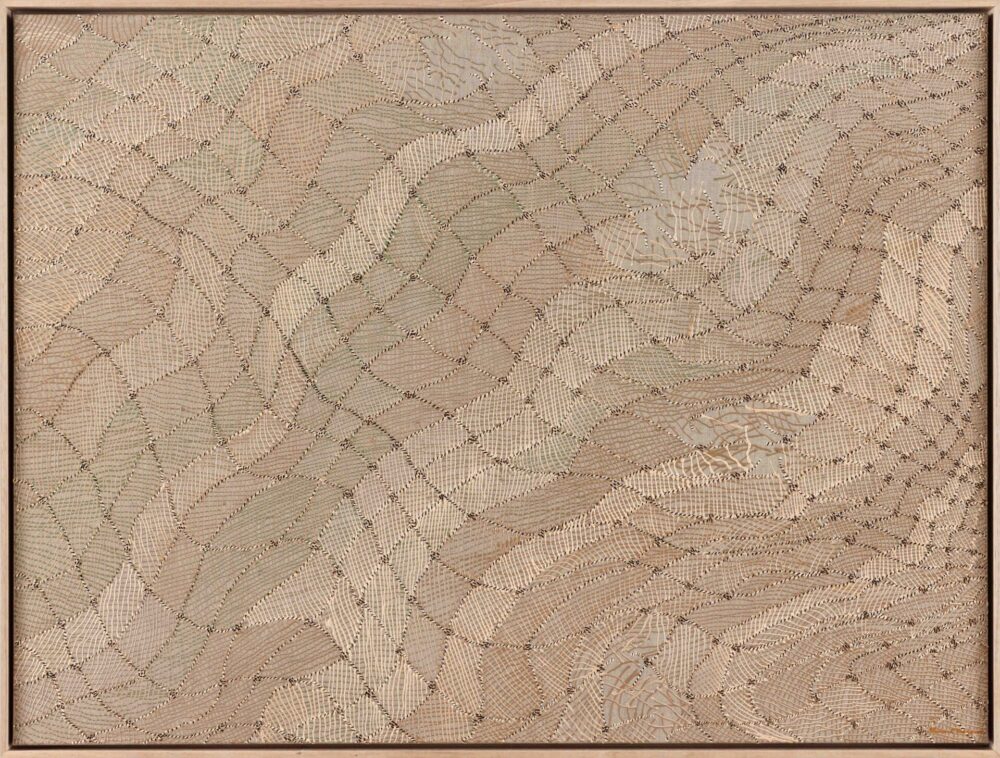
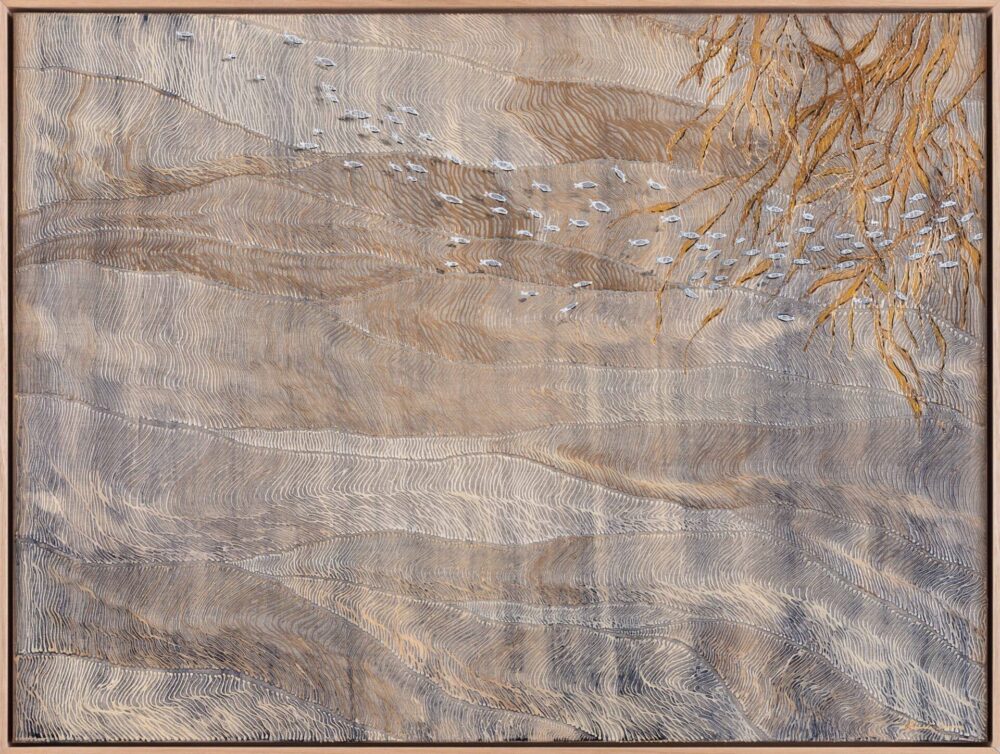
Hampson’s paintings combine considerable technical accomplishment with a sustained interest in material, place and Indigenous knowledge systems. Esoteric Lore, following her 2025 exhibition Vantage, extends this enquiry through an increasingly delicate and exacting language of paint. Across some of the largest canvases of her career, minute marks accumulate into filaments, ripples and dense fields, giving the surfaces a quality that is at once woven, organic and impossibly weightless.

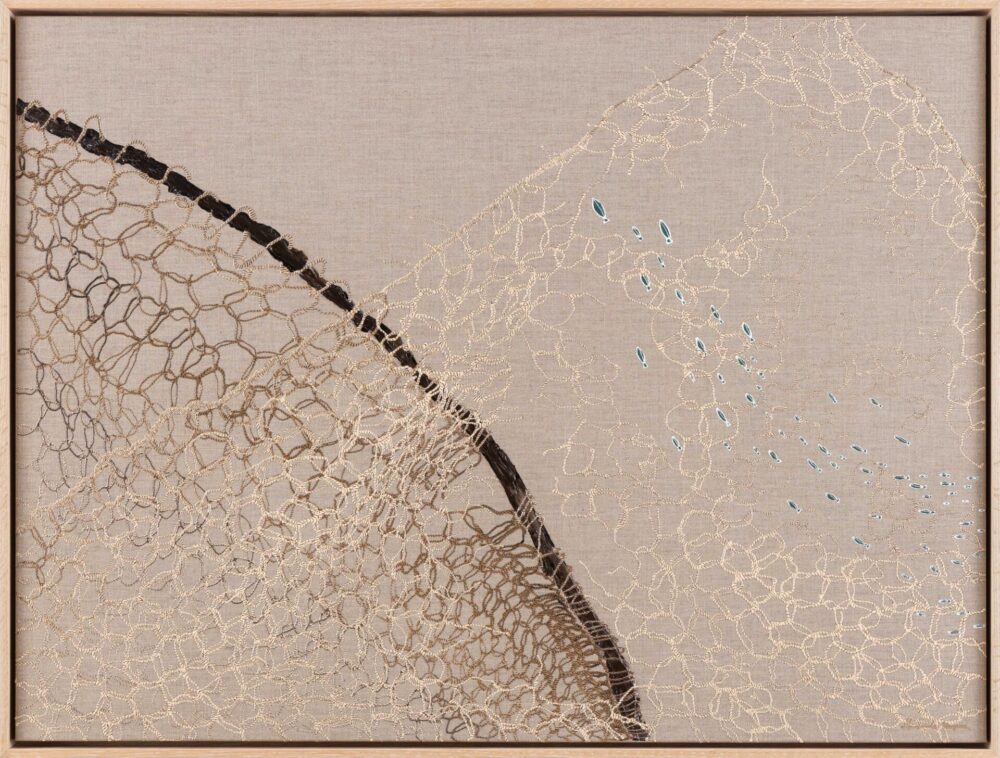
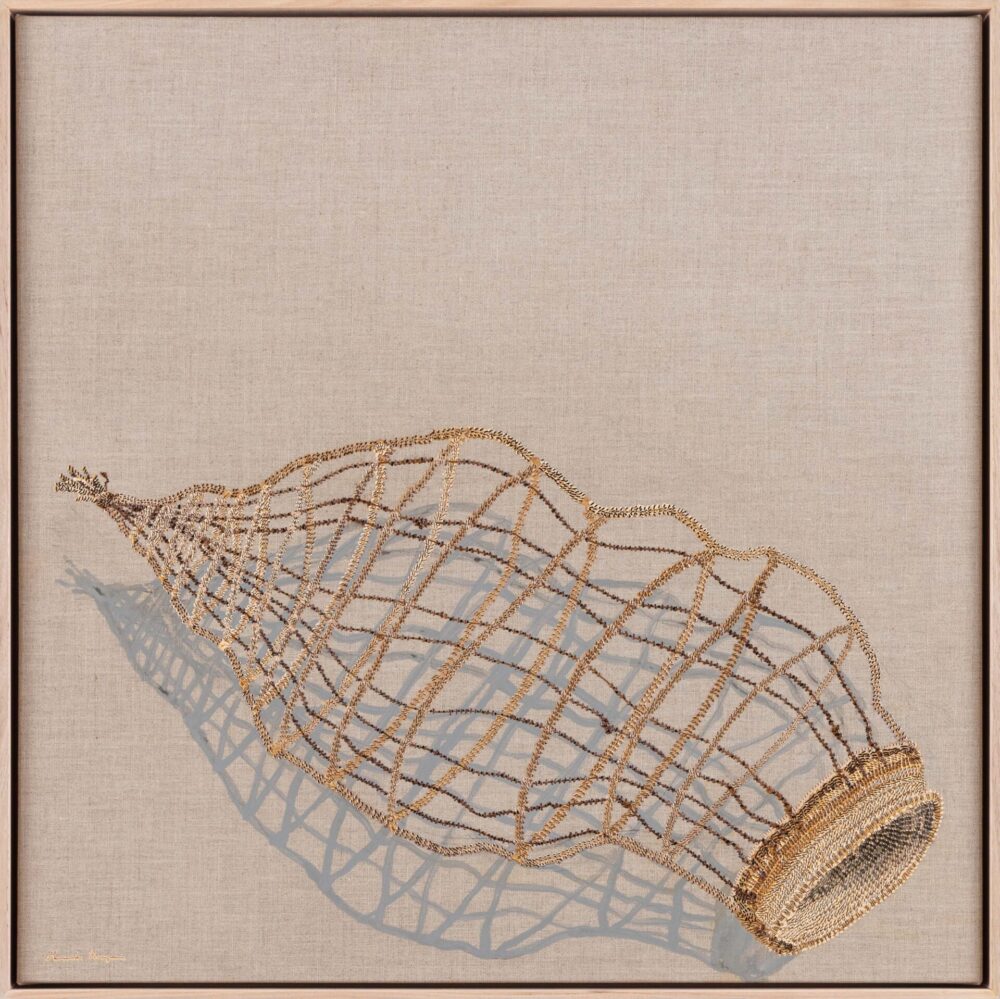
The fishing net provides the collection’s central image. In certain works, it is recognisable as an object, suspended against a neutral ground or caught in shadow. Elsewhere, it spreads across the canvas, becoming almost abstract and, in places, suggestive of cracked earth. For Hampson, the net offers a compelling way of considering Country as a system of interconnected relationships. “Fish traps do not resist movement entirely; they work with currents, migration and seasonal change,” she says.

There is something apt, too, in the way the net is made. Each line depends upon the next, as thread depends upon thread. Hampson recreates this structure entirely in paint, and beneath that lies the linen canvas itself, already woven. There are, in other words, several kinds of making held within a single surface: the weave of the canvas, the weave of the net, and the ‘stitching’ of paint.

This same kind of thinking is extended, with similar rigour, across other phenomena and subject matter, all suggestive, in some way, of a balanced coexistence with Country, or a call to repair these missing links.

The long strands of kelp in The Shape We Take bend with currents and tides, dancing in response to the water around them, bringing a distinctly more fluid kind of reciprocity to the fore. “The organisms that sustain the world are often the least visible,” says Hampson. “Like phytoplankton and kelp, they remind us that life persists through countless acts of exchange and connection beyond our immediate view.”

Esoteric Lore will span both Michael Reid Southern Highlands and Michael Reid Northern Beaches this October, bringing the two galleries together for a single presentation of the collection. For priority access, please register your interest.

Artist Profile | Drew Truslove

Posted by

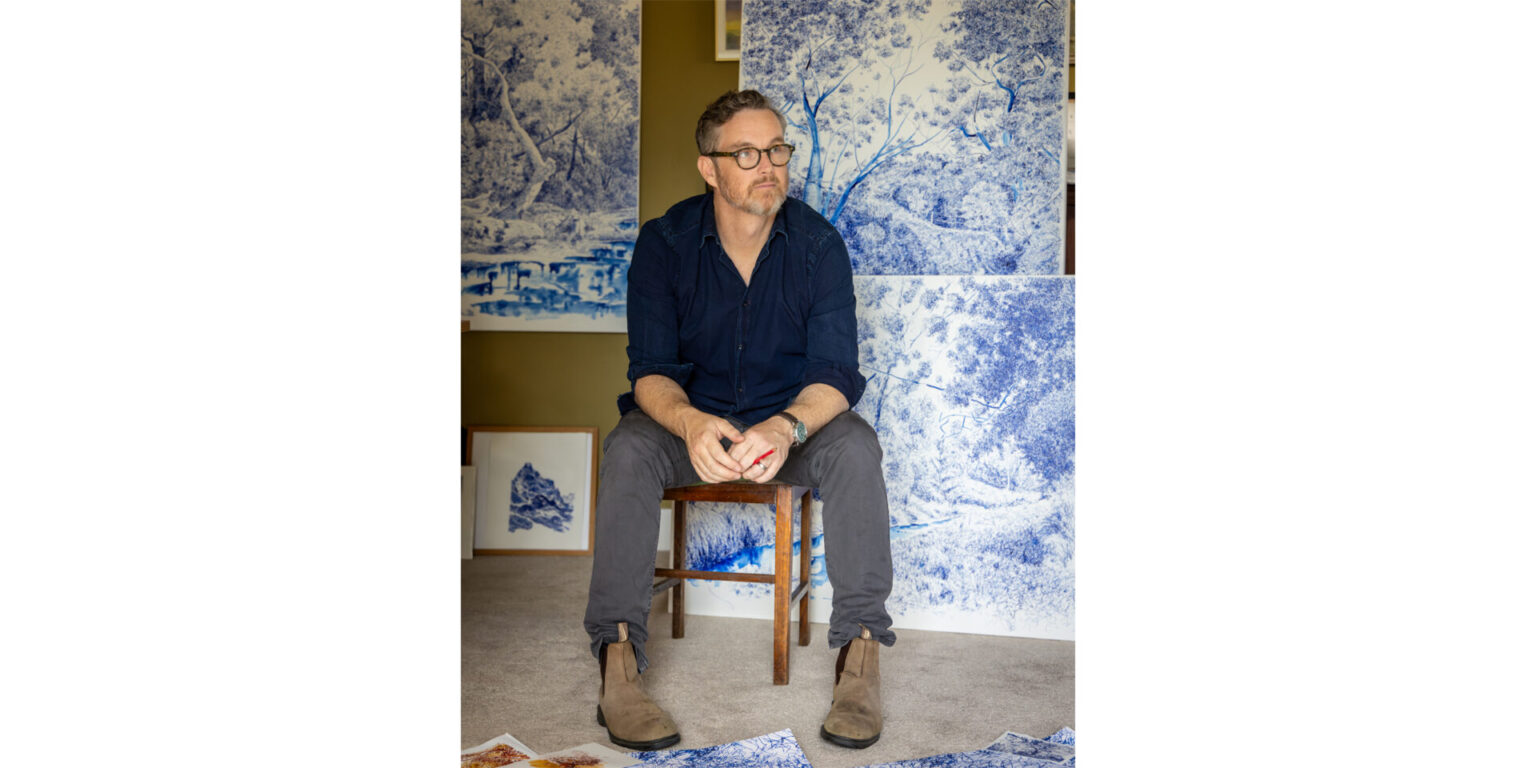
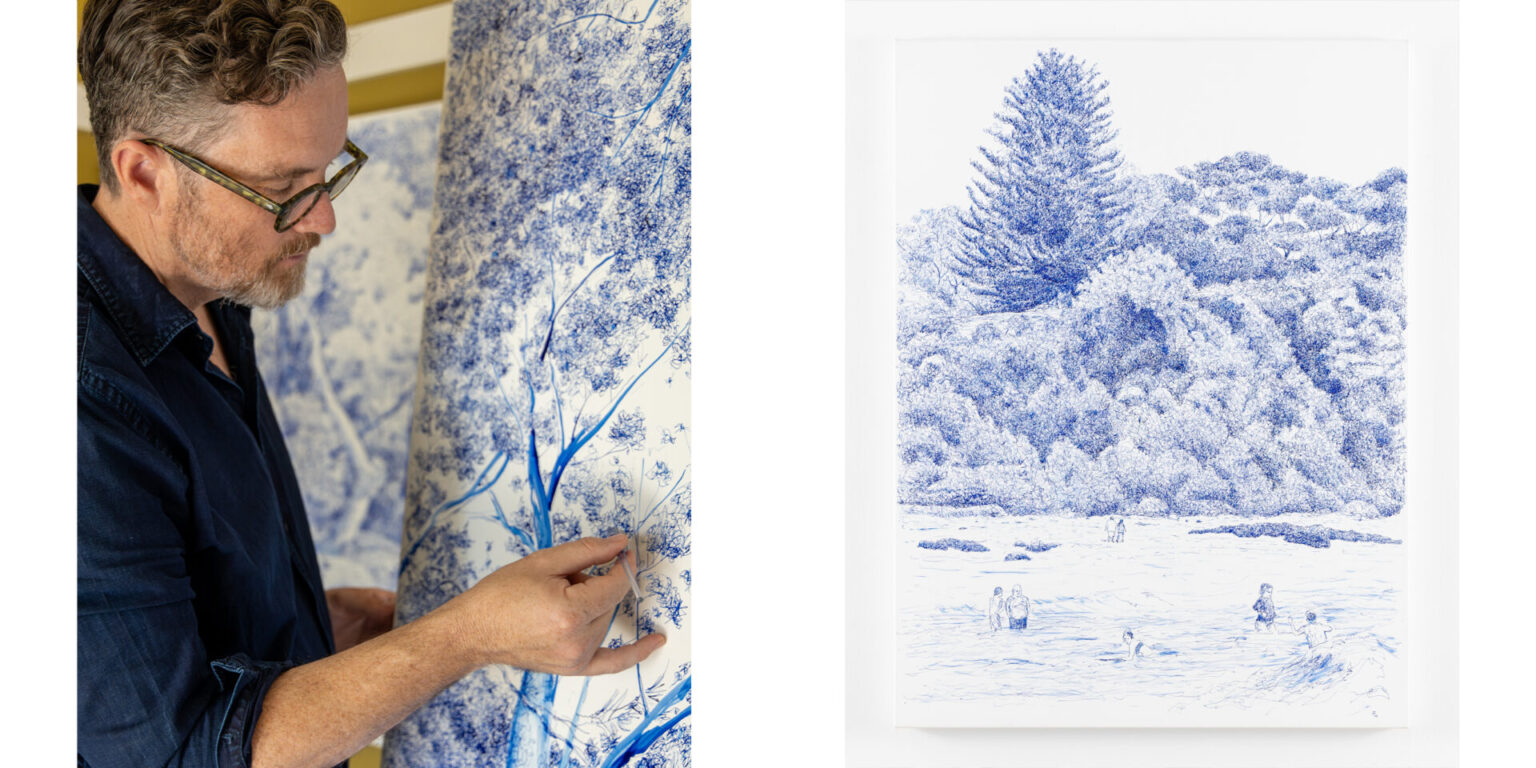
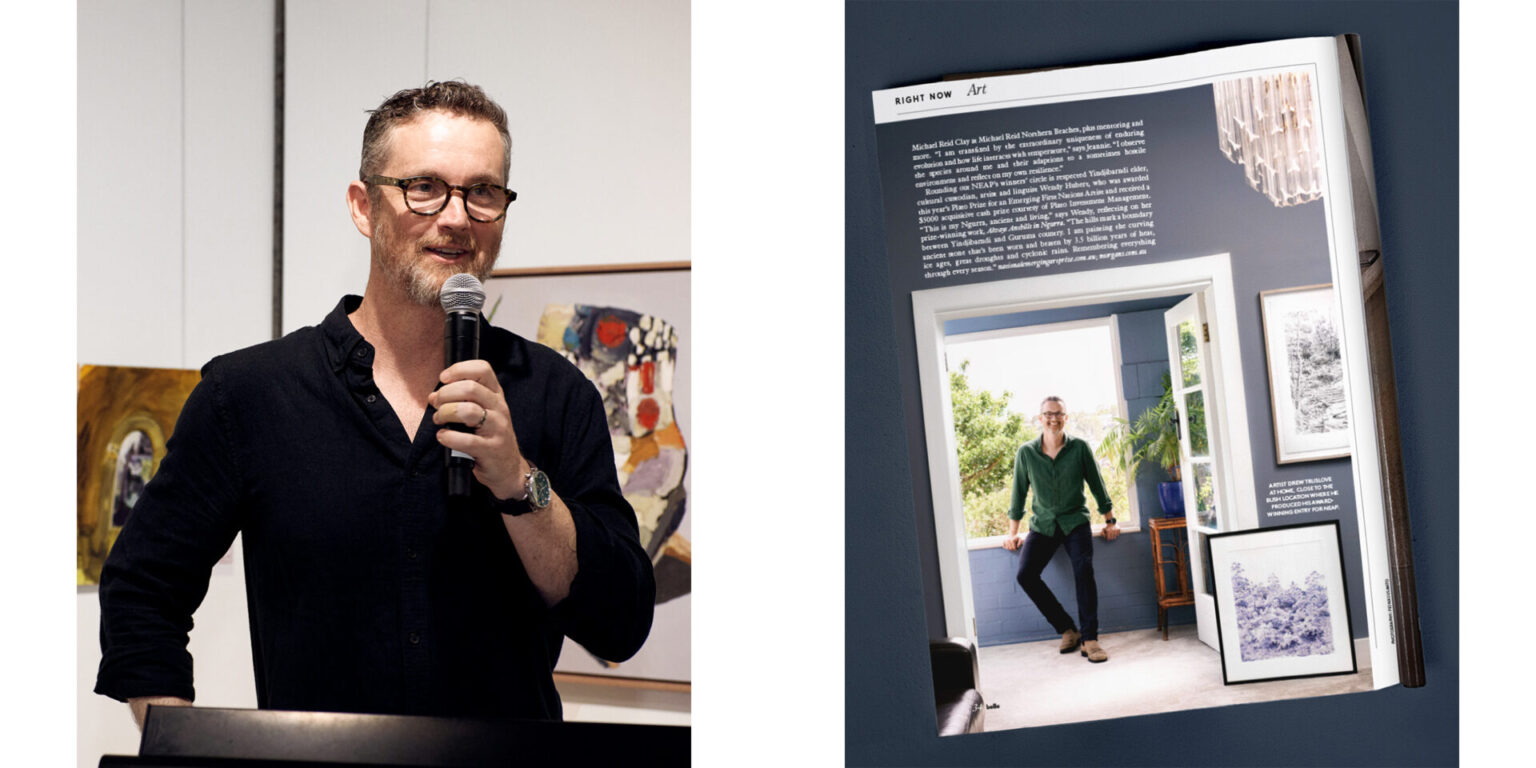
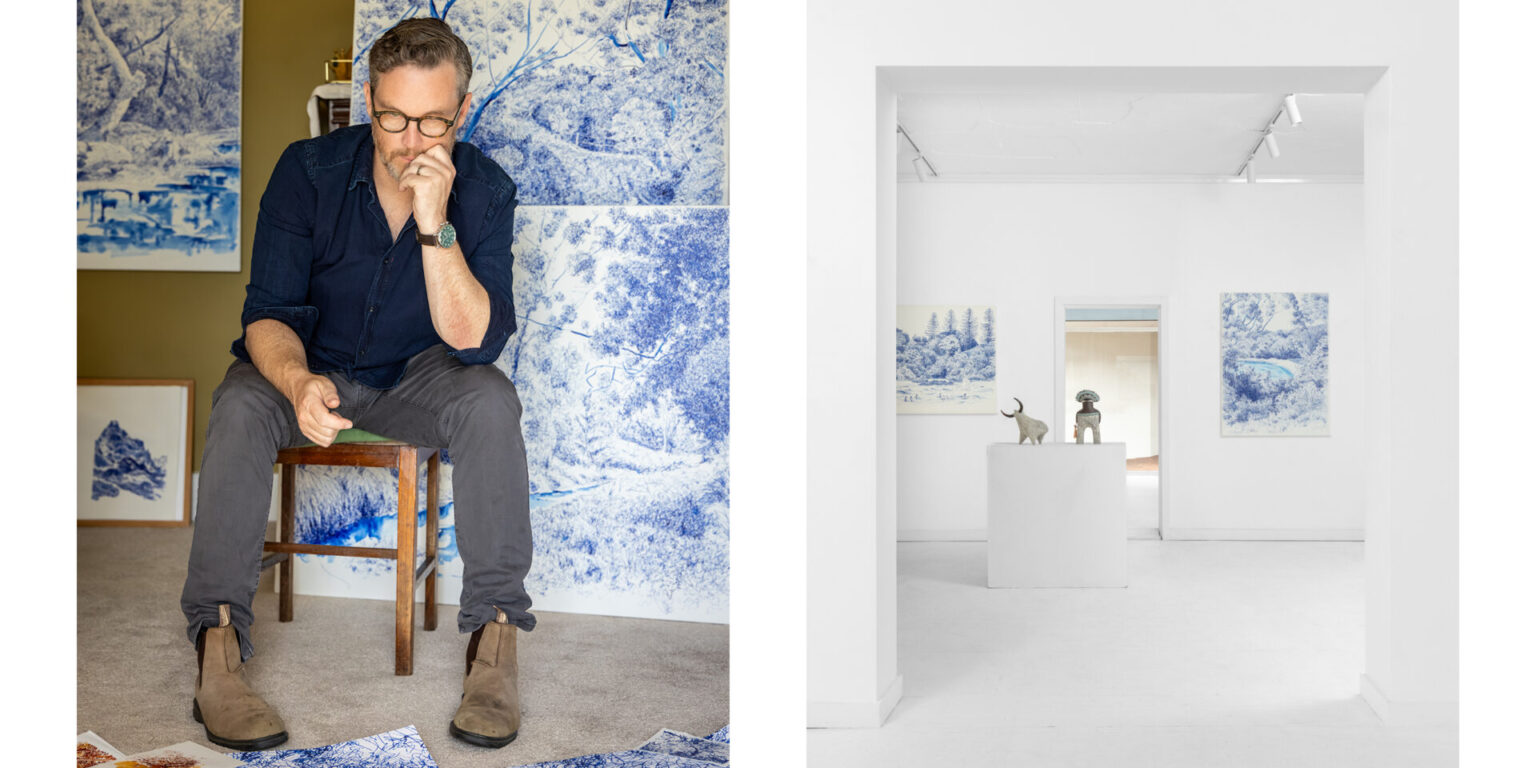
Ahead of the announcement of Drew Truslove’s representation by Michael Reid Northern Beaches and Southern Highlands, our gallery team visited the Eora/Sydney artist and 2024 National Emerging Art Prize Award of Excellence winner at his lower North Shore home and studio overlooking Flat Rock Gully – a site that has loomed large in his work to date.

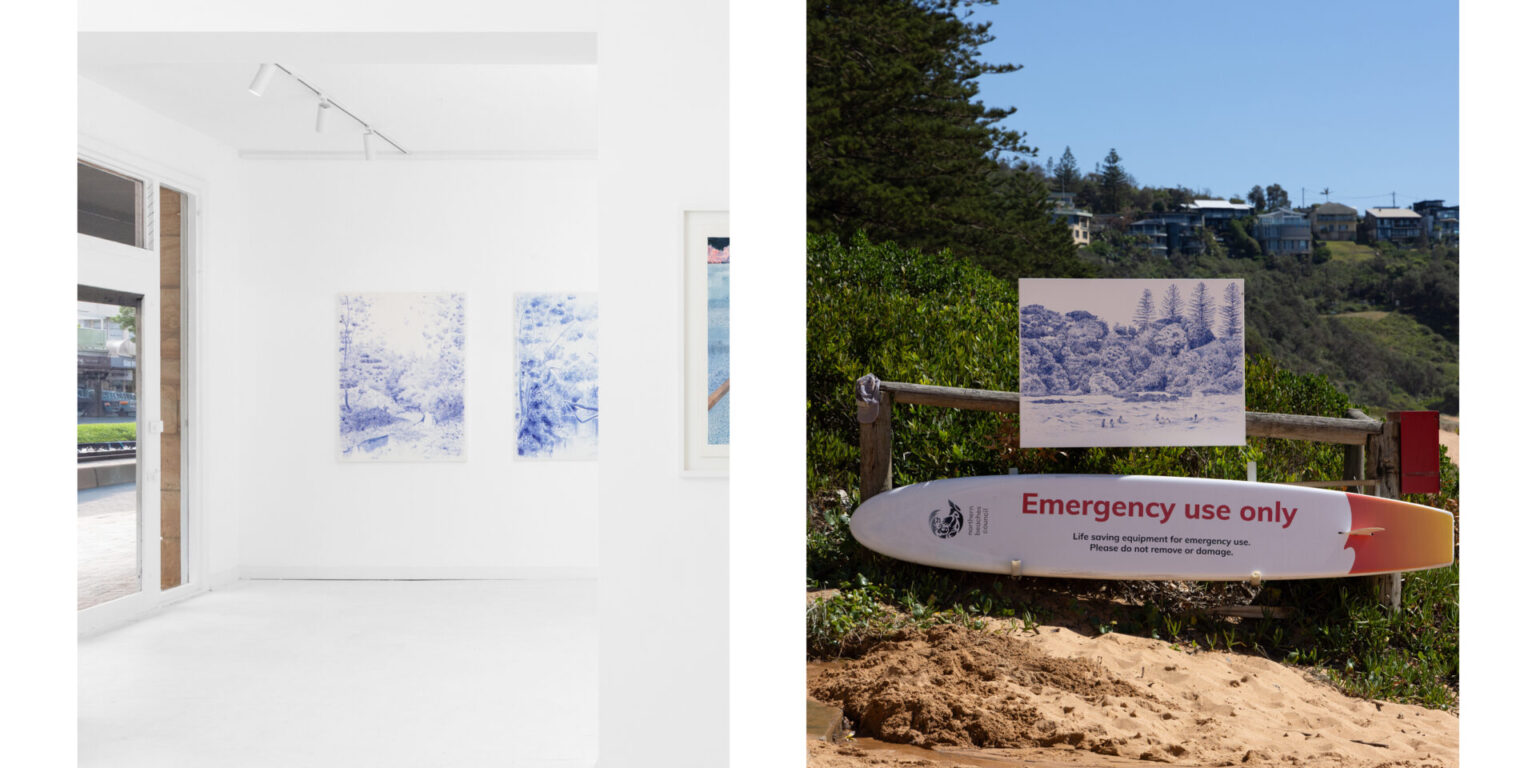
“I will often choose a place where I can do multiple sketches – and final pieces – from the same spot, creating a series as a survey of what that land looks like right now,” says Truslove in our wide-ranging interview, which covers his formative influences, moments of creative breakthrough and the coastal enclaves at the heart of his next solo exhibition, Waterline – opening 9 October as the inaugural presentation at the expansive new home of Michael Reid Northern Beaches.

“Often beach scenes can be quite nostalgic and I hope that people see themselves in the waves or on the sand,” says Truslove. Works from Waterline can be previewed and acquired below alongside our conversation with the artist. For enquiries, please email sophienolan@michaelreid.com.au
“I like portraying people in landscapes in a fairly rudimentary way, having them dwarfed by nature. They’re cameos against the backdrop – the main star of the show.”


DREW TRUSLOVE
___

What were some of your earlier creative influences?

I had parents who encouraged me to draw from a very young age, and my father was a wonderful artist as is my uncle. I still recall my father urging me to look at the actual shape of people’s bodies, helping me to move out of drawing stick figures when I was really little. From an early age, I was inspired by the drawings and paintings of Picasso, as well as Dalí and da Vinci. Later I have found evergreen sources of inspiration in the work of Jacques-Louis David, Géricault, Caravaggio and Goya. Alongside Monet I find the work of Morisot so stunning – her paintings are an excellent lesson in composition and storytelling. Closer to home over the years I’ve loved the work of artists such as Brett Whiteley – also a fan of ultramarine blue – and Mike Parr. The intensity of Parr’s self-portraits is spellbinding.

How did you first come to pursue drawing – and what informed your work at that time and into the early stages of your career?

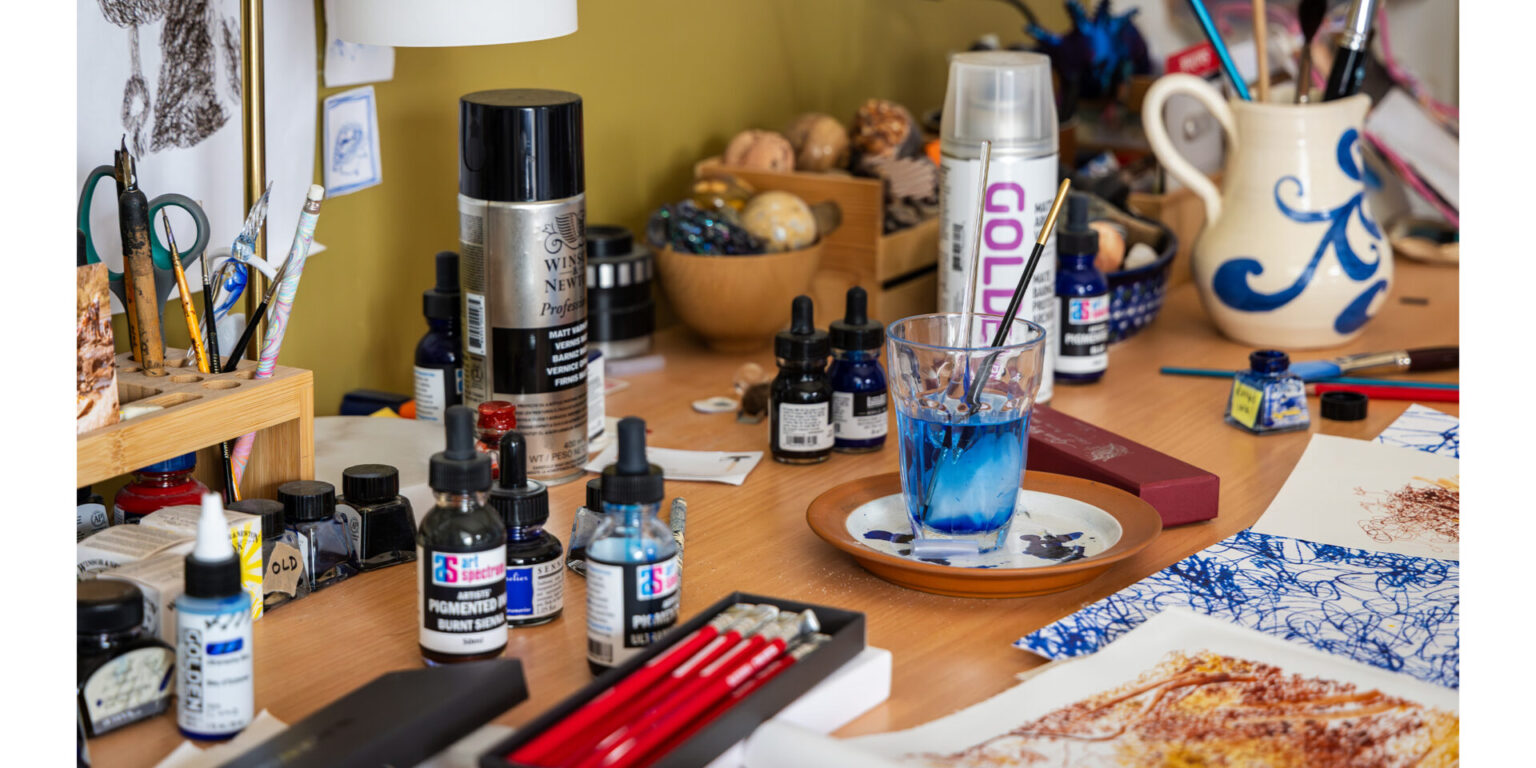
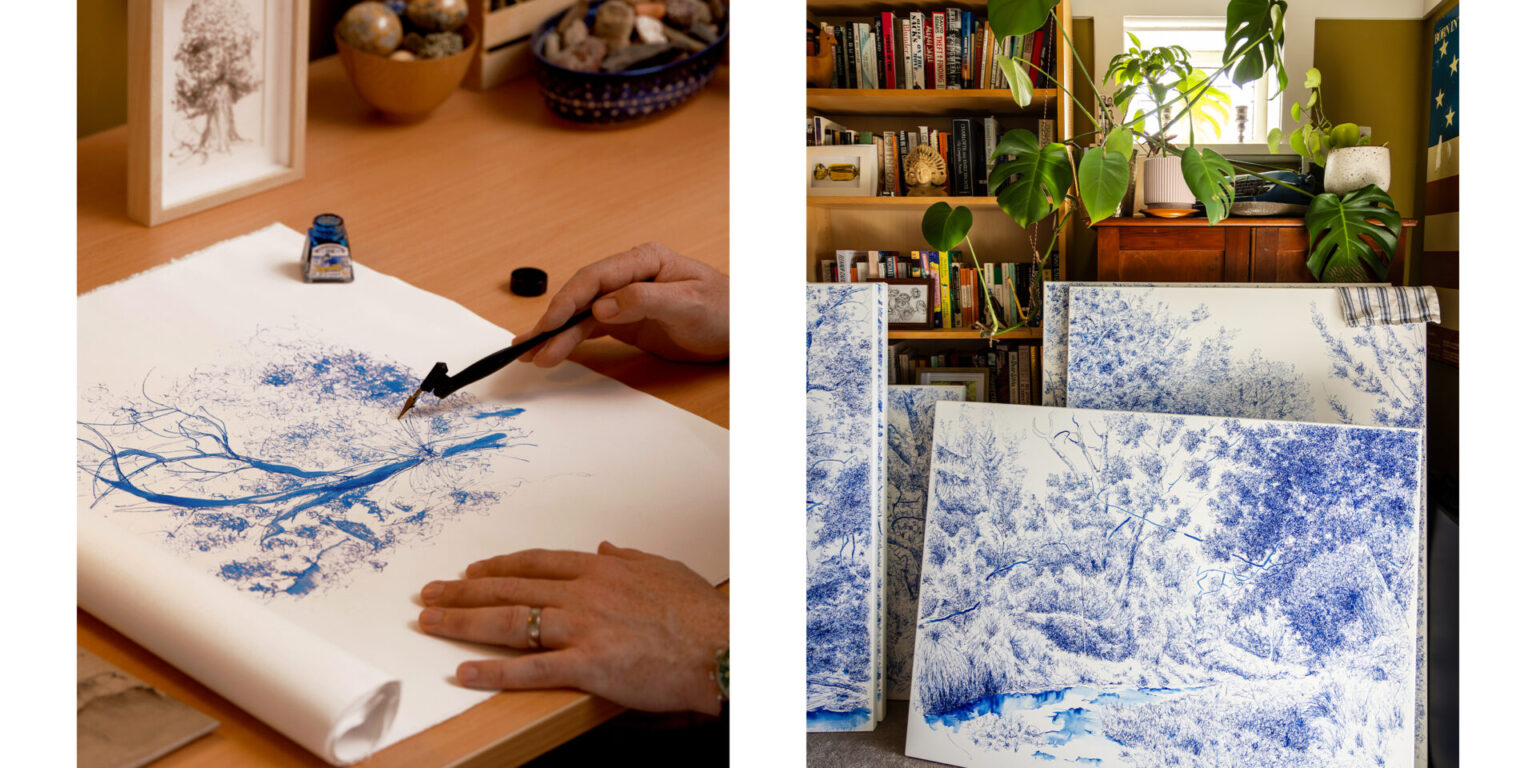
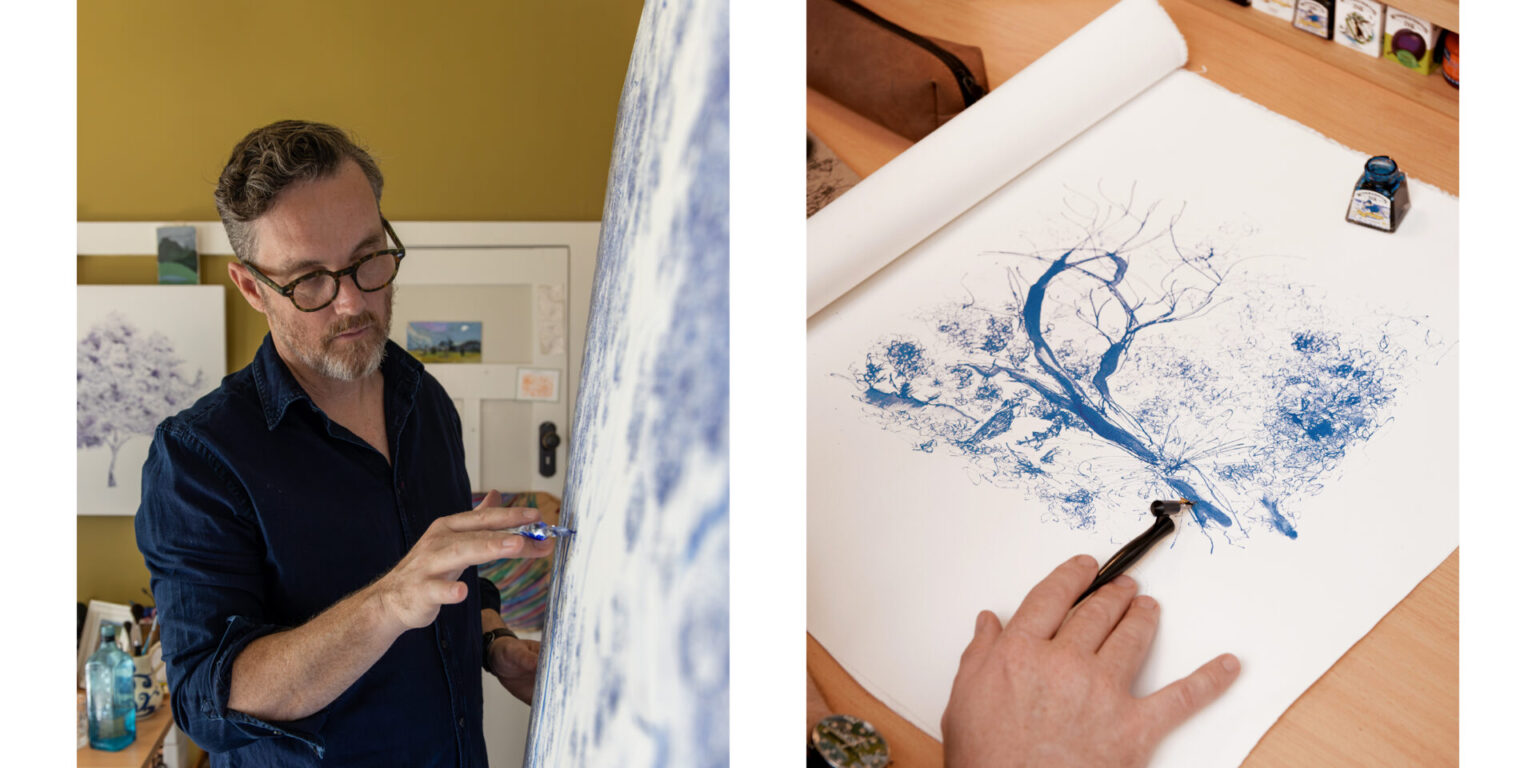
I’ve drawn all my life – nominative obligation, I suppose – and most recently I’ve been using ink on paper and canvas. About 10 years ago I was at a crossroads; I wasn’t liking much of the stuff I was generating and wanted to do something different – divorced from formality and as incomparable as possible to other practices I’d known. I wanted to carve out something for myself that I hadn’t really seen. One day I saw a glimpse of three figures sitting by the side of the road, teenagers I think, all in black, with one of them sitting on another’s lap. I was driving so it was only a glimpse and they all seemed to merge into each other – the scene was so intimate and harmonious. I thought – how might I draw that scene? That’s where the faster, more chaotic brushstrokes were born. That early influence still informs my work now – the style is being refined and developed as I go but I’m enjoying having it as a staple at the moment. The clarity and speed of that ink line is quite striking so it’s fun to work with.

How did the landscape emerge as a prevailing concern?

I initially used that style for portraits, but after a while turned my attention to trees and landscapes. I have a few key bushland areas I’m lucky enough to spend time in. One is right next to our house, a beautiful place called Flat Rock Gully, which has formed the basis of two of my shows in recent years. It’s a stunning piece of landscape winding down a steep hill, around which Indigenous folks hunted, played, swam and fished for many thousands of years. The other muse for me is Jamberoo. I’m lucky enough to spend time at a farm down there quite often and the property has a rainforest, a river, hills, animals and thick bushland that is ripe for painting. So these two areas have become recurring and patient sitters in my work. I managed to tear myself away from them to spend some time drawing beach scenes recently, which is probably good for me.

How has your approach to drawing developed over time?

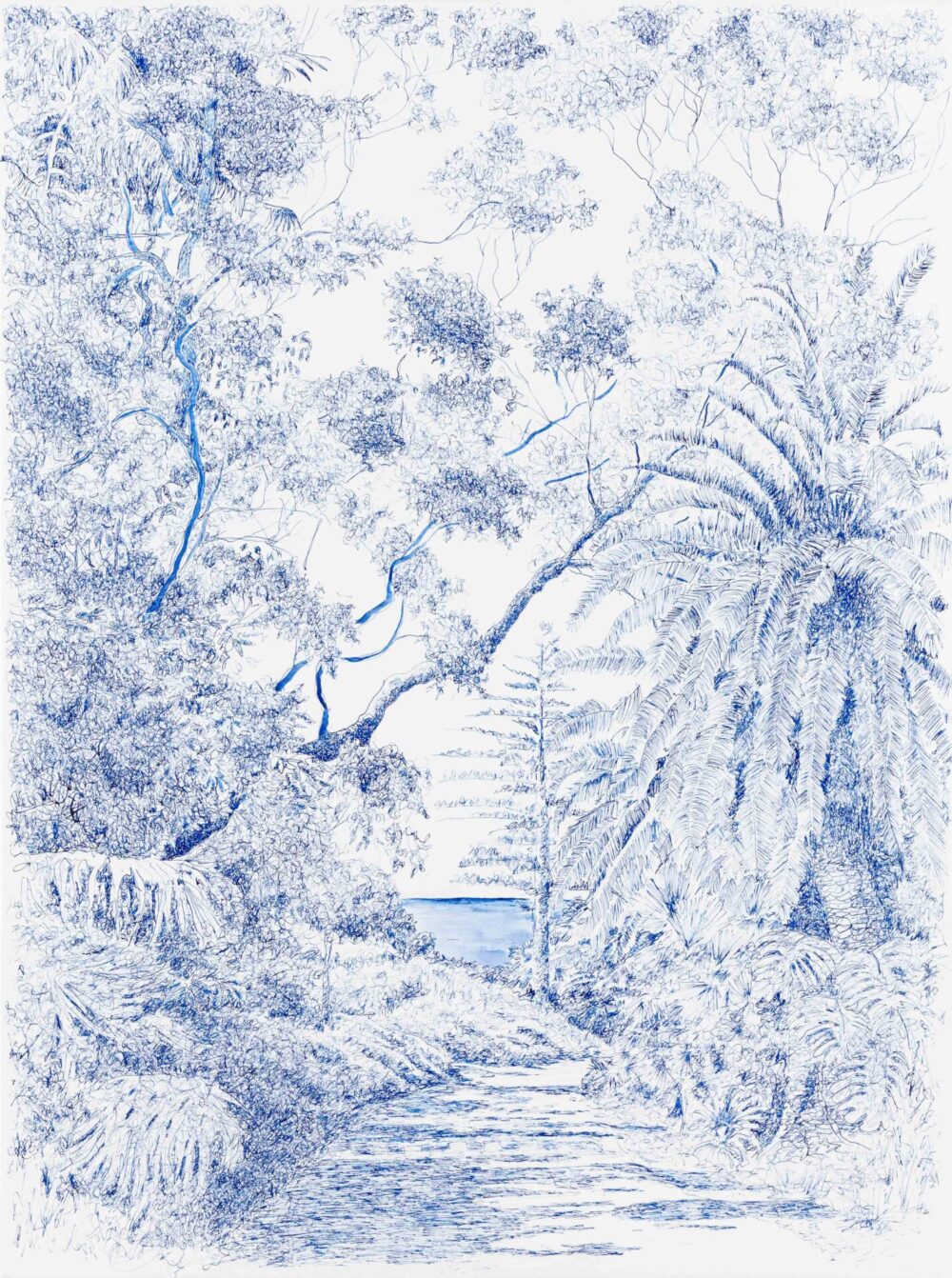
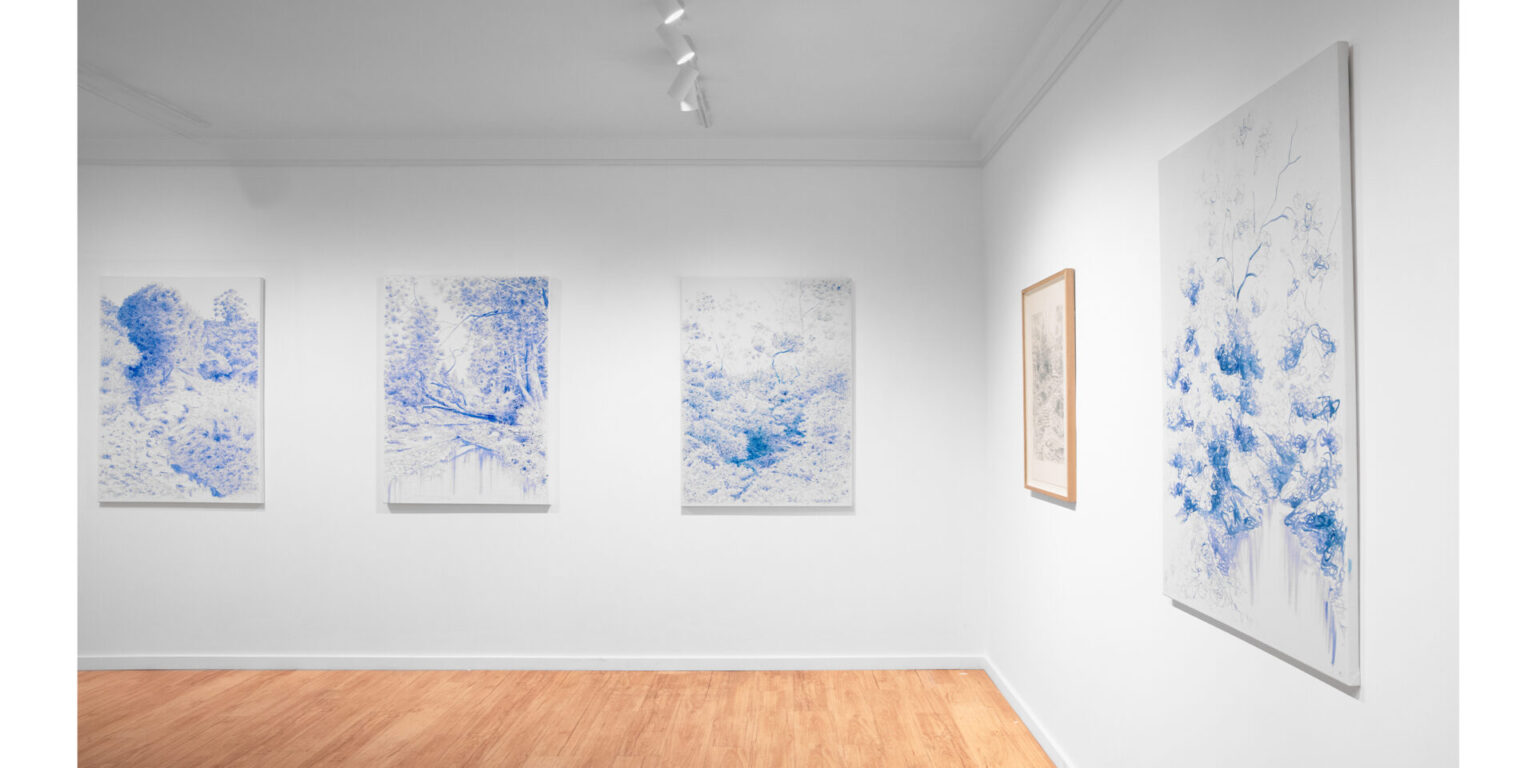
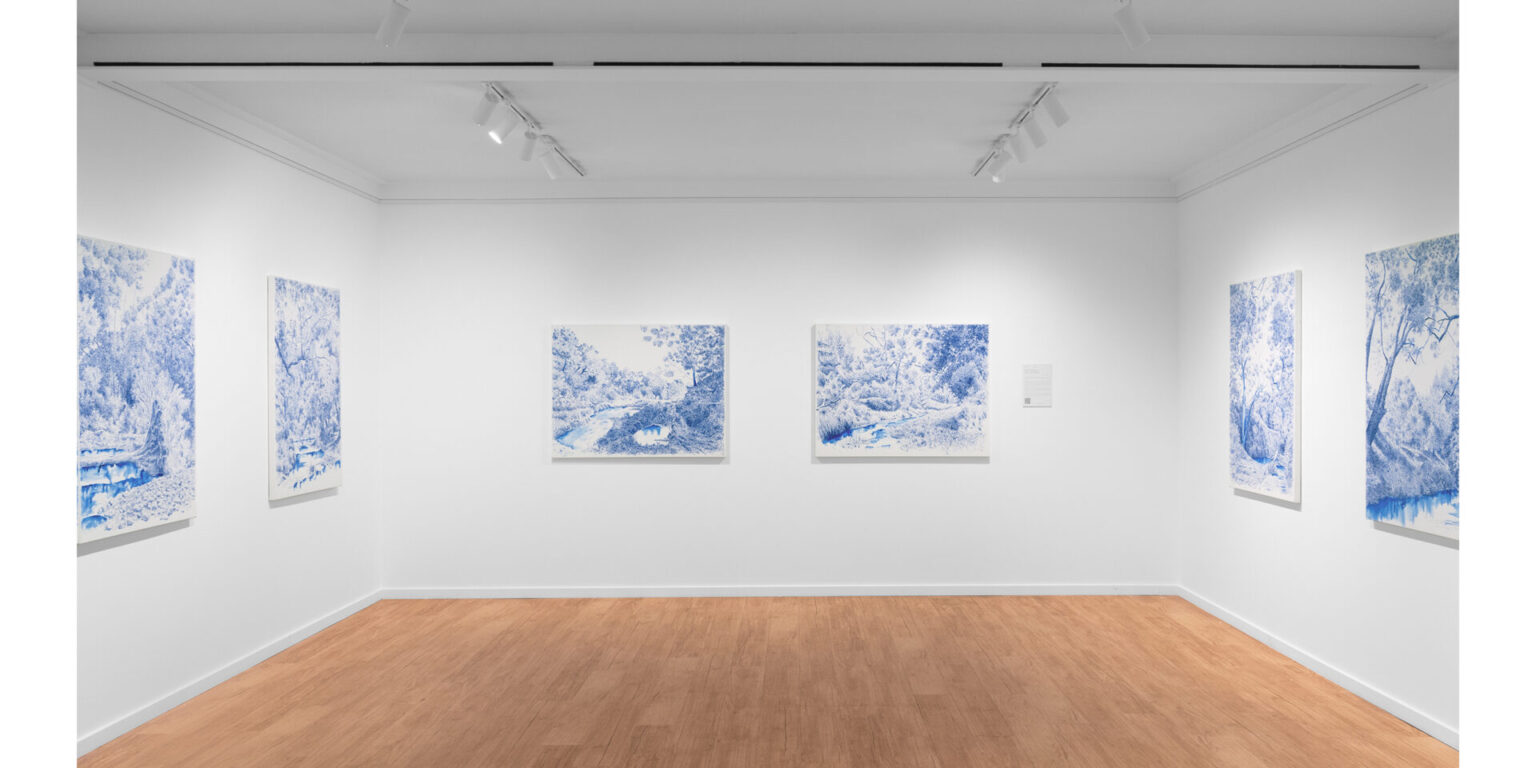
With each painting it refines a little – the pictures have become a bit more dense and I try to focus more on light and composition. I’ve added in more water courses, so the landscapes have stretched from being single trees into riverscapes and beachscapes. I’m also moving into increasingly larger pieces. I’ve been using ultramarine blue for a few years now; before that I was predominantly using black. The blue was an experiment that I’ve fallen in love with. It’s such a strong colour and it has so many different possibilities, having traces of light blue, purple and green throughout. It allows for intensely dark and soft light areas in the same artwork. Ultramarine itself is a very old colour with a history dating back to the 6th century, when monks ground it up for cave paintings in Afghanistan. The creative process usually involves sketches in situ, followed by canvas work in the studio. Depending on the size of the piece I will start the final work en plein air, but with the larger pieces it’s a little more difficult. I will often choose a place where I can do multiple sketches – and final pieces – from the same spot, creating a series as a survey of what that land looks like right now.

Could you tell us about some of your favourite career experiences?

I recall a few times as a child realising that what I was producing on paper was different to everyone else and I found that absolutely thrilling. I remember kids and teachers looking over my shoulder and calling others over to look. As an adult, I really enjoyed putting together one of my earlier exhibitions where I did a series of portraits of one tree, a gigantic Illawarra fig that sits in the farm at Jamberoo. I painted this from different angles, en plein air, and this is one of the first times that I showed that style to a broader audience. It was received well and again that was a great breakthrough for me. More recently, getting runner-up in the National Emerging Art Prize was a thrill and an honour. That moment was certainly pivotal in my career and exceptionally influential in what I’ve been doing for the last couple of years.

Could you tell us the story behind your work Flat Rock, River Crossing, 7th Angle from the 2024 National Emerging Art Prize?

During Covid, we were lucky enough to use the Flat Rock Gully walking trail as a place to escape and get the hell out of the house. I was walking the trail once with my son and we stopped and looked around in a circle and realised that each angle that we looked at was a beautiful landscape within itself. This started my practice of doing multiple landscapes from the same spot on the ground. This was the first time I had painted something that big. It was a risk given that everything else I’d done had been on paper and this was a real experiment in terms of using canvas and trying to reproduce an effective landscape with such scale. It took a while to do but I was really happy with it. I first exhibited it in a show alongside the stunning work of the artist Mark Rowden, but while people commented favourably, no one came close to taking it home. I started to think it was too big and that something had been lost in the scale and perhaps I needed to stick with smaller pieces. As a last minute thing I decided to enter it into NEAP. On the night it was a great thrill to get the Award of Excellence in painting and I met some collectors and artists there who have become wonderful friends. This award also gave me the confidence to use that level of scale for my landscapes. In fact nowadays that’s the smallest size I use.

Your most recent exhibition, After the Flood, focused closely on the Minnamurra River and a landscape transformed by flooding. How did that body of work develop your thinking about the landscape?

Historically, I looked at landscapes at face value, really just considering the beauty of the composition and the bushland involved. This is actually not a bad thing to do. I think that often landscape paintings will ask a question of the audience: ‘do you think this landscape is beautiful’ and ‘would you like to walk around in it’? I usually try to tick both those boxes, however with After the Flood it was something different. I wanted to capture the impact of a particular event, in this case a series of floods that had severely impacted the landscape. So there was something more thematic there and, what I realised halfway through painting this, was that the series actually reflected life and death in the one motion. The pictures were filled with broken branches and flood debris, yet there was new growth trying to push its way through. Nature wanted to win in the end.

What was the starting point for your new series and how did it evolve?

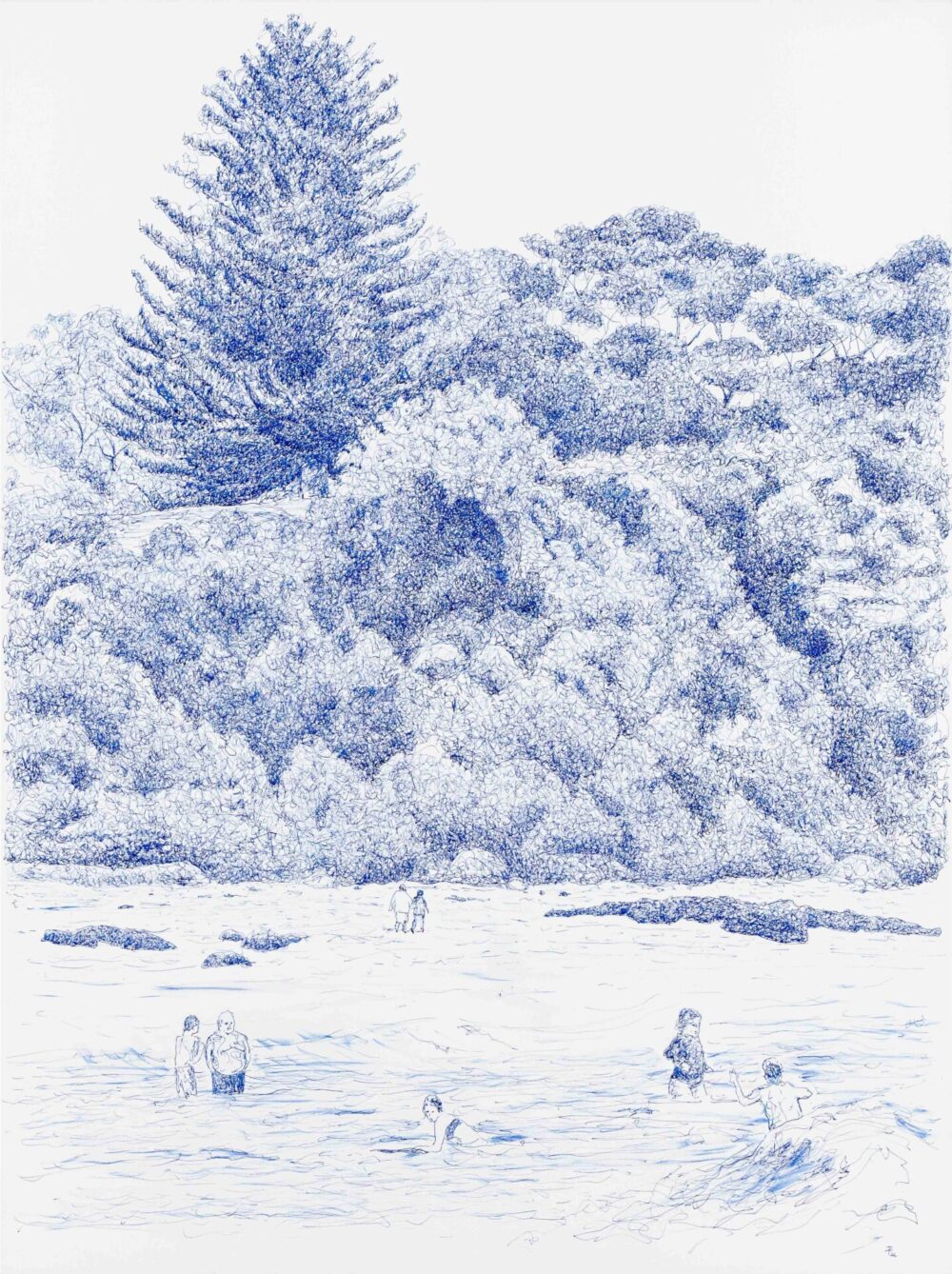
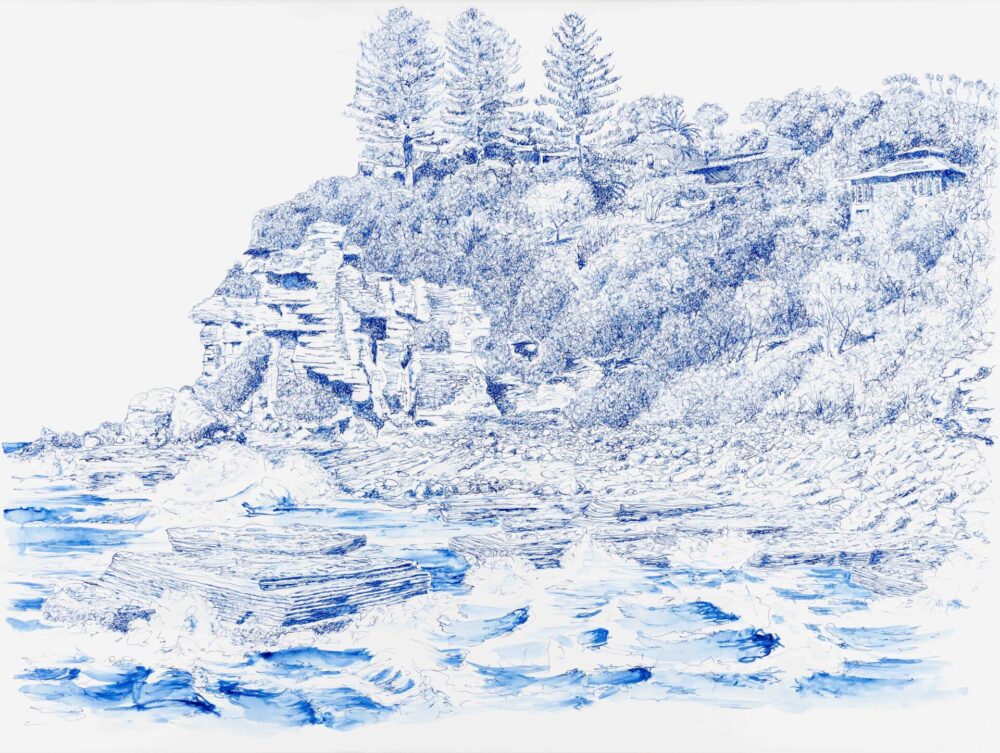
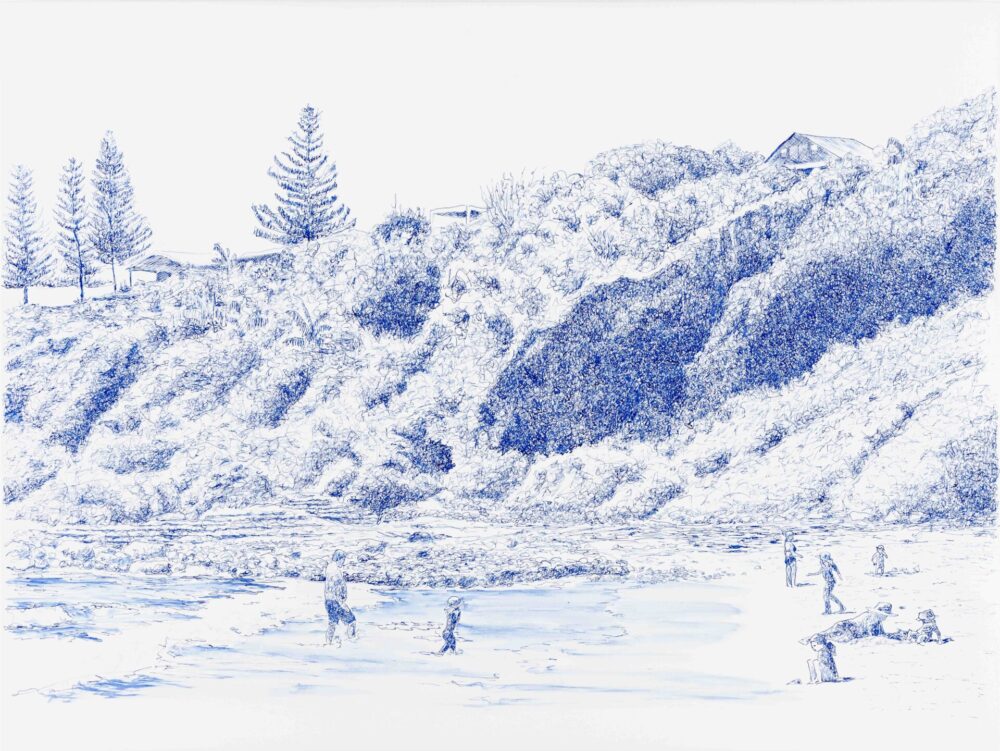
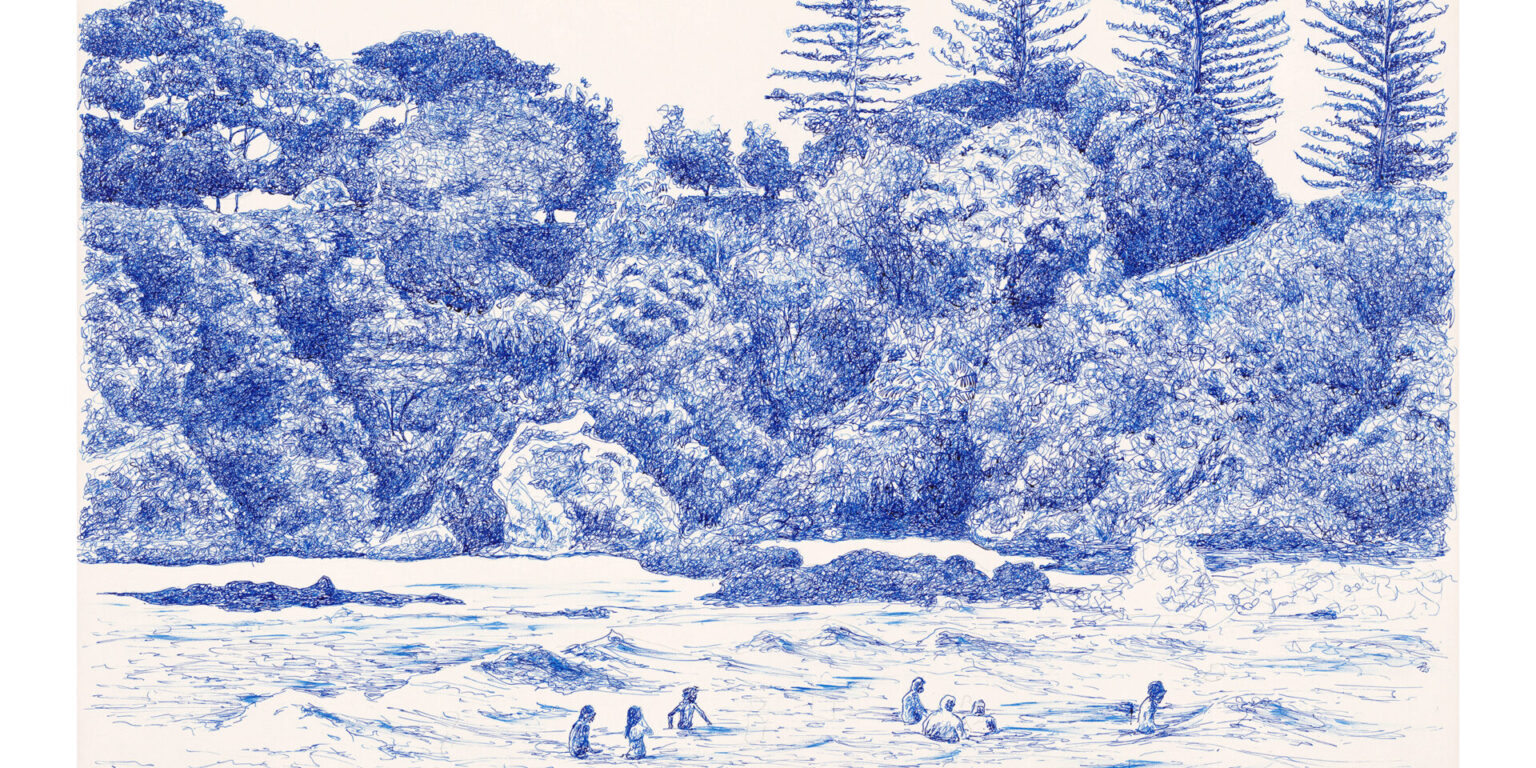
This current series looks at the human experience of beaches, with people playing in the shallows, strolling in the sand and walking towards the beach. However, these are really landscape pictures and the humans are quite secondary. I like portraying people in landscapes in a fairly rudimentary and brief way, having them dwarfed by nature. They’re cameos against the backdrop, which is the main star of the show. I’ve enjoyed looking at different ways of representing the water and at the different kinds of trees that we see on these coastal landscapes.

Is there one work from the new series that feels particularly significant?

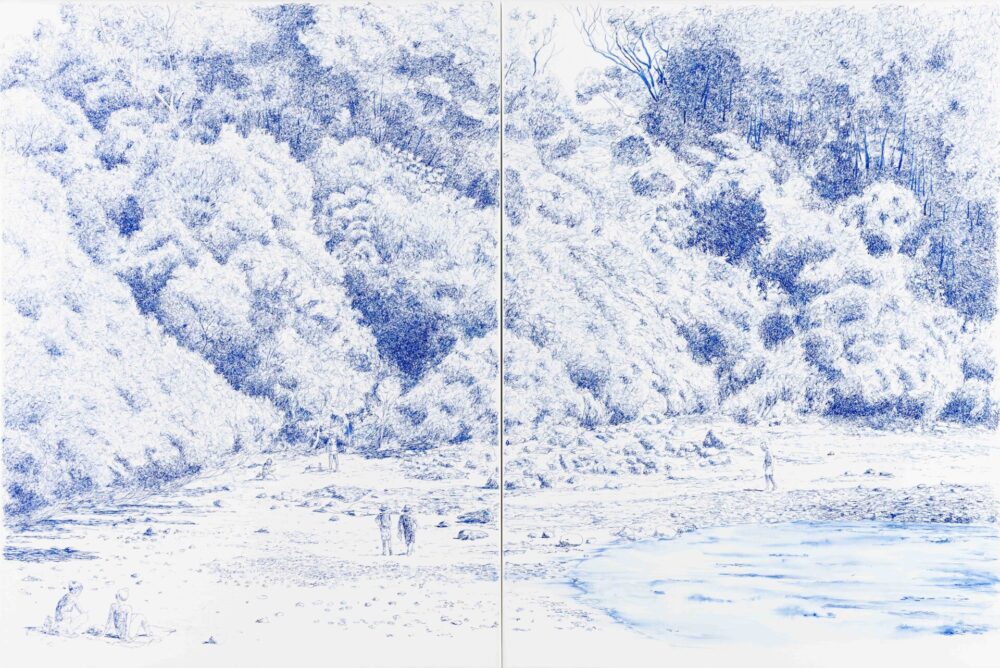
They were all quite fun to paint, although I suppose if forced to pick one I’d go for the diptych. This is a stunning beach that we’ve only recently heard about. We typically go to Gerringong or Gerroa because of the waves, but Boneyards is a beautiful flat beach with stunning blue water. It’s almost a lake and the beauty of the place was quite striking. This little beach is sun-drenched and well protected. People tend to lose themselves in the environment, fossicking among the rocks and the shells.

How do you hope viewers will experience this new body of work?

I hope they find it relatable – often beach scenes can be quite nostalgic and I hope that people see themselves in the waves or on the sand.

What other ideas, places or projects are exciting you?

As usual I have about a million ideas, it’s just a matter of figuring out what’s practical. I do like the concept of images around approaching the water, walking down to the beach – there are a couple of pieces in this series that focus on this – so perhaps that will be a good direction to follow. I’ve also been considering a hiking series, following a track as it winds along. There are a few international locations I’d like to explore as well, to see if this style and format translates to different settings. After that, who knows?

Private Moving Sale

Posted by

Private Moving Sale

  • Artist
    Melanie Waugh, Kathryn Dolby, Jordy Hewitt, Anastasia Naiya Wilson and more
  • Dates
    18—20 Sep 2026

Our last five years in Newport have been a wonderful ride, showcasing an incredible array of stunning artworks from talented artists across the country. As we take the next step in the gallery’s journey, moving to our new, larger gallery space in Brookvale, we wanted to thank you for all your support over the last five years of Michael Reid Northern Beaches.

As a token of our appreciation, it is our pleasure to invite you as one of our qualified customers, to this special one-of-a-kind sale. We look forward to you joining us on the next phase of our adventure.

For all enquiries, please email sophienolan@michaelreid.com.au
 

Small Works Salon

Posted by

Small Works Salon

  • Artist
    Conor Knight, Jo White, Wendy Marinich and more
  • Dates
    10—26 Sep 2026

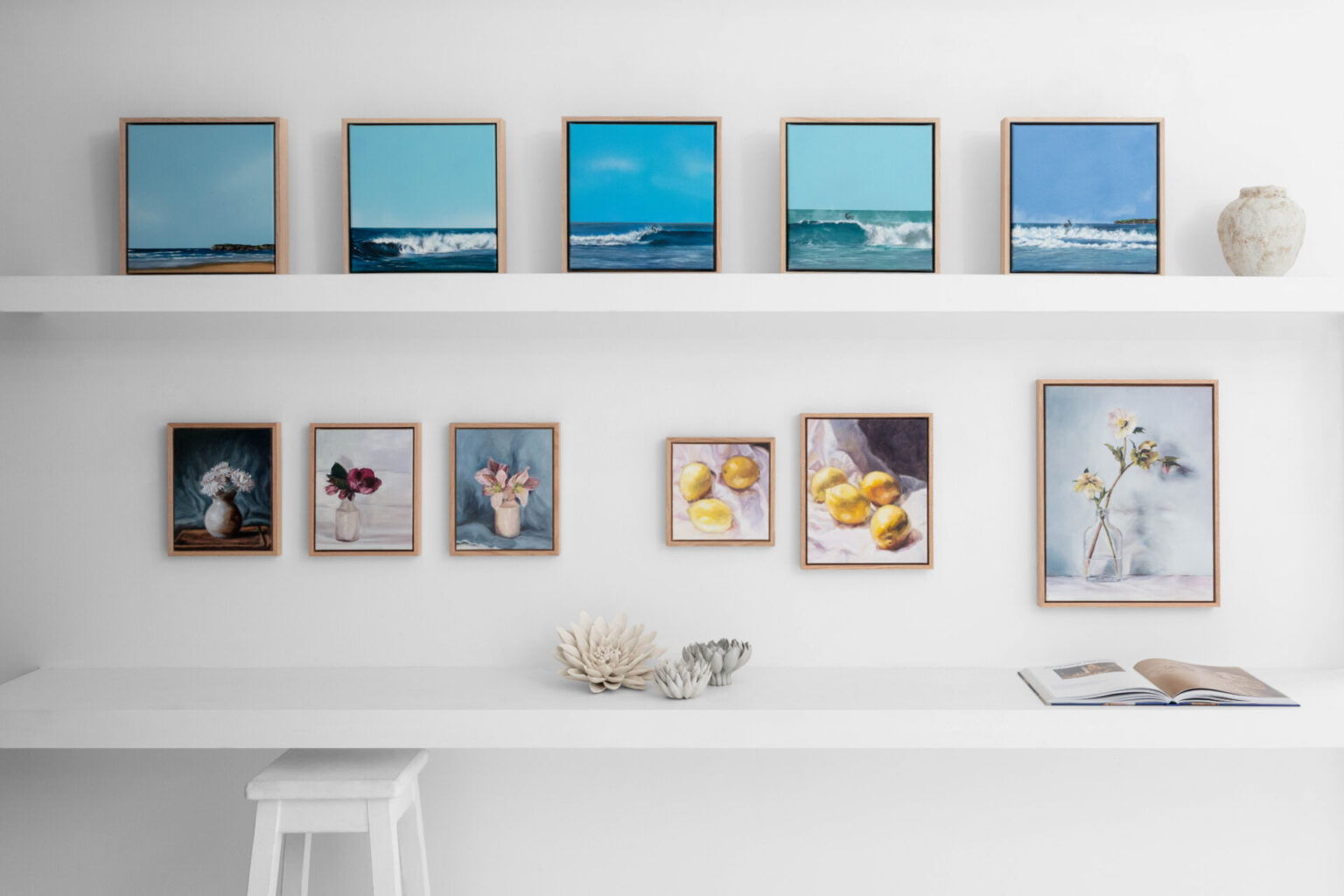
The Michael Reid Northern Beaches team has curated an abuntant selection of perfectly petite paintings to bring intimate yet enriching moments of beauty, grace and interest to our smaller spaces. From elegantly composed still-life vignettes to landscapes distilled in miniature, these bijou canvases possess a poise and impact that belie their scale, offering jewel-like points of focus that draw us into their micro-worlds.

Many of the bright stars of our gallery’s stable and broader exhibitions program are represented in this collection, including Melanie Waugh, Conor Knight, Louise Knowles, Lauren Jones and more. Whether tessellating to form a sprawling salon or hanging solo in the powder room, kitchen nook or on a library shelf, there is a work in this collection to suit every style and space – or make a perfectly proportioned gift.

Explore our Small Works Salon online and in the gallery until 26 September. For enquiries, please email sophienolan@michaelreid.com.au
Still Life | Stockroom Highlight

Posted by

Still Life | Stockroom Highlight

  • Artist
    Angela Chauvin, Sophie Sachs, Leanne Thomas, Kirsten Hocking, Sherry Quiambao
  • Dates
    20 Aug—10 Sep 2026

Waterline

Posted by

Waterline

  • Artist
    Drew Truslove
  • Dates
    8—29 Oct 2026

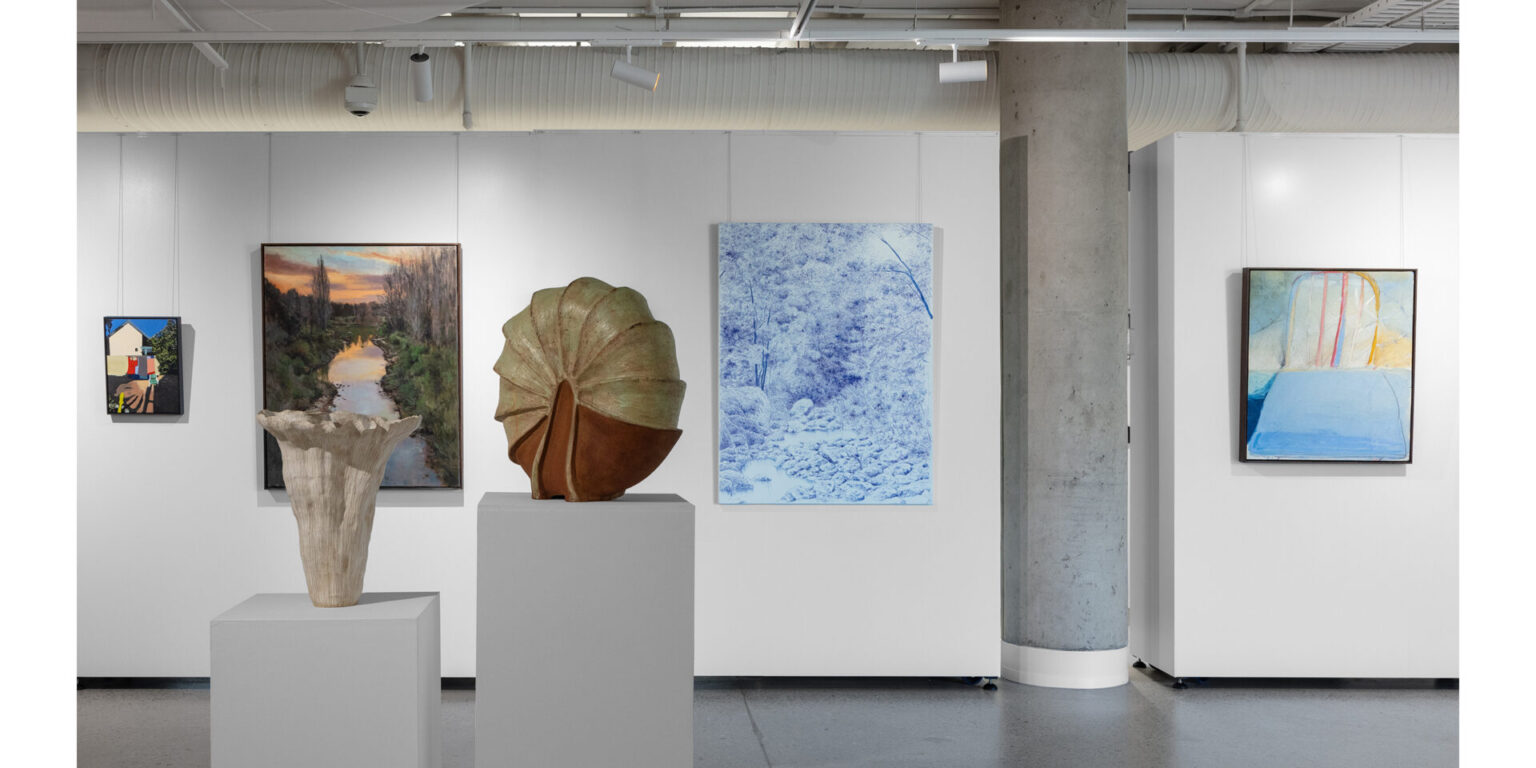
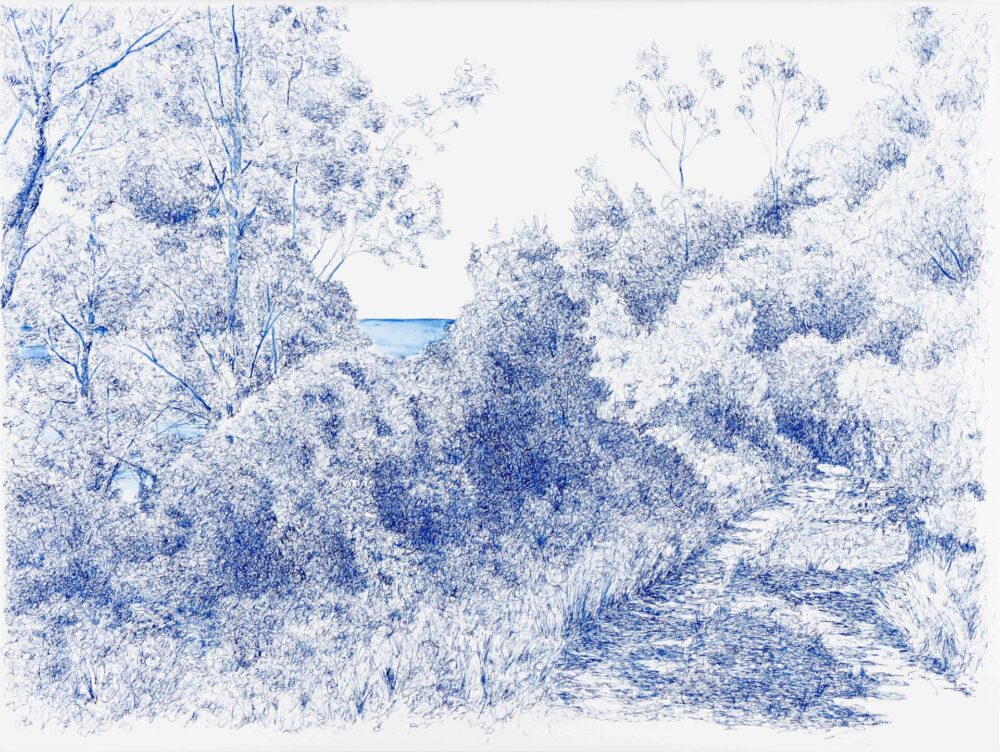
Eora/Sydney-based artist, Drew Truslove turns his attention to the Australian coastline. Working with a single colour—a luminous, mineral blue – Truslove’s landscape are drawn in near-continuous fields of marks, looping, searching and restless. His line doubles back, thickens and disperses, at times so fine it seems to hover just above the canvas, then gathering weight along the spine of a trunk, or in the articulation of roots gripping the bank. Ink proves uniquely suited to this task. It follows the slip of a hand without resistance, registering each pause and surge of confidence. Drew Truslove proposes a different way of seeing landscape. In choosing ink as the final medium, he makes a decisive claim: that a line and a single colour – drawn with clarity, patience, and an acute responsiveness to the world – can hold the vastness, force, and subtlety of a landscape. Named Runner-Up in the 2024 National Emerging Art Prize, and recipient of the Award of Excellence in the Morgans Financial Prize for an Emerging Painter for ‘Flat Rock, River Crossing, 7th Angle’, Truslove is an artist of growing stature. Waterlines is his fourth solo collection with Michael Reid – with his prior three collections selling out in their entirety.

“I am an Australian artist who works predominantly in ink on canvas. This current series leans into the human experience of beaches, with people playing in the shallows and strolling on the sand. We spend a lot of time in the water as a family and I love capturing those shoreline interactions with people fossicking about the shoreline. The humans are quite secondary in this series; I find myself portraying people in landscapes in a fairly rudimentary and brief way, cameos against the backdrop of the star of the show. I’ve enjoyed looking different ways of representing the water and look at the different kinds of trees that we see on these coastal landscapes.”

In Relation

Posted by

In Relation

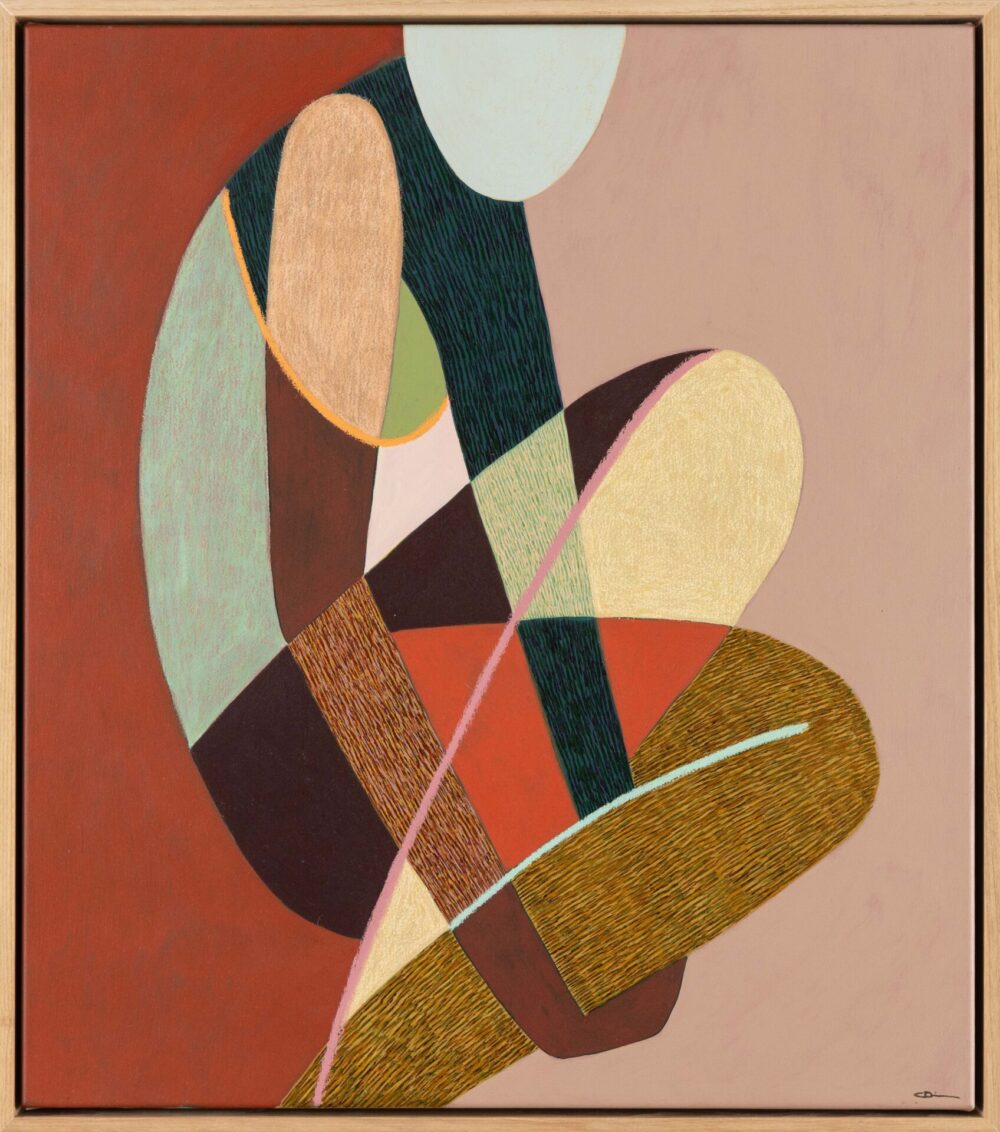
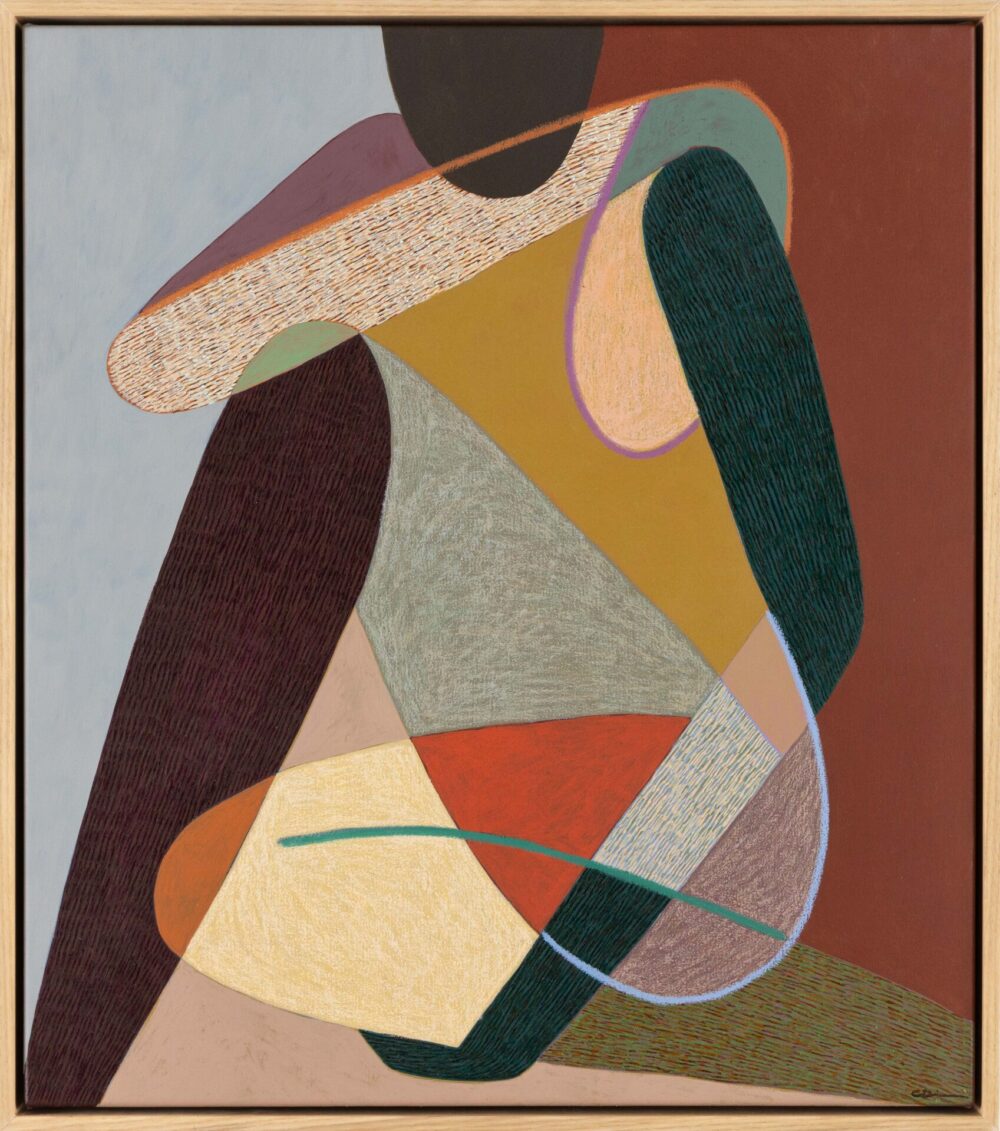
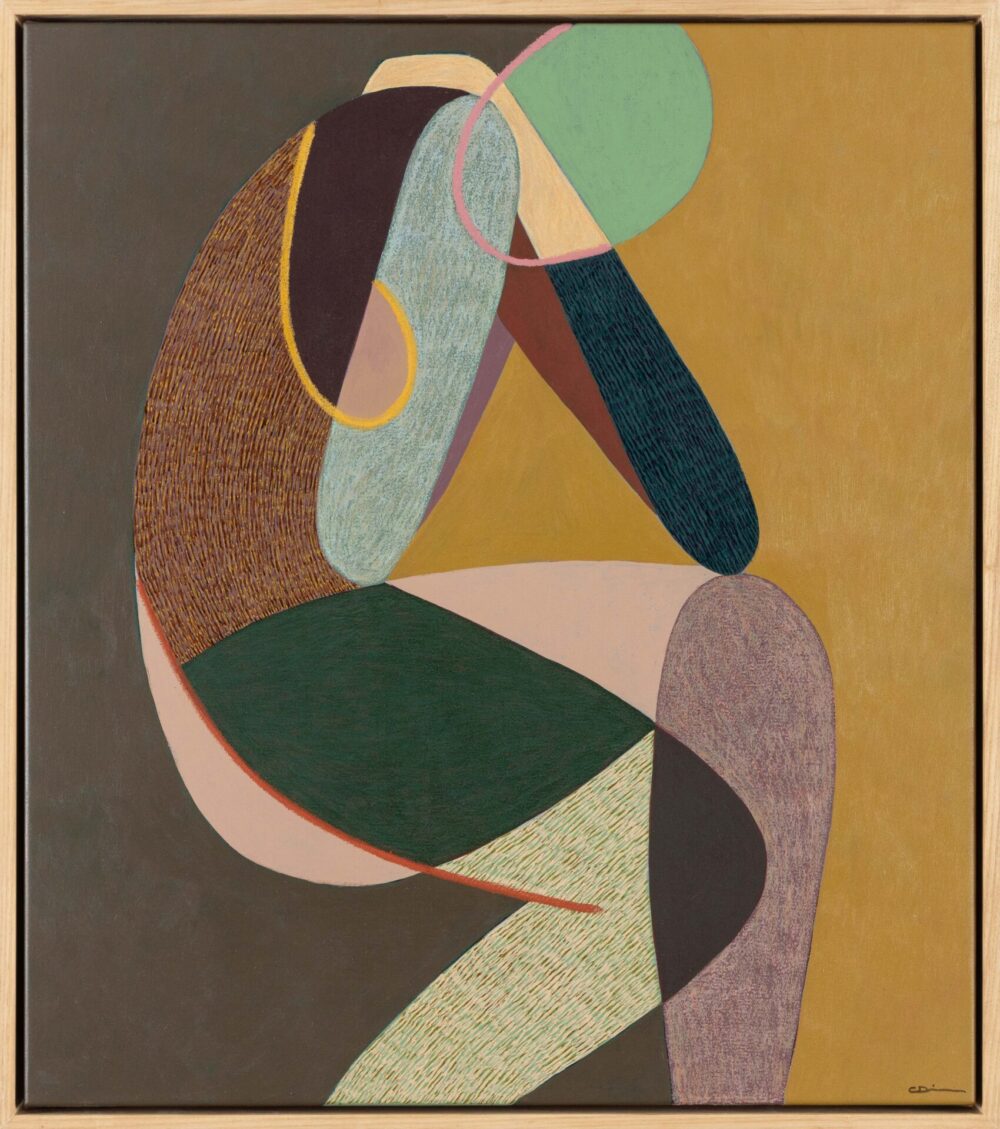
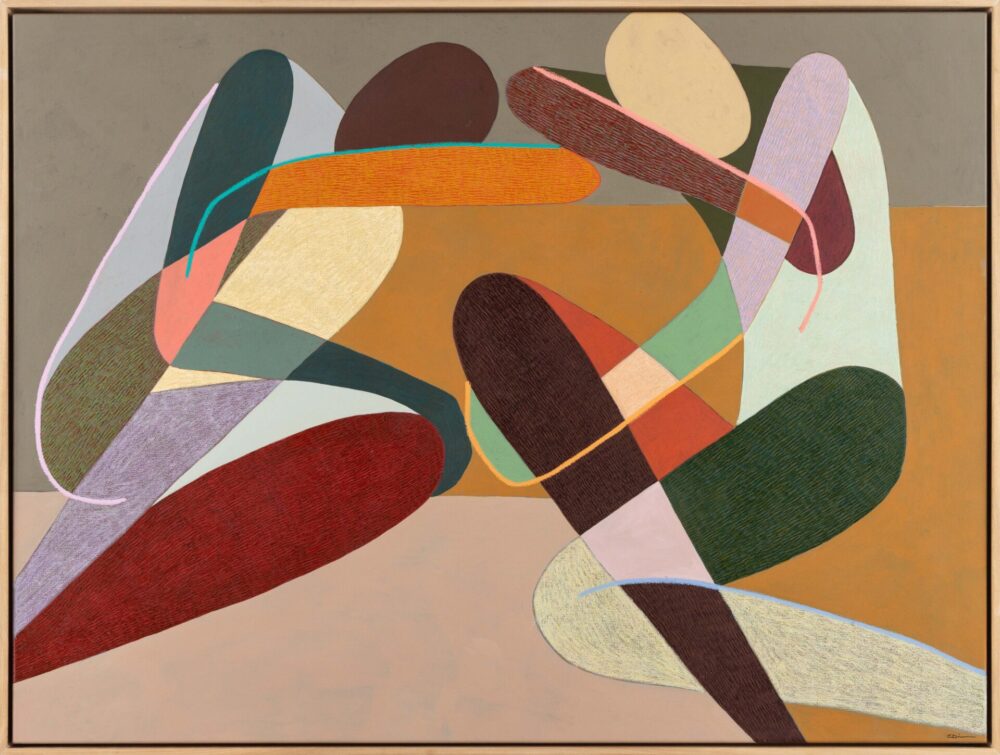
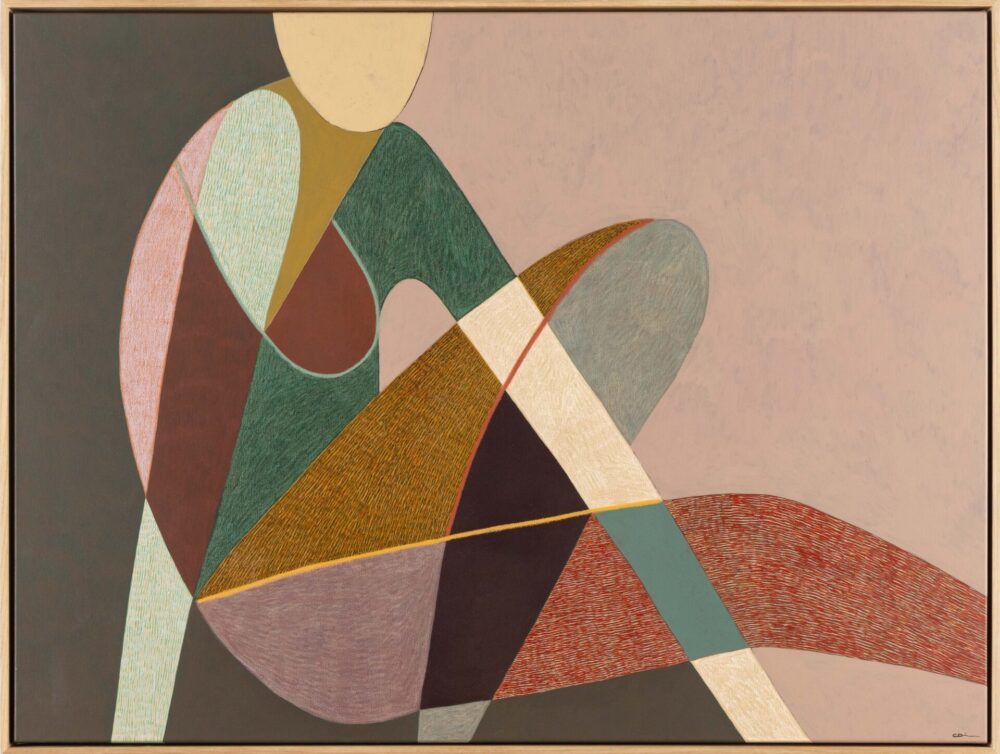
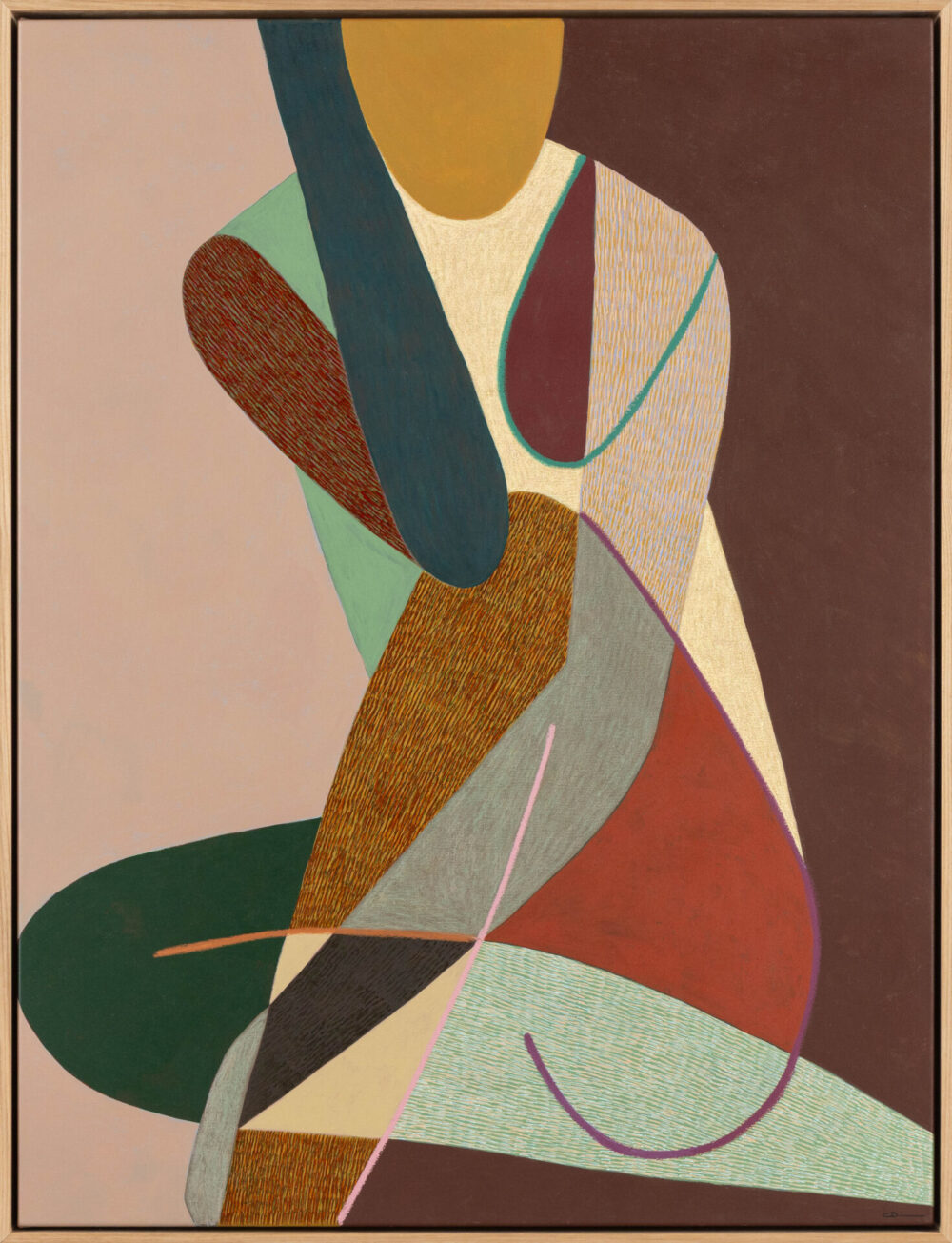
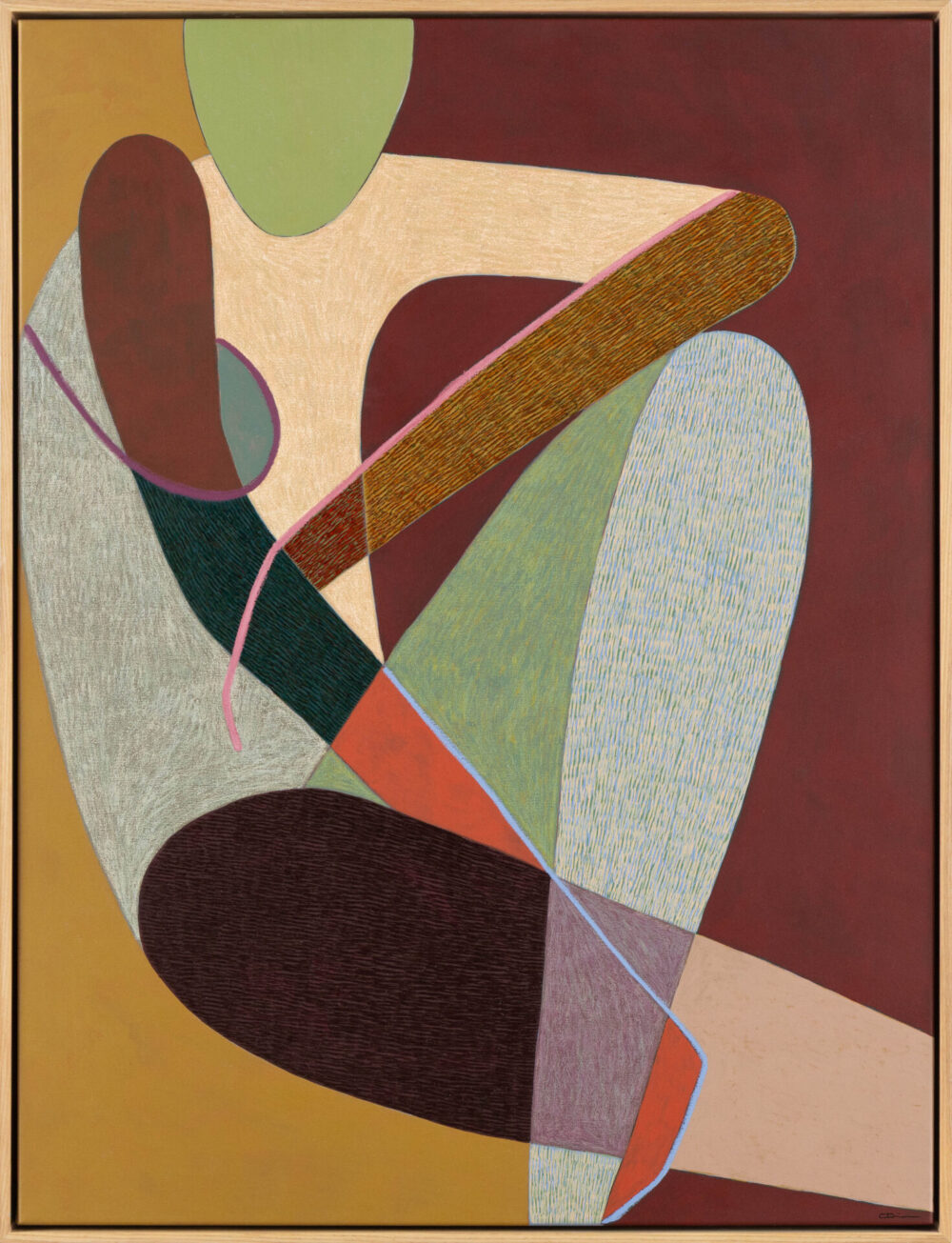
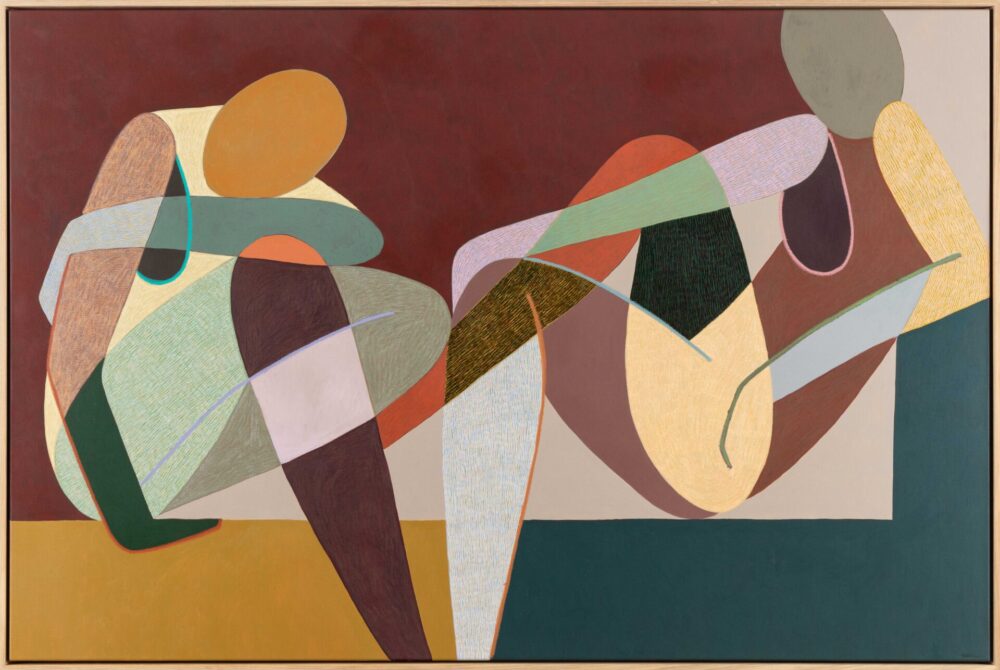
For many years, the human figure has been a constant presence within Clare Dubina‘s practice. She has returned to it again and again, exploring the body not as a portrait of a particular person, but as a way of expressing something less tangible: emotion, identity, vulnerability, connection and the quiet complexity of being human.

The figures within these works exist in moments of occupying space together and alone. They reflect the many ways we move through relationships with one another and with ourselves: seeking connection, finding comfort, creating distance, offering support, or simply existing alongside another.

But In Relation also speaks to Dubina’s own relationship with the figure as an artist. After years of returning to the human form, this body of work represents a culmination of that exploration. It is an opportunity to reflect on what the figure has allowed Dubina to express, discover and understand, while also making space for what comes next.

The figure is familiar, yet endlessly open to interpretation. A body can hold emotion without speaking. A gesture can suggest an entire inner world. And two bodies sharing space can say something about connection that words cannot.

In Relation is ultimately a reflection on connection between bodies, between people, between the inner and outer self, and between an artist and the subject that has accompanied Dubina for so long, and a quiet acknowledgement of where her work is beginning to lead me next.

A Window To Swim Through

Posted by

A Window To Swim Through

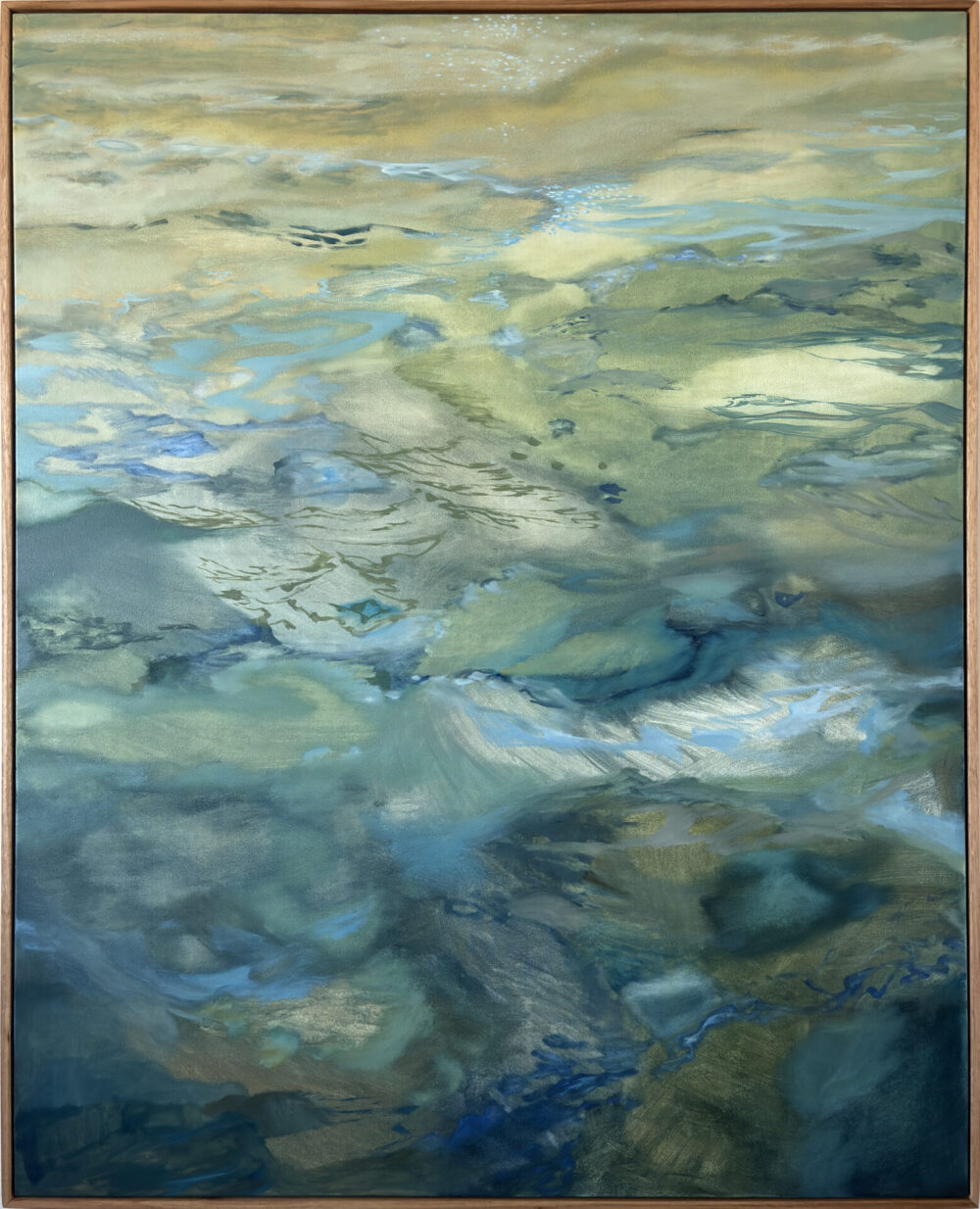
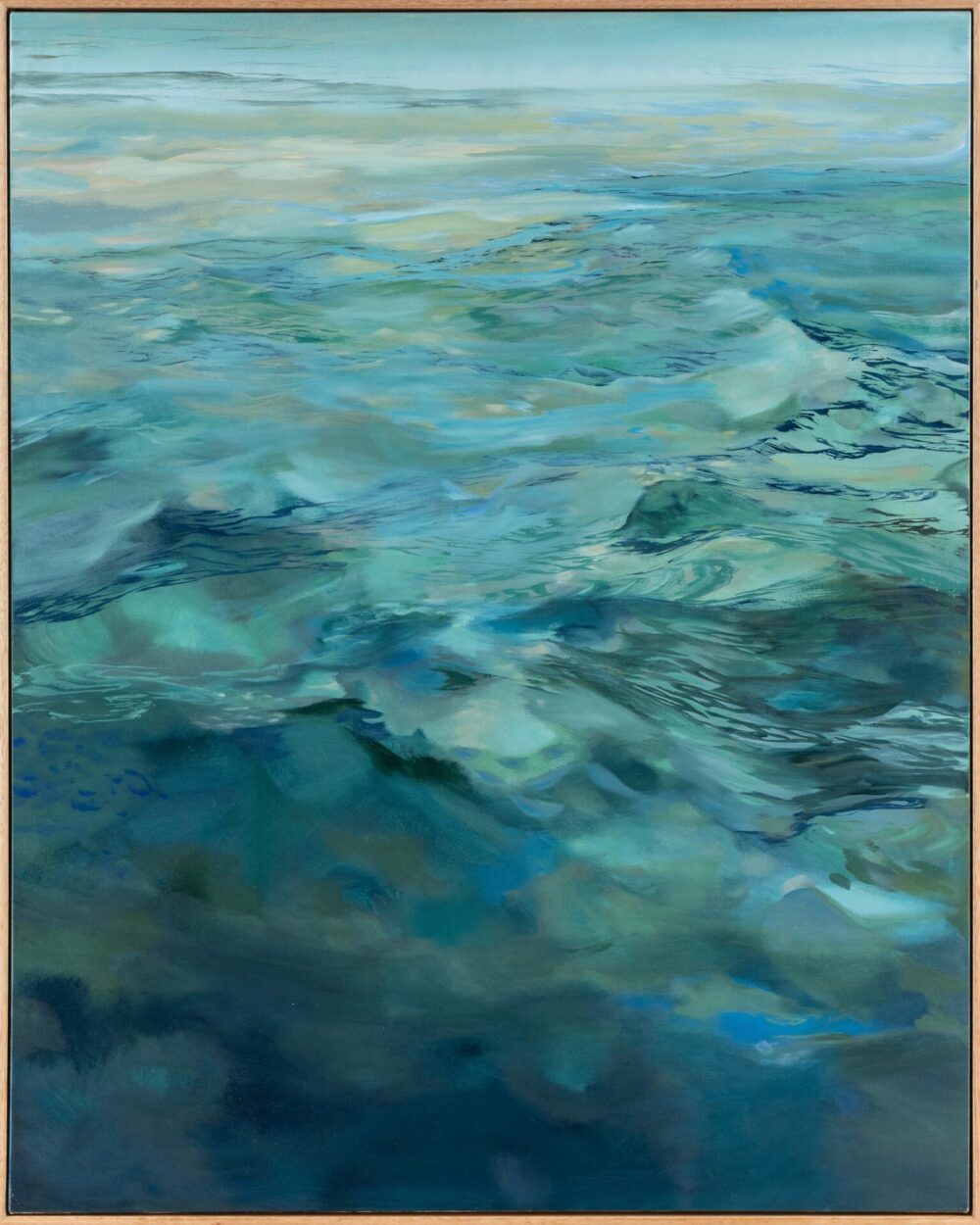
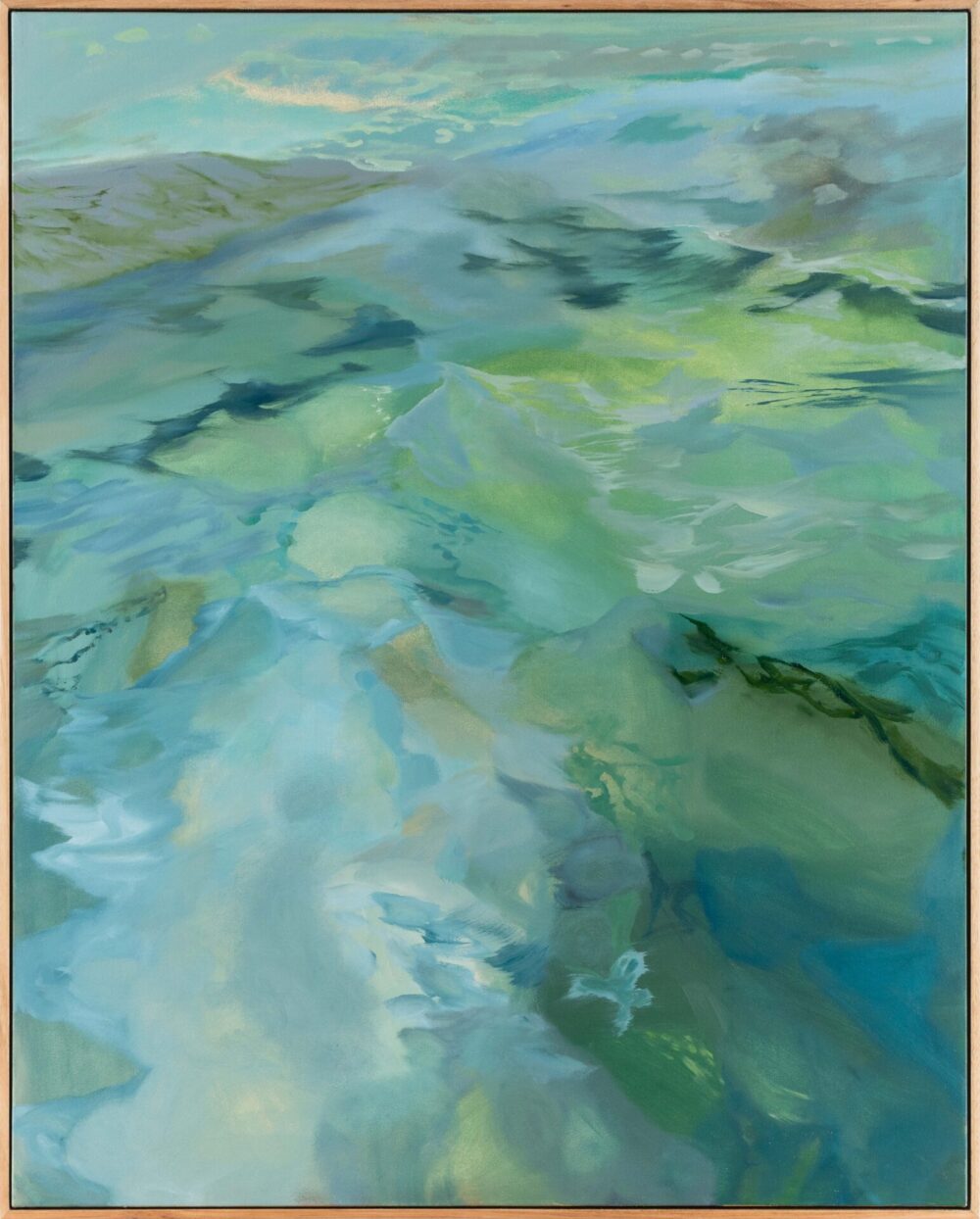
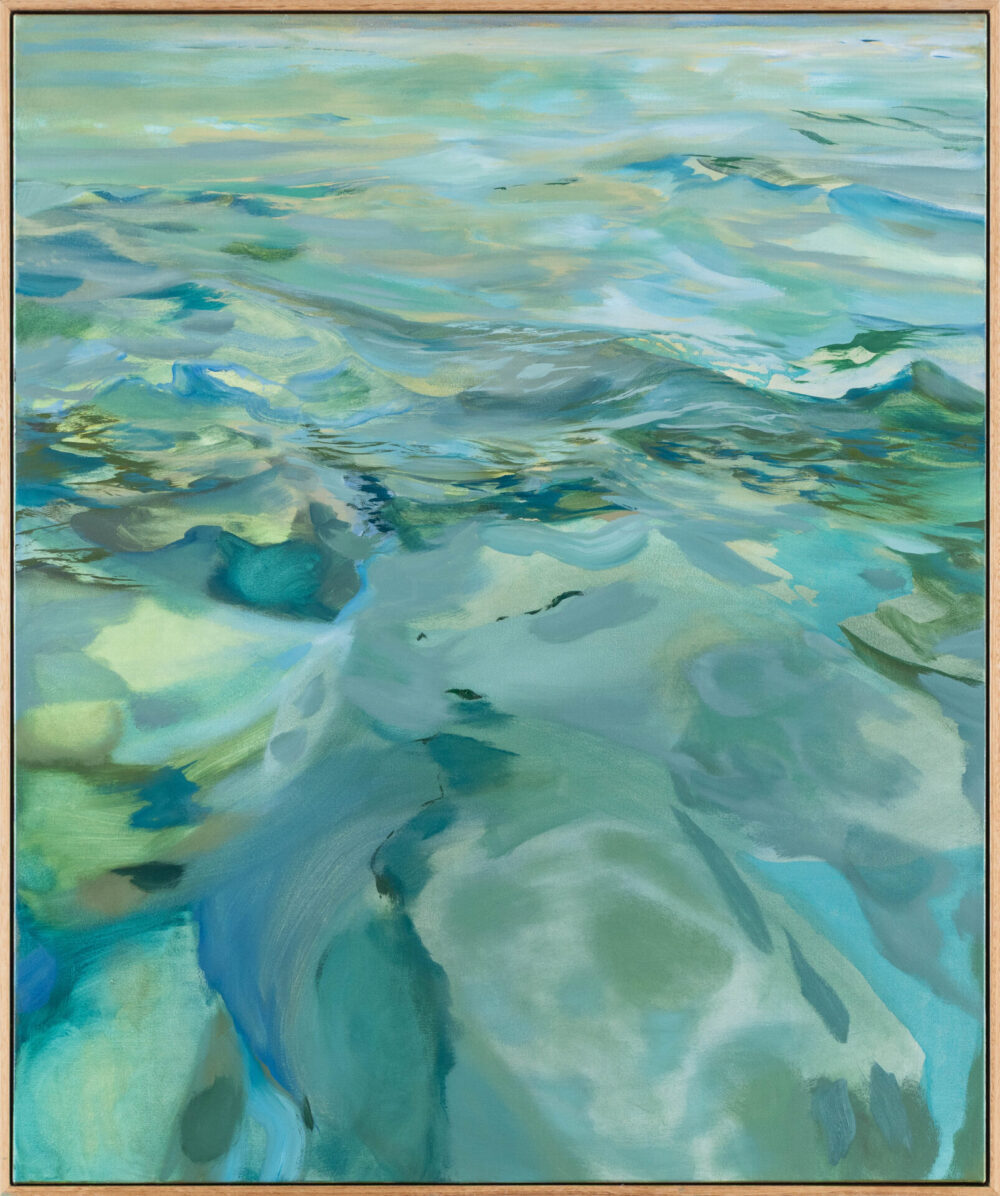
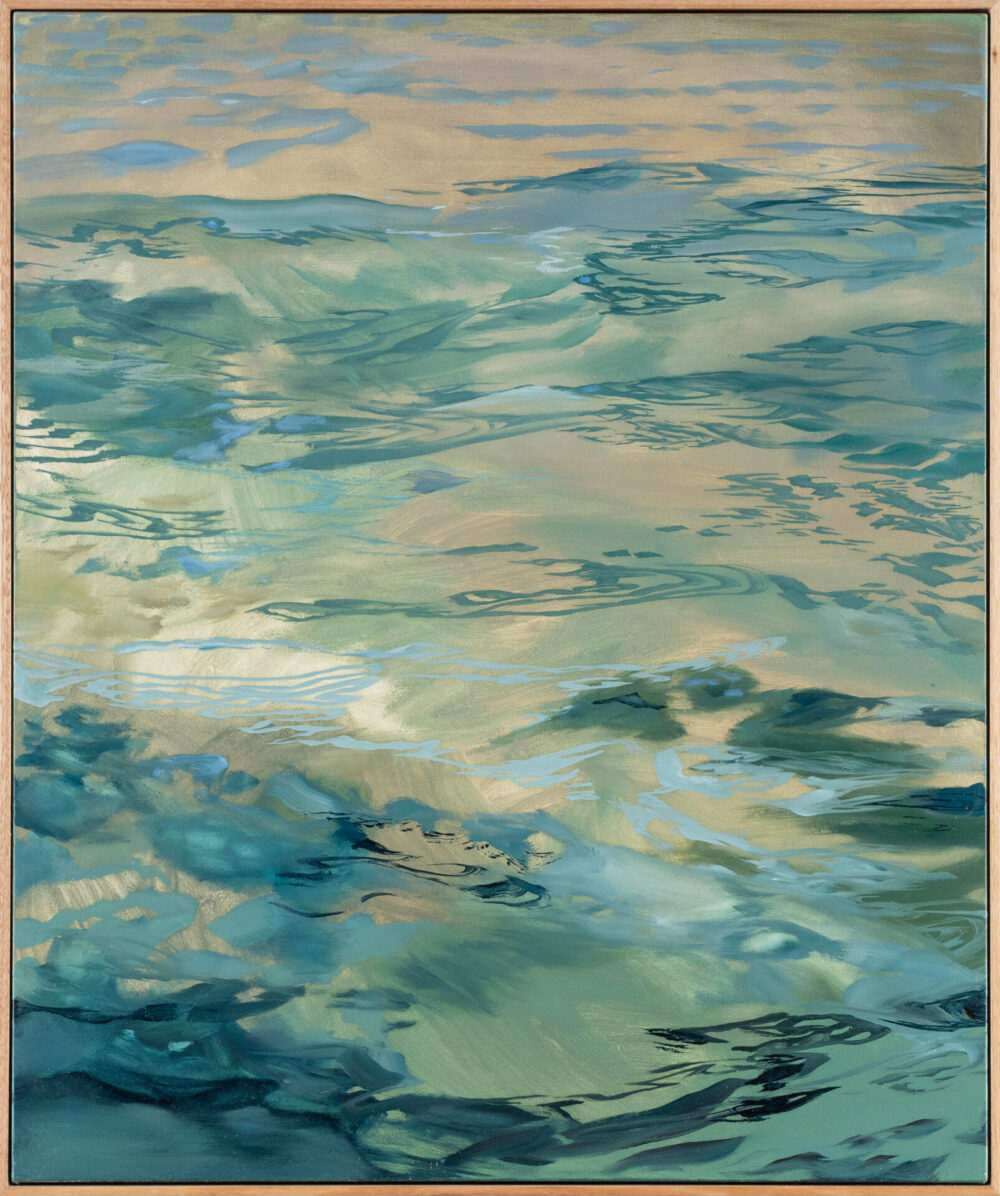
Nicole Steenhof (b. 1990) is a visual artist currently working with oil painting and post consumer sculpture based in Shoalwater, WA. Completing post-graduate studies with distinction in Fine Arts at Curtin University in 2024, Steenhof has since had multiple works acquired by public collections including John Curtin Gallery and the City of Melville. She has been a finalist in many art awards throughout WA, including Mandorla Art Award and Castaways Sculpture Awards, and won Emerging Artist at Royal Prize for Landscape award in 2024.

Swimming in the ocean through the seasons has given me an appreciation for all of the different qualities each day brings – the same ocean is new every time. It has helped me find an embodied way of painting the ocean. The paintings have ribbons not only of dark and light, but of shape formed by colour. Oil paint is applied and removed, allowing the underpainting to gleam through, much like the water is understood by its opaque reflection of the sky and also its transparent substance. The paintings mimic the way the ocean shifts, disappears, reappears.

Through swimming, you experience a sense of one’s own wateriness and a fading of boundaries between the depth beneath, the reflection of the sky, and between bodies of water (yourself and the sea). The title of the collection is based on a resolution to a dream that my daughter had, where the ocean filled our home and yet it didn’t matter to my daughter who said she found ‘a window to swim through’. It’s my hope that these paintings function in a similar way, that the paintings of the ocean become a window to swim through, a portal of freedom.

Diary of an Artist

Posted by

Diary of an Artist

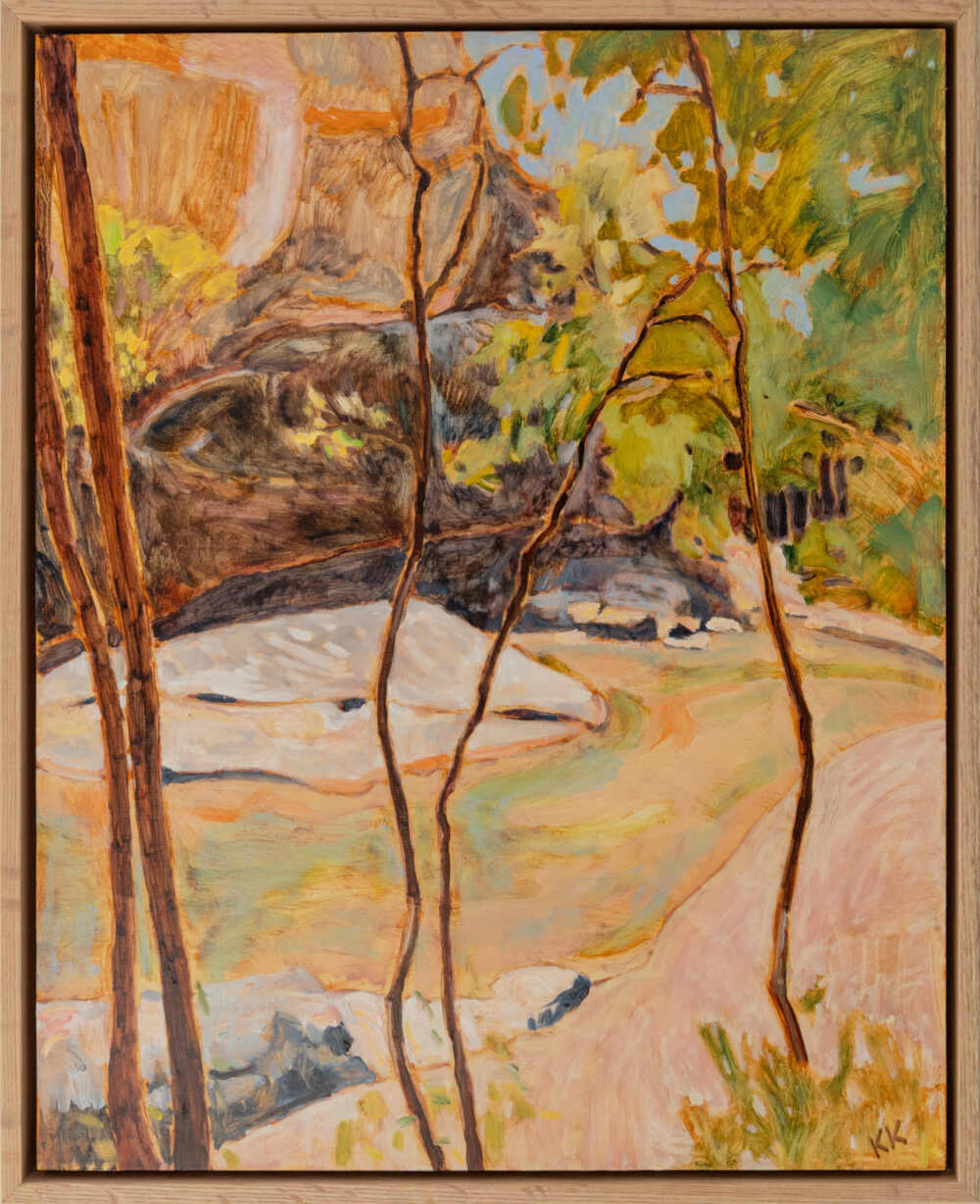
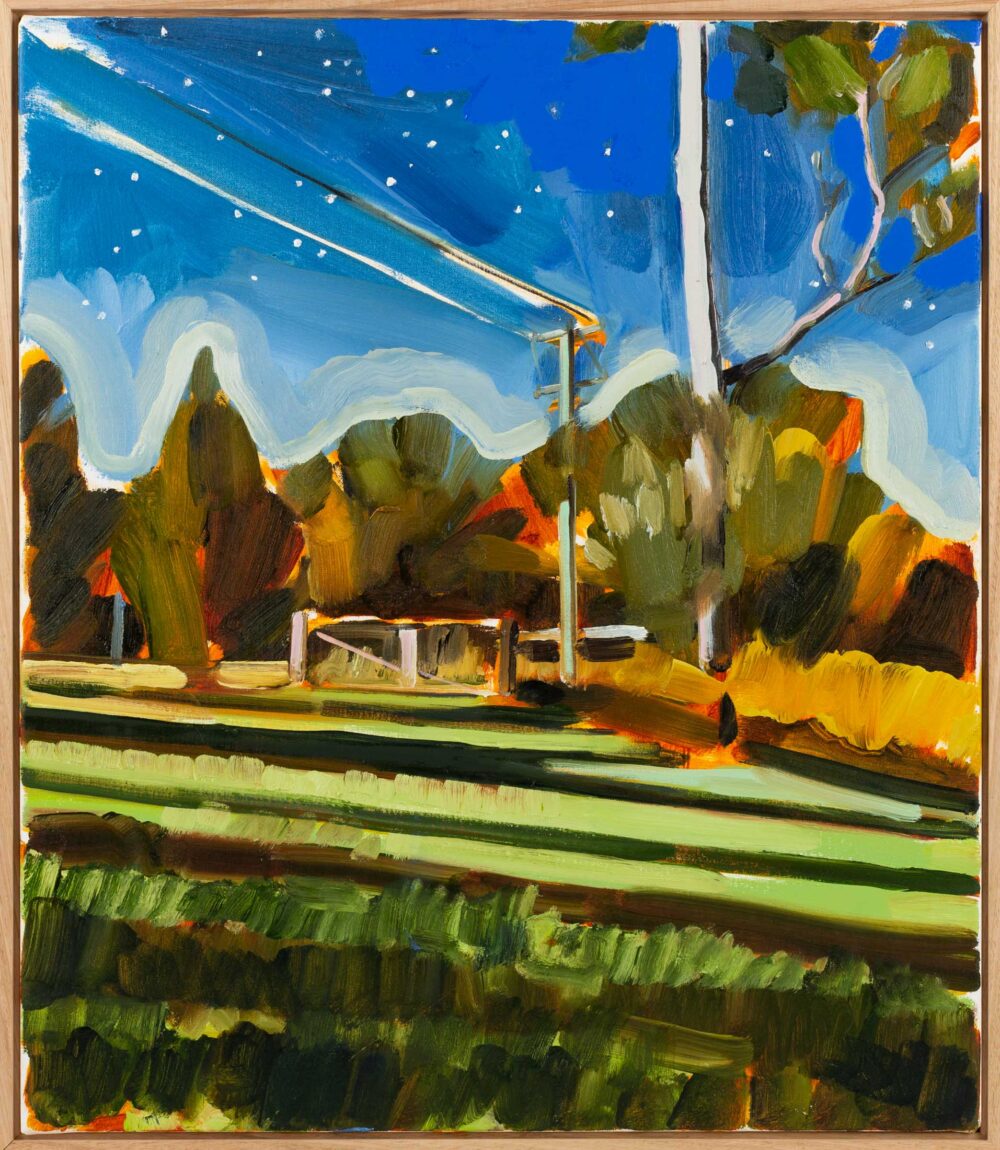
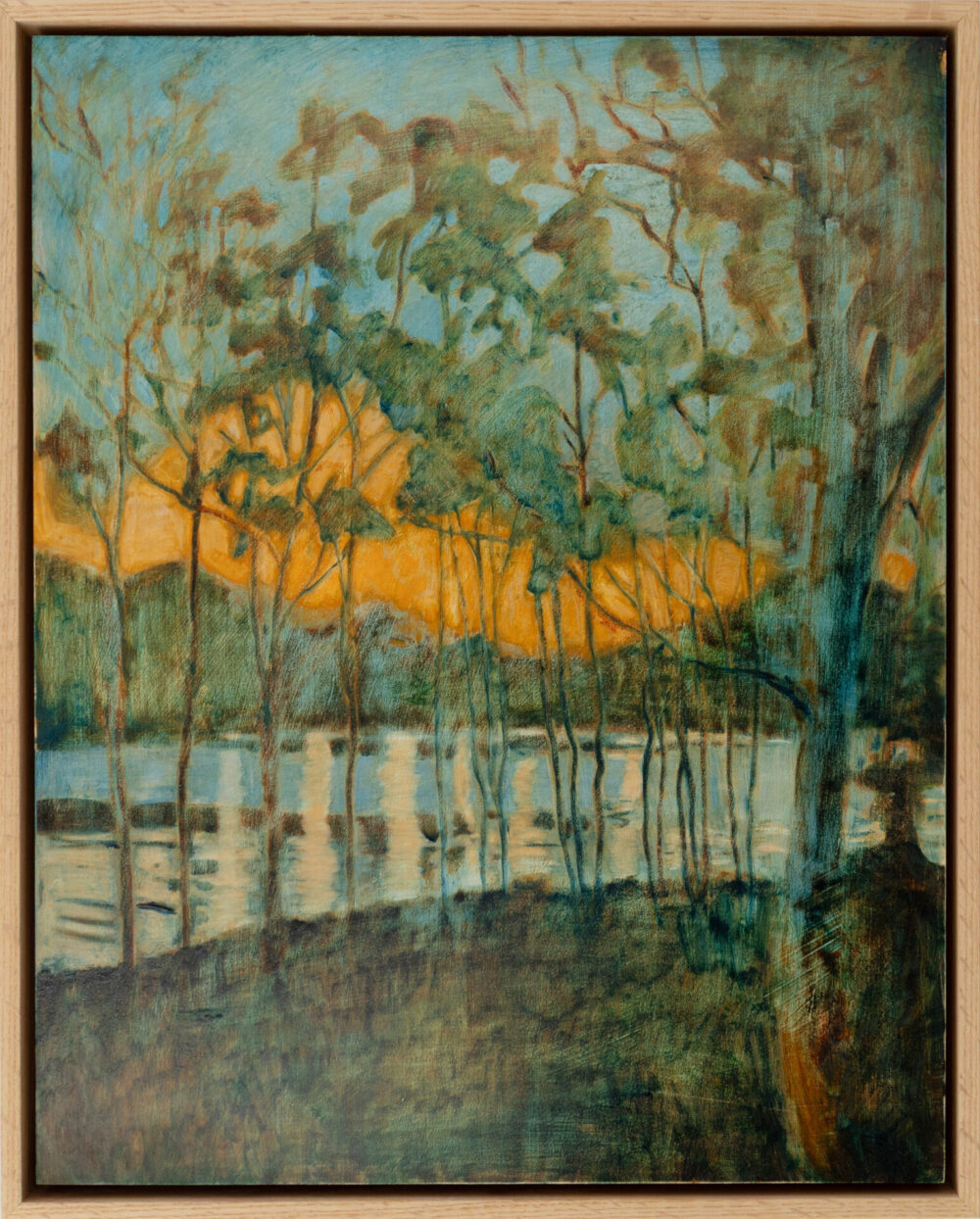
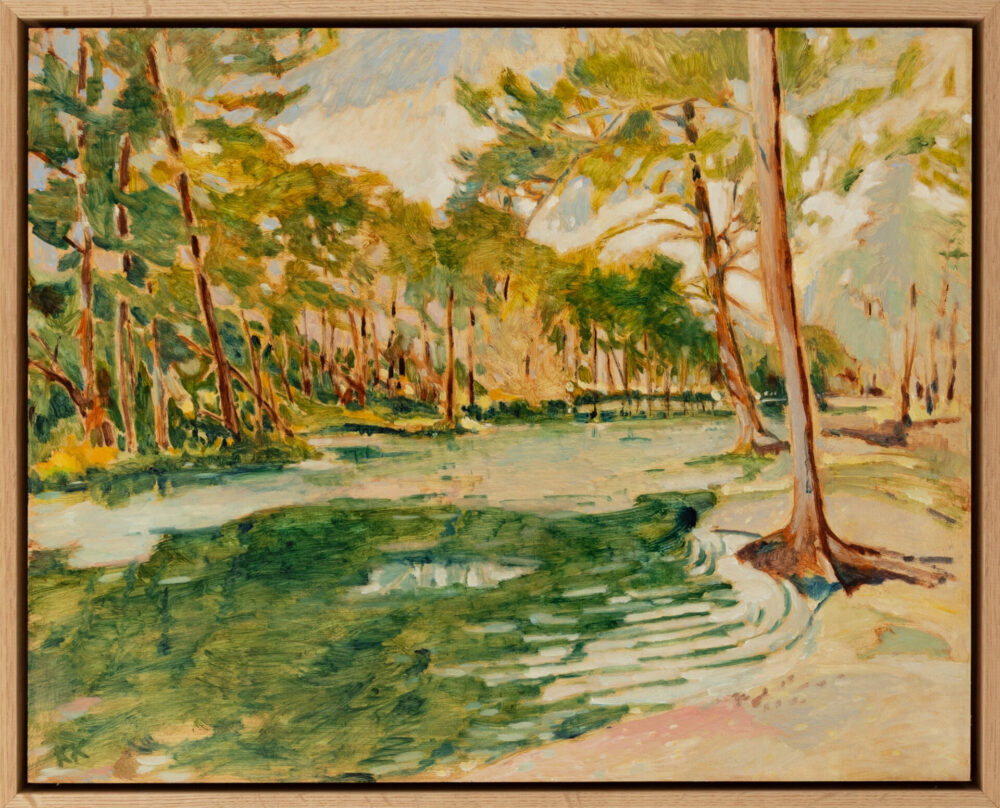
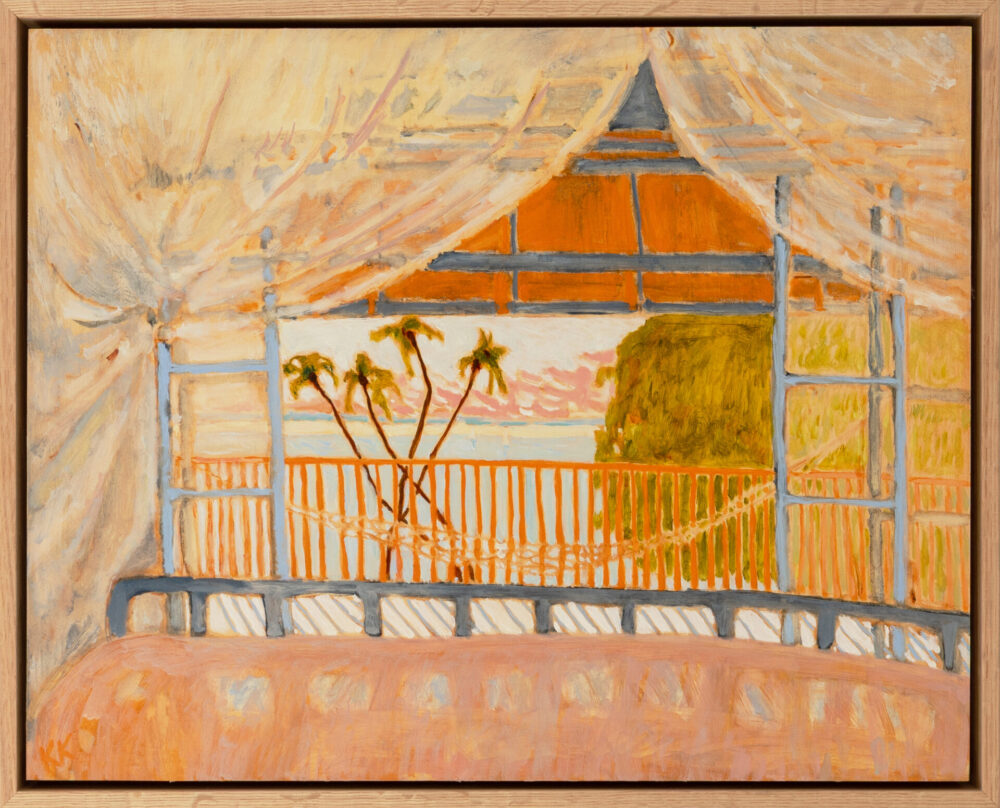
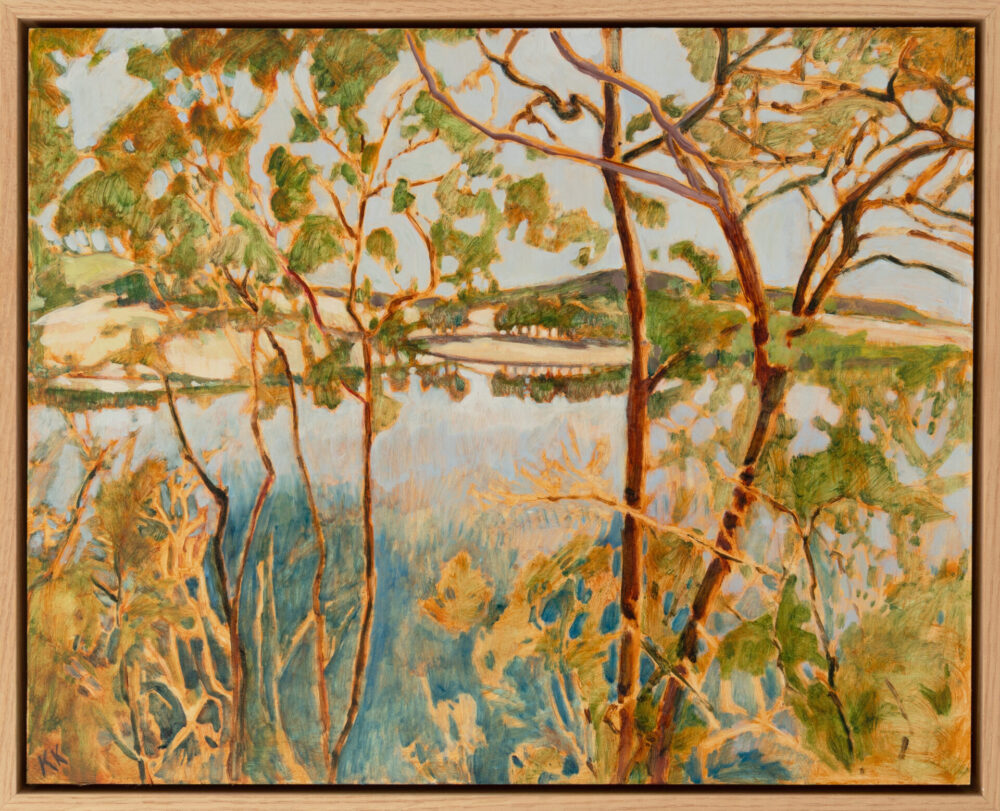
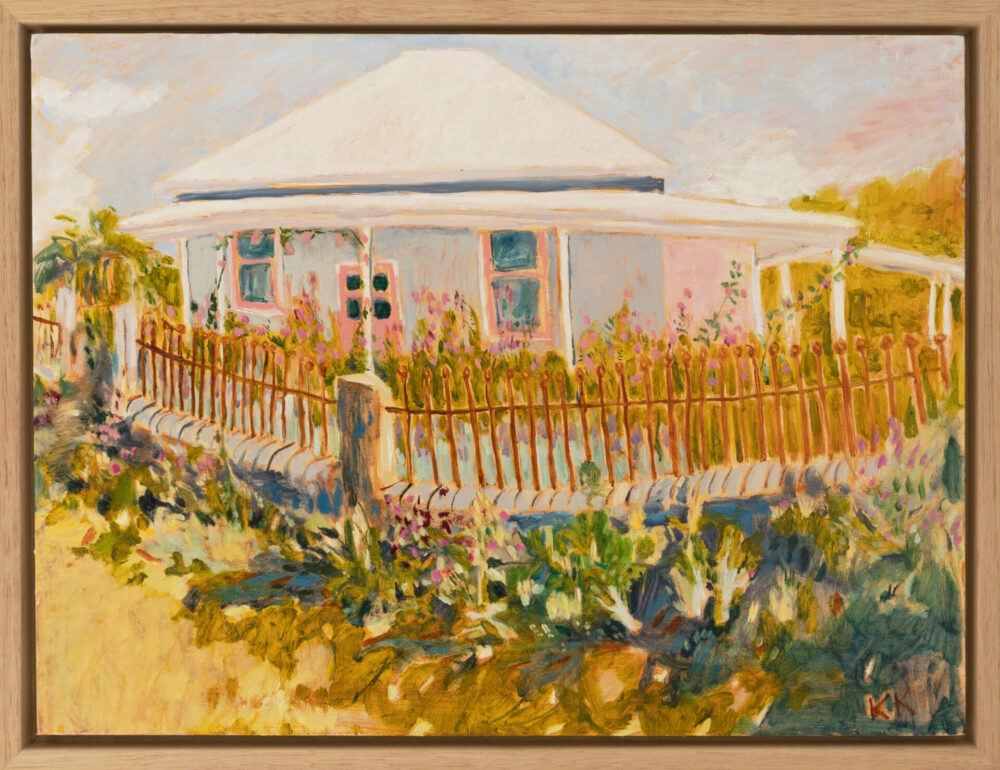
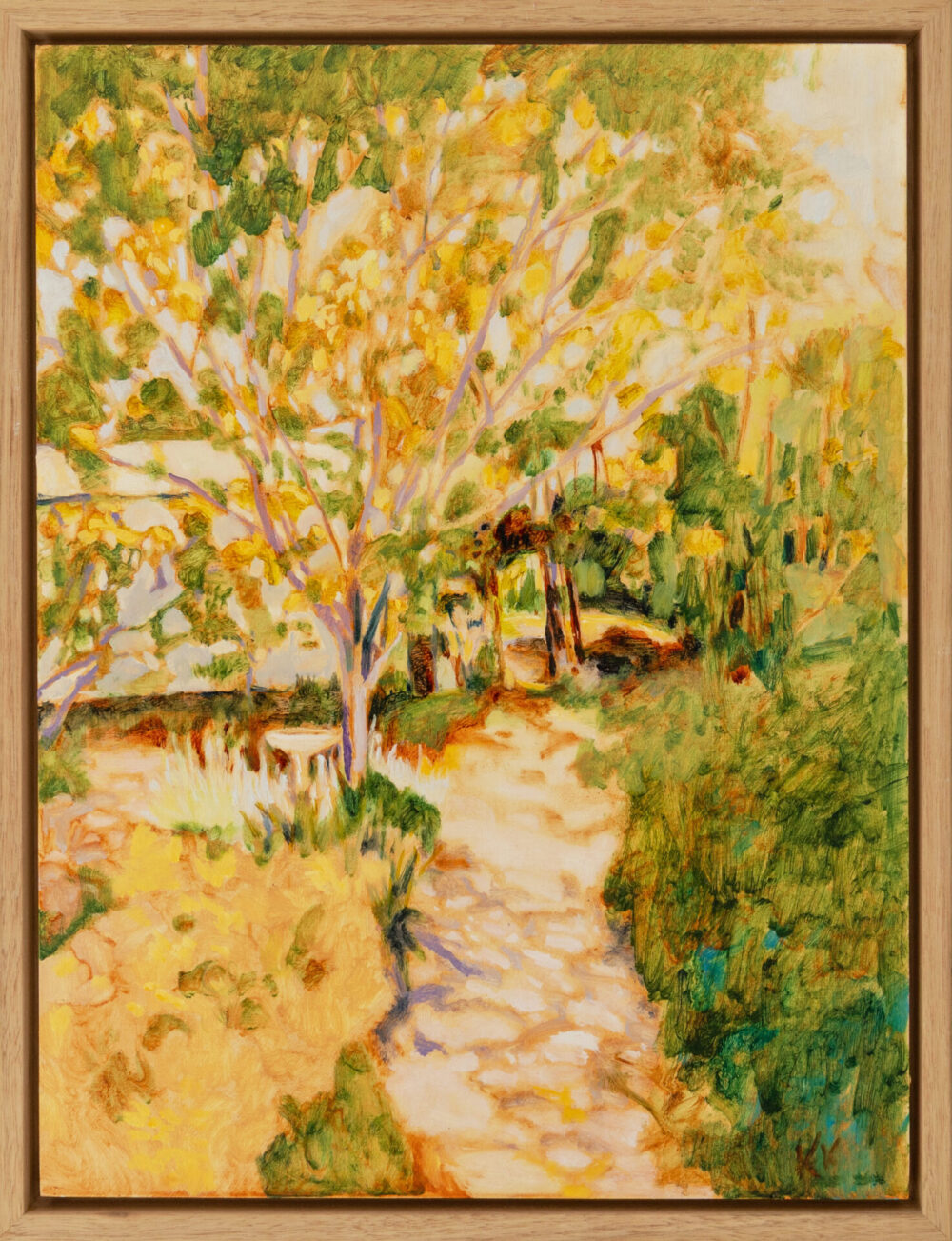
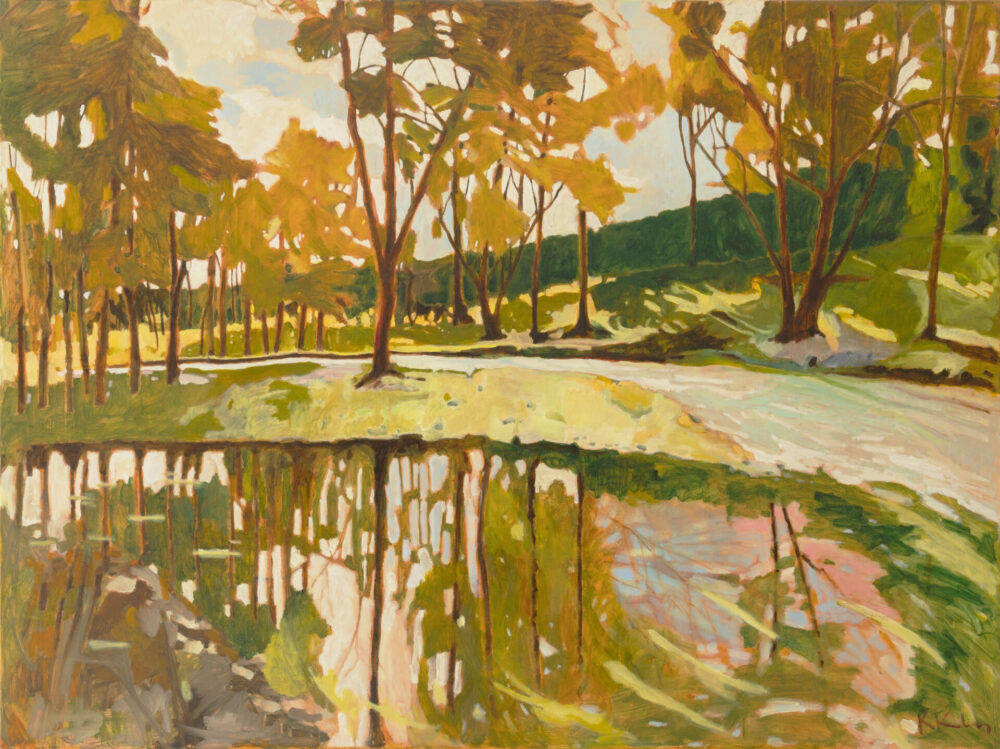
In Diary of an Artist Kerri Kerley’s paintings offer a visual diary of daily life. They represent moments, and memory over time, exploring a world the artist finds fascinating and bewildering.

Water is a recurring theme in this latest exhibition. A place of mystery and magic, with kaleidoscope of colours and reflections of trees and sky. Describing her connection to the water in Diary of an Artist, Kerri explains “I am fortunately spoilt for choice with so many beautiful rivers and creeks where we live, they are a reminder of my childhood and take me back to when I would spend hours searching for tadpoles, watching and waiting for them to turn into frogs and watching dragonfly skipping across the water.

For Kerri, a painting is more successful when there is an established relationship or connection with the subject. “There is an unexplained exchange of energy that somehow translates onto the canvas, enabling me to think in colour, form, composition and light, coming together to communicate the feeling of being immersed in the landscape.”

For all enquiries, please email sophienolan@michaelreid.com.au
Sophie Sachs – Small Release

Posted by

Sophie Sachs – Small Release

  • Artist
    Sophie Sachs
  • Dates
    9 Jul—9 Aug 2026

After completing her Masters of Architecture at the University of Queensland Sophie worked as a lead designer with Urban Art Projects in public art for 5 years. Sophie now works as a full- time artist in her home studio in Brisbane. Winner of NEAP painting prize 2022. Winner of Saint Cloche wall works award, Little Things Art Prize, 2021.

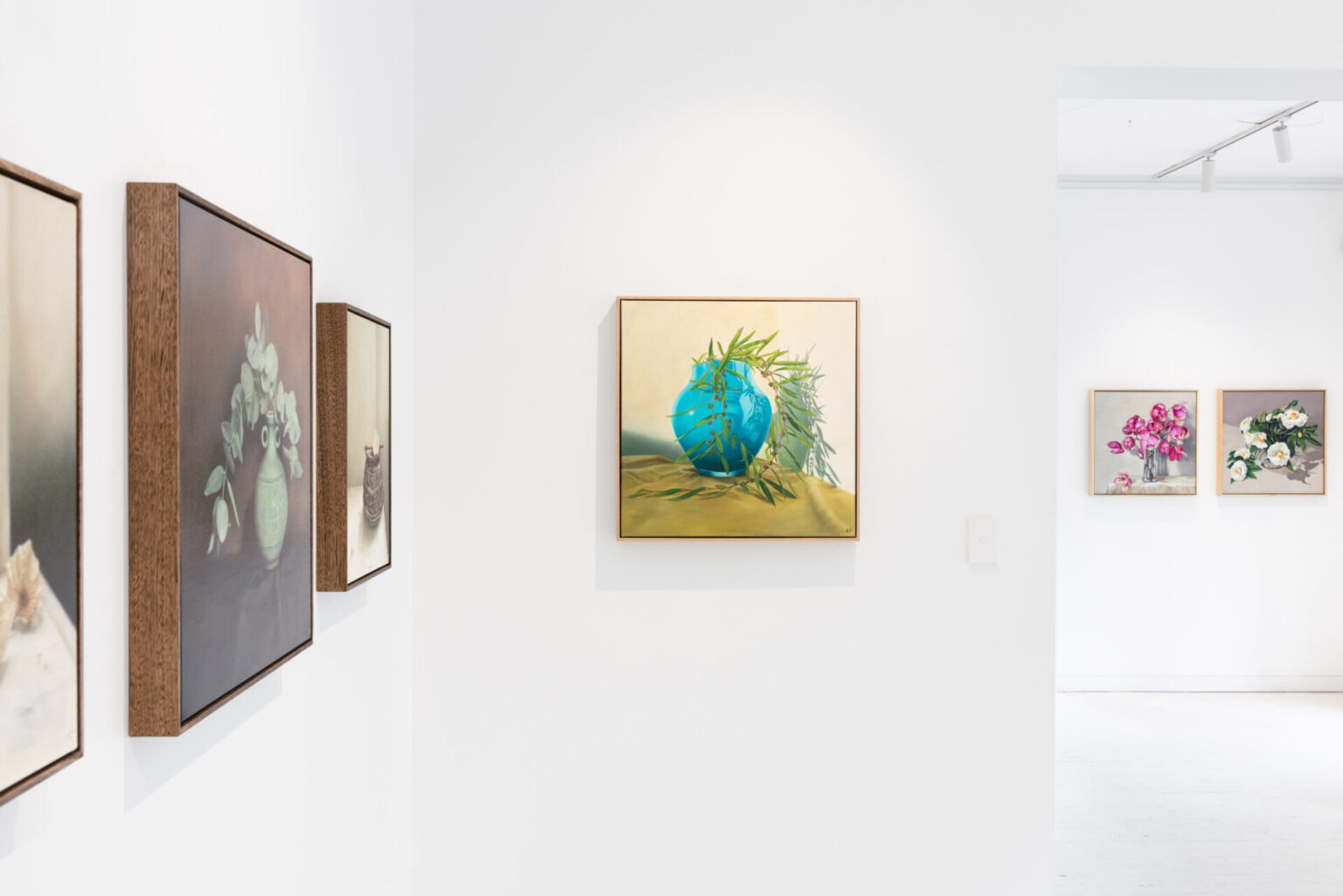
At the heart of Sachs’s practice is a fascination with light’s ephemerality, expressed through meticulous arrangements of commonplace objects that bask in direct sunlight. Shadows play an equally vital role in her compositions, weaving an interplay of form and void that pays homage to the still-life tradition while reinterpreting it, capturing the optical effects of light in its most curious arrangements.

“My paintings do not seek to be extremely realistic. I selectively highlight details that inspire and interest me while allowing other elements to become more stylised and retain a painterly quality,” says Sachs. Her work operates in a two-fold approach: an immediate impression of luminous light and colour, followed by a more intimate exploration of detail.

Artist Profile – Nicola Woodcock

Posted by

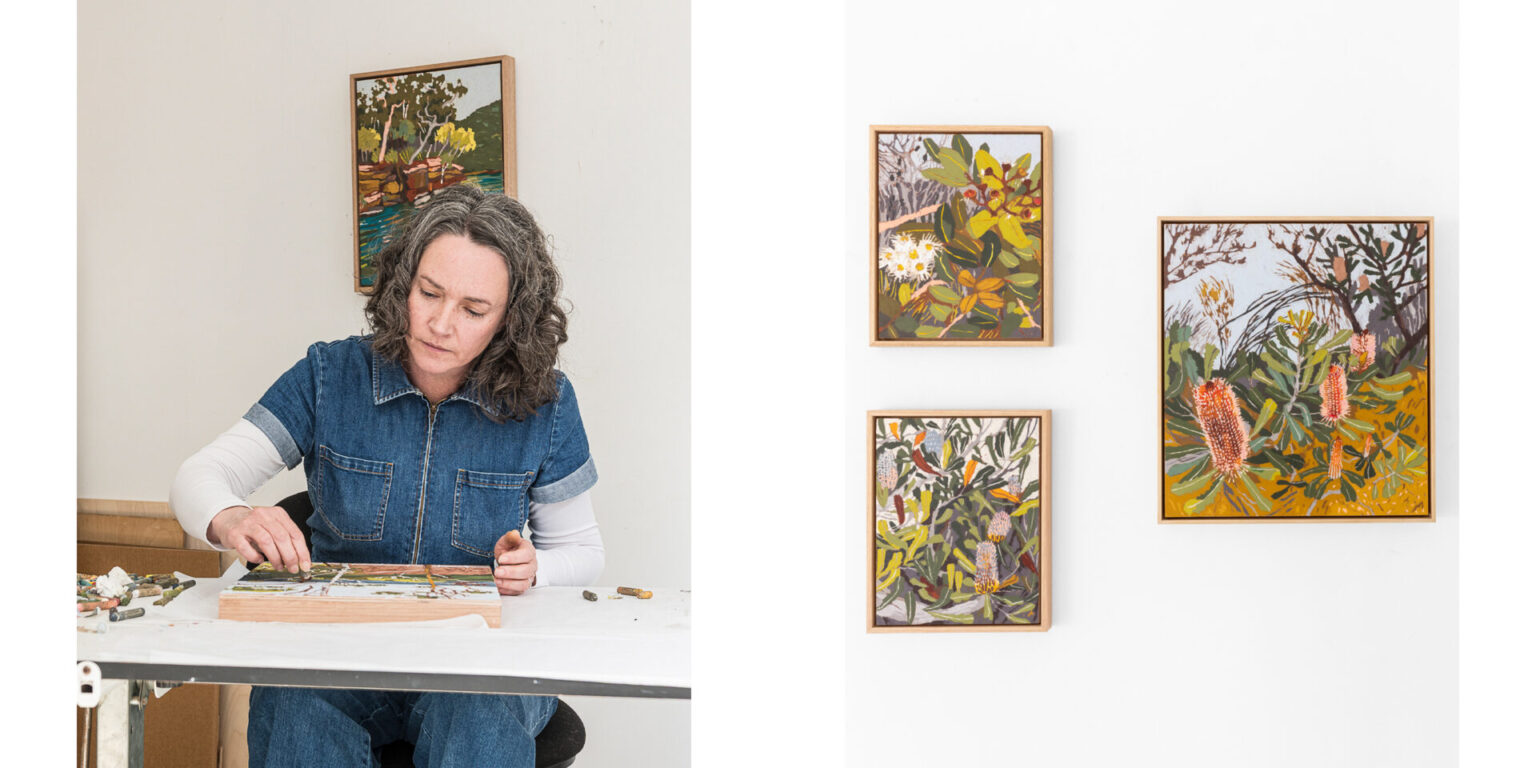
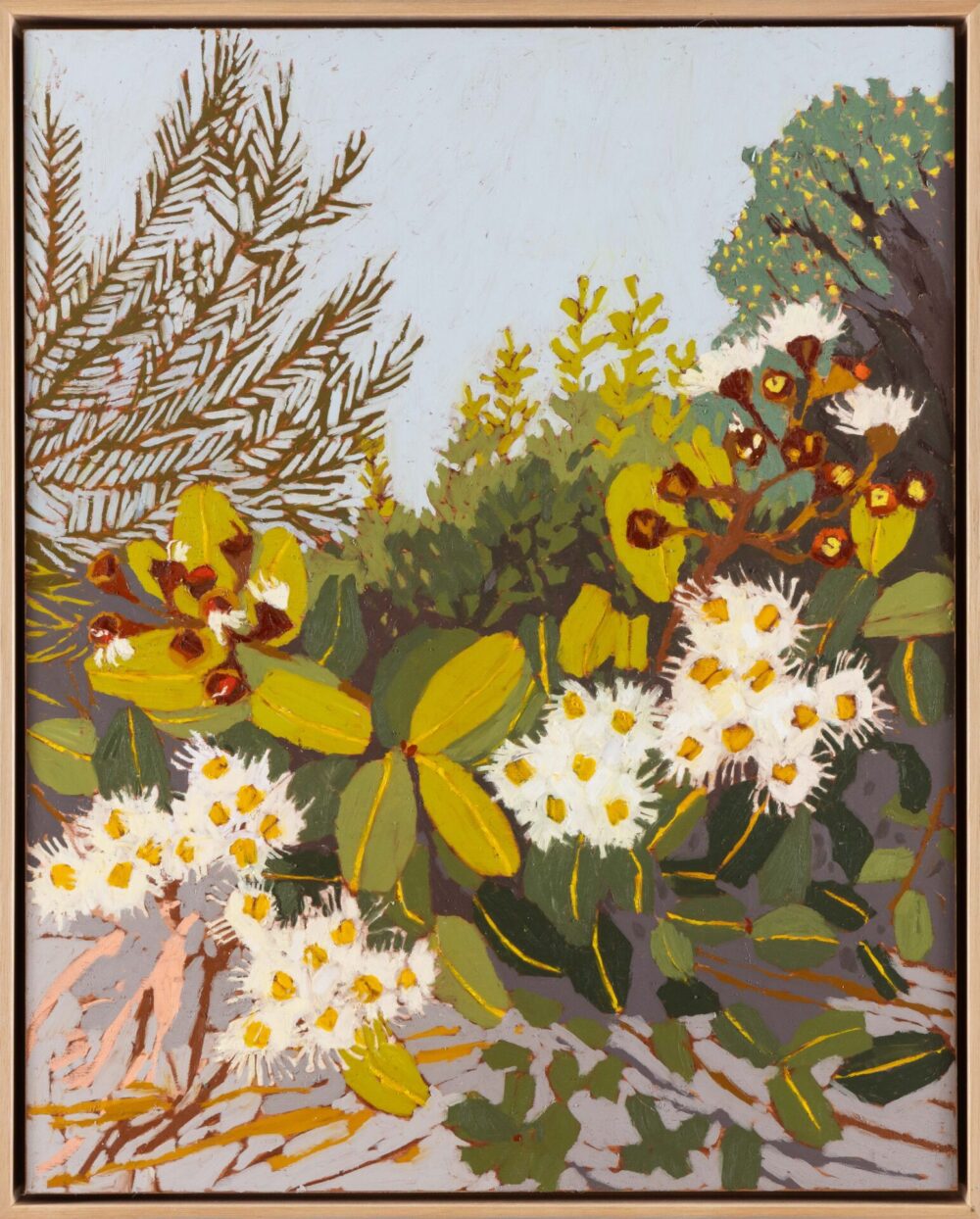
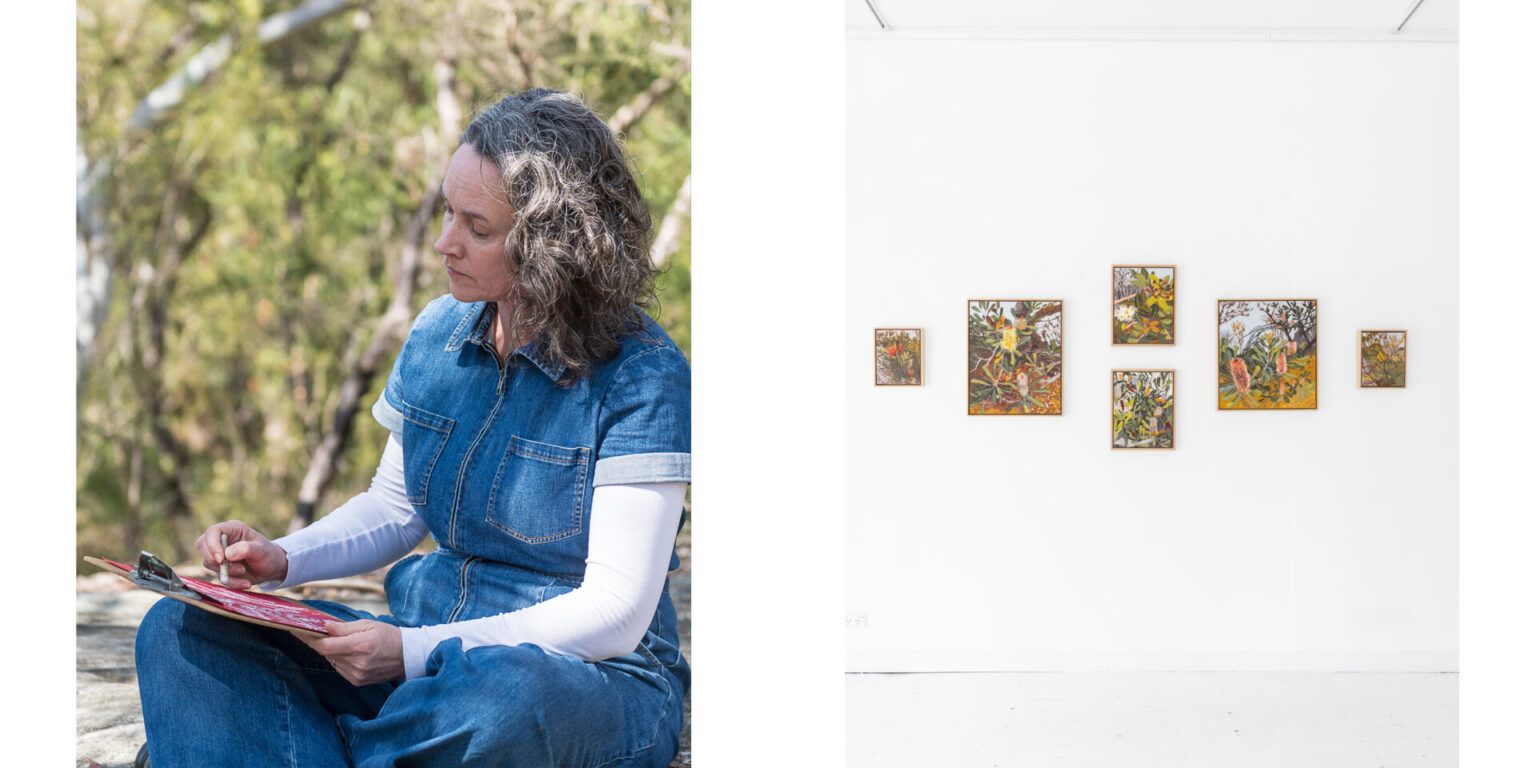
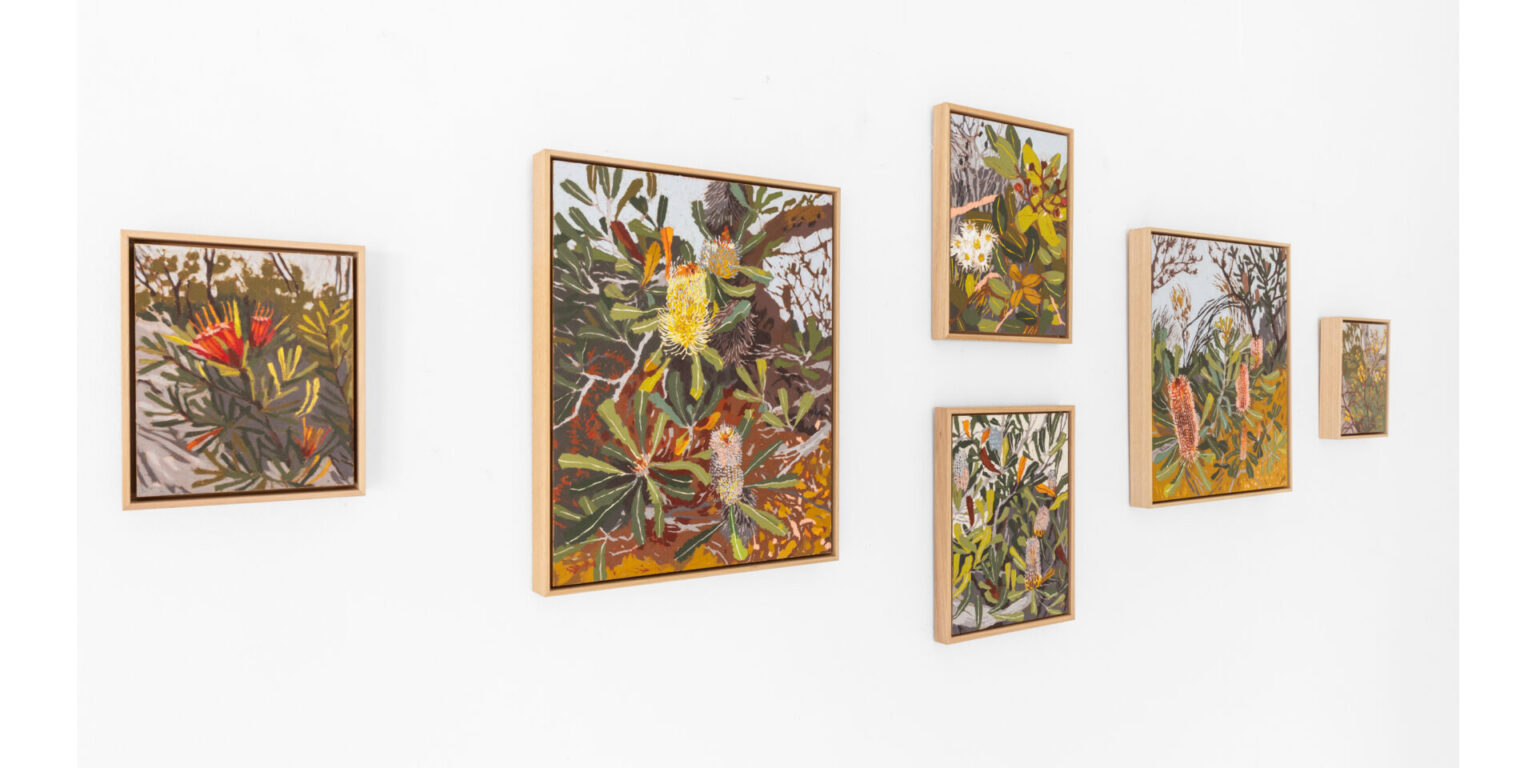
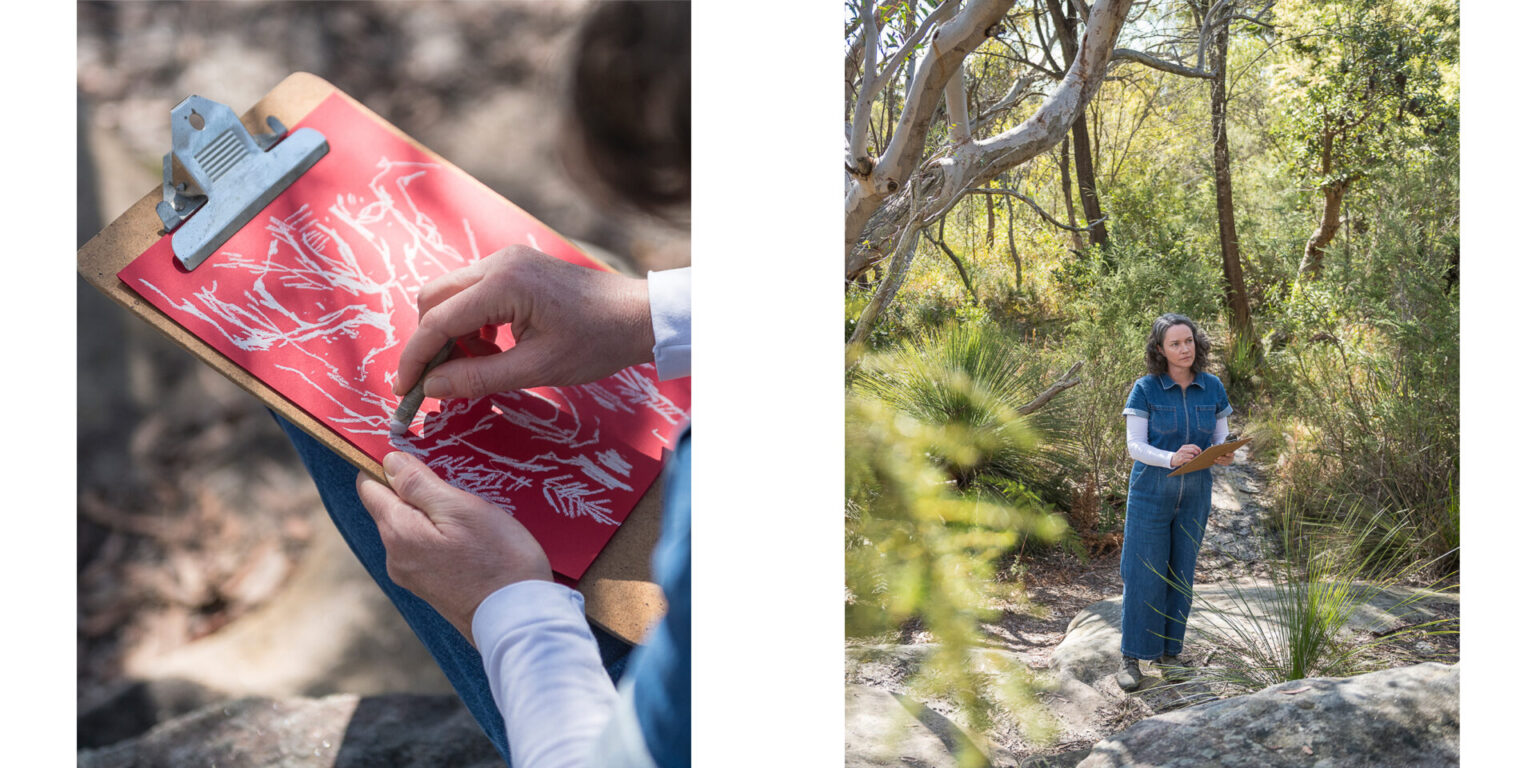
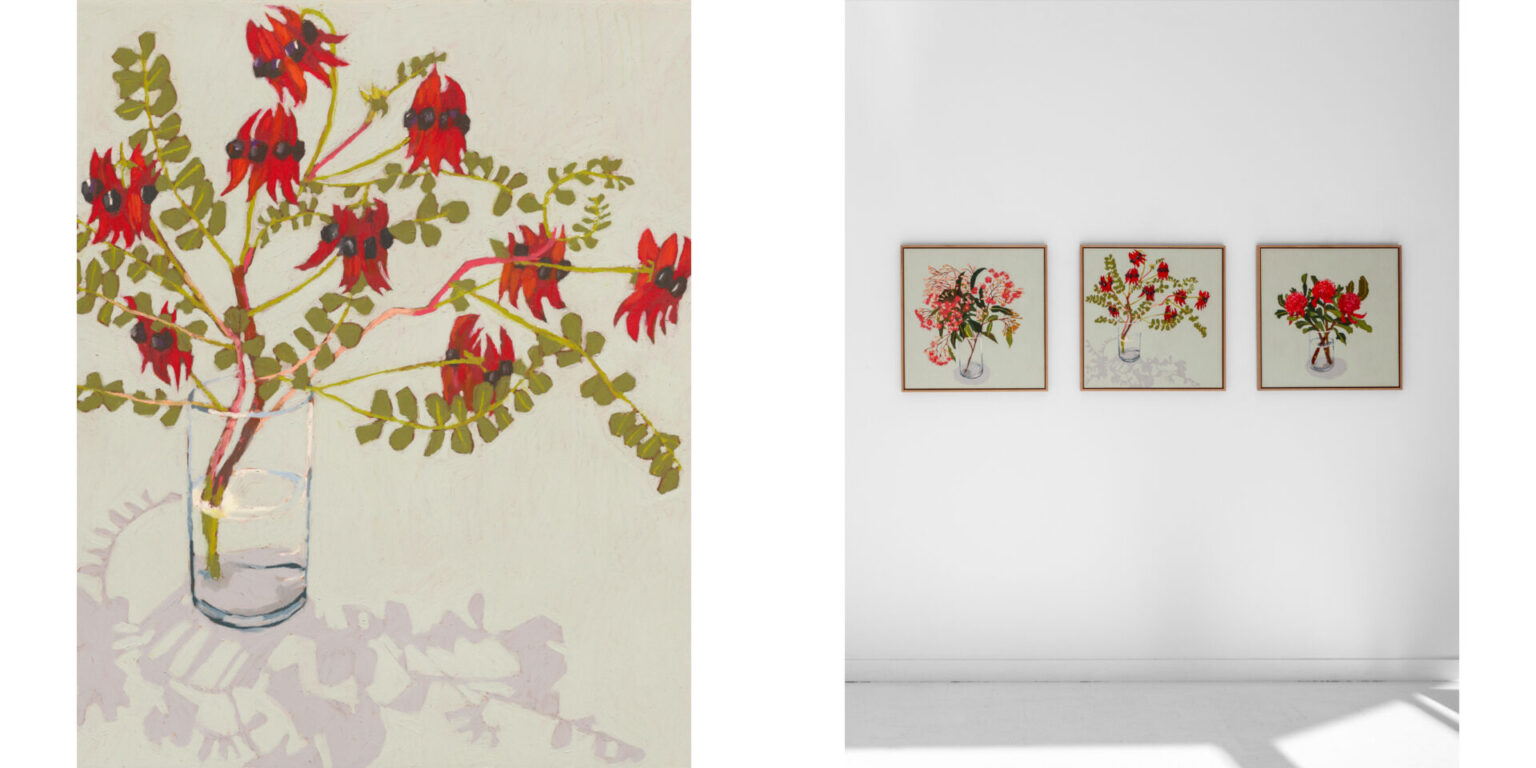
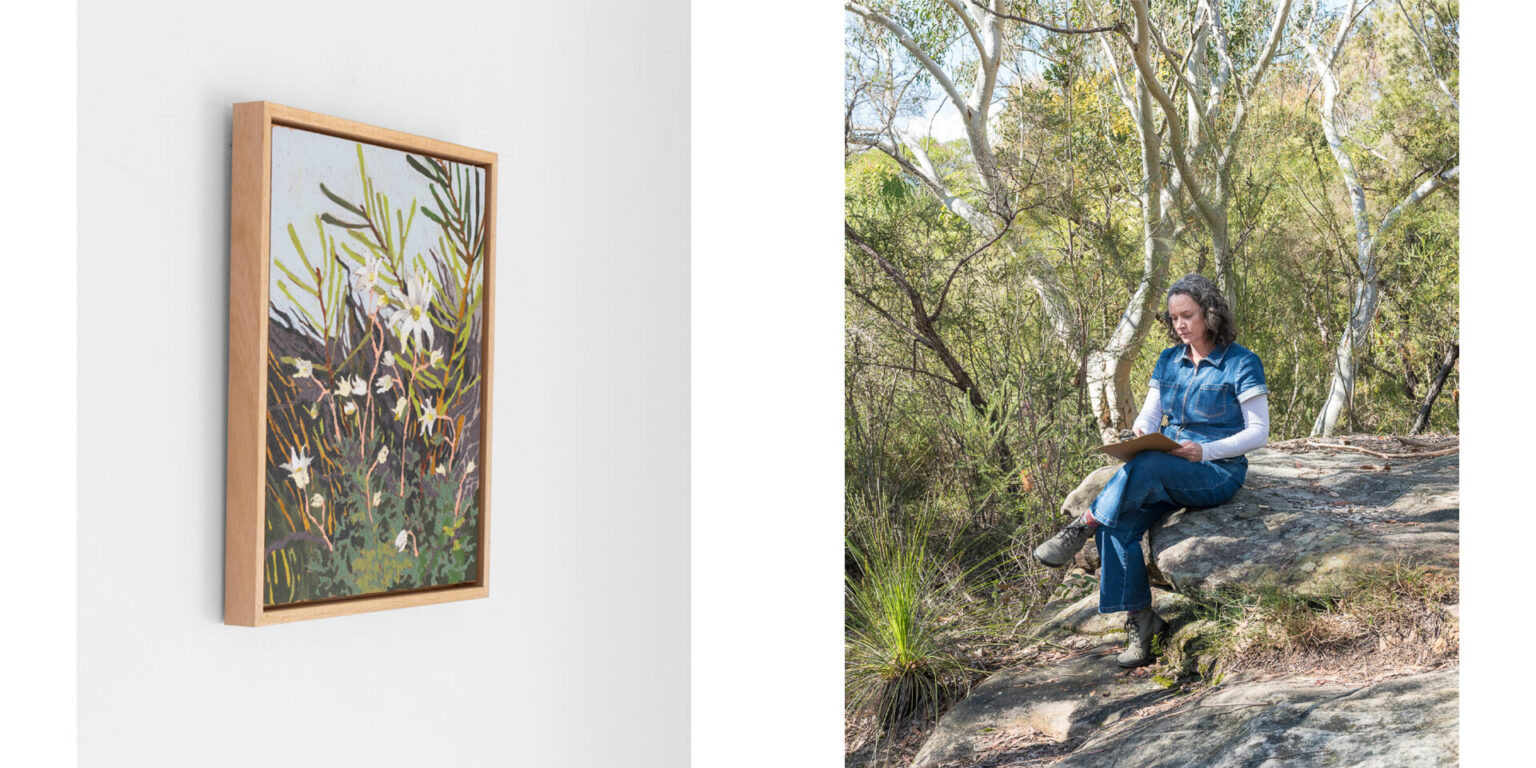
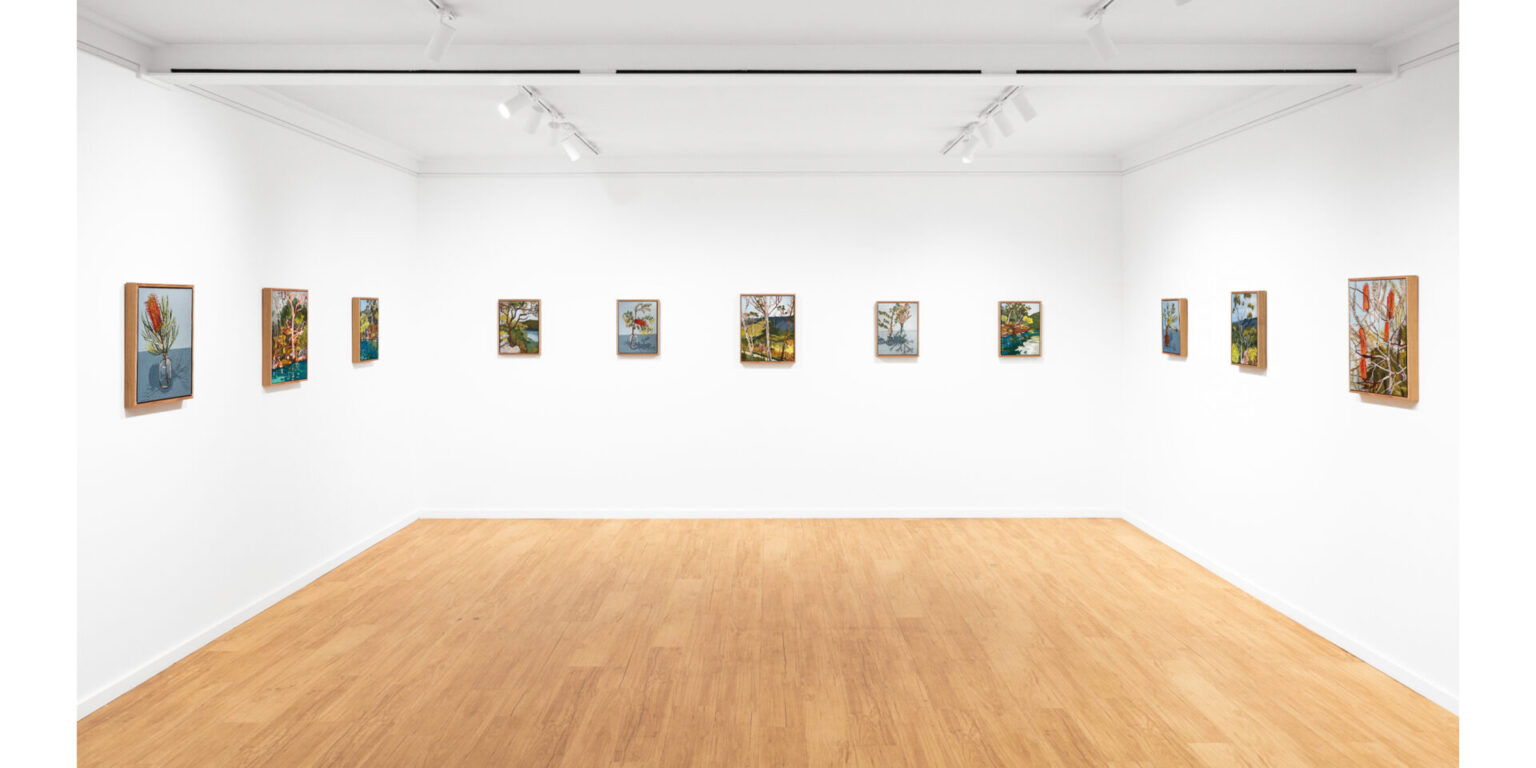
In the lead-up to the announcement of Nicola Woodcock’s representation by Michael Reid Northern Beaches, the gallery team visited the artist at her studio in Sydney’s north, a short drive from the harbour foreshore walking trails that inform her practice. Our resulting conversation is published today alongside Bush Vignettes – a newly completed suite of paintings shaped by the distinctive native flora found along Sydney Harbour.

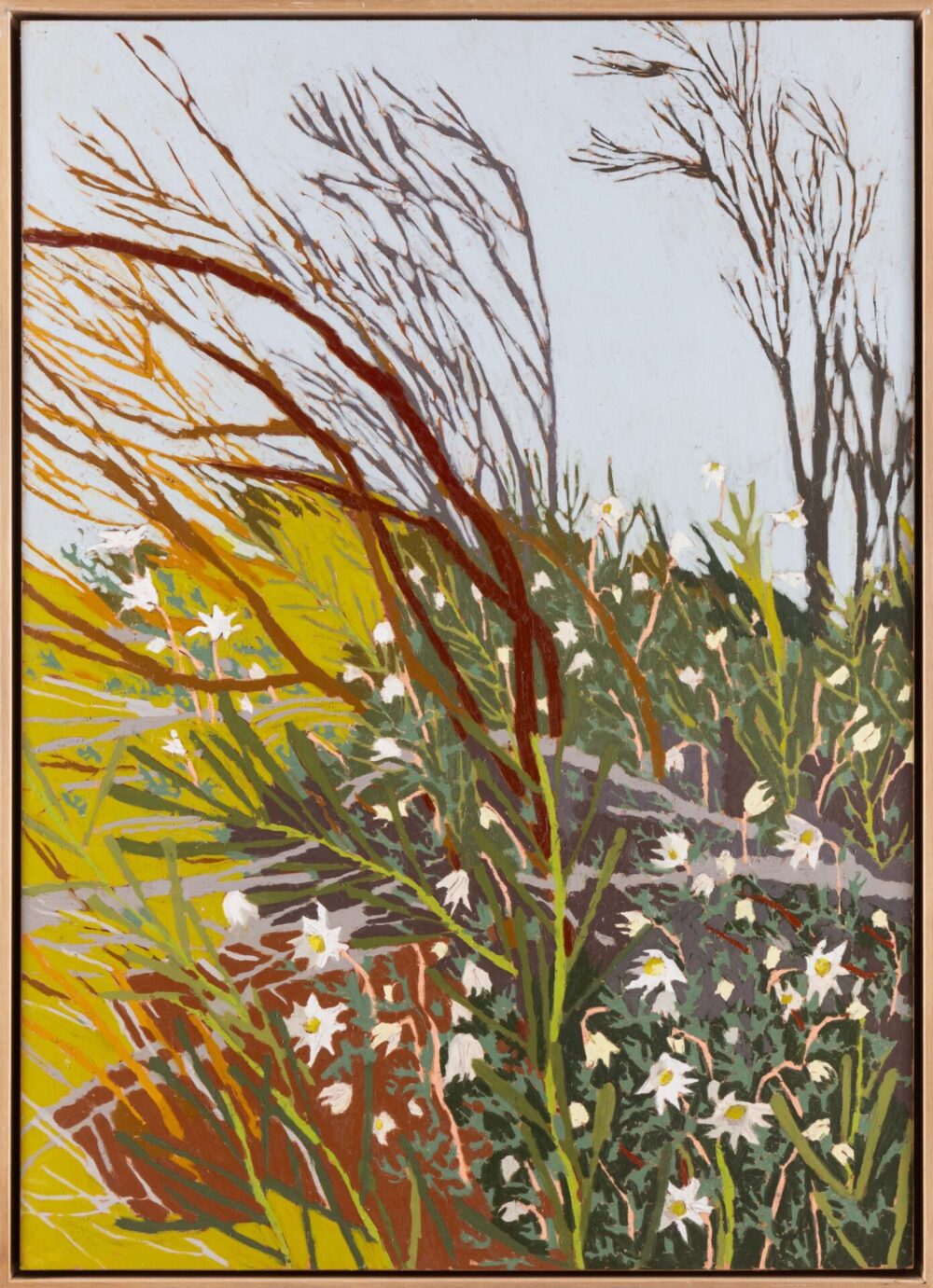
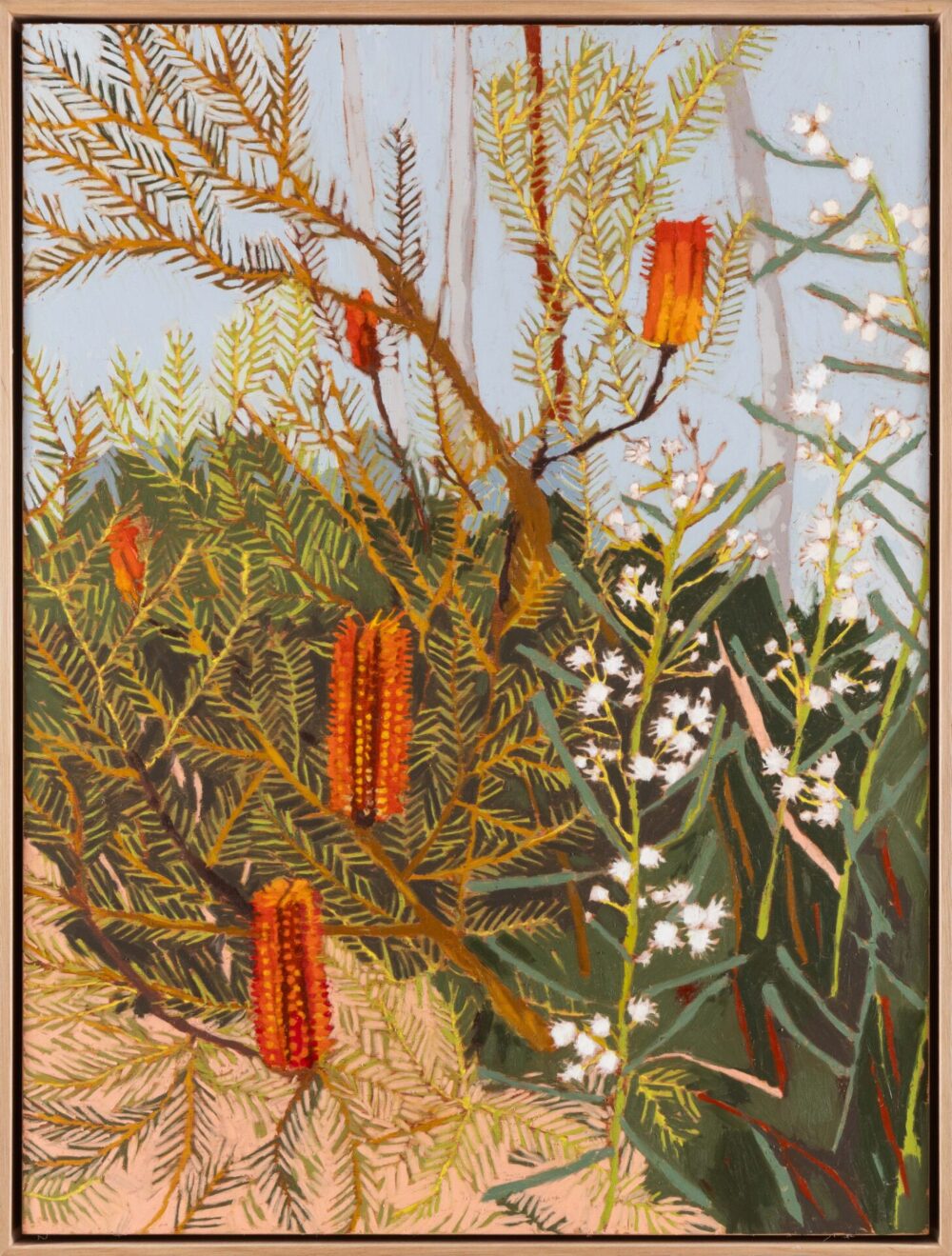
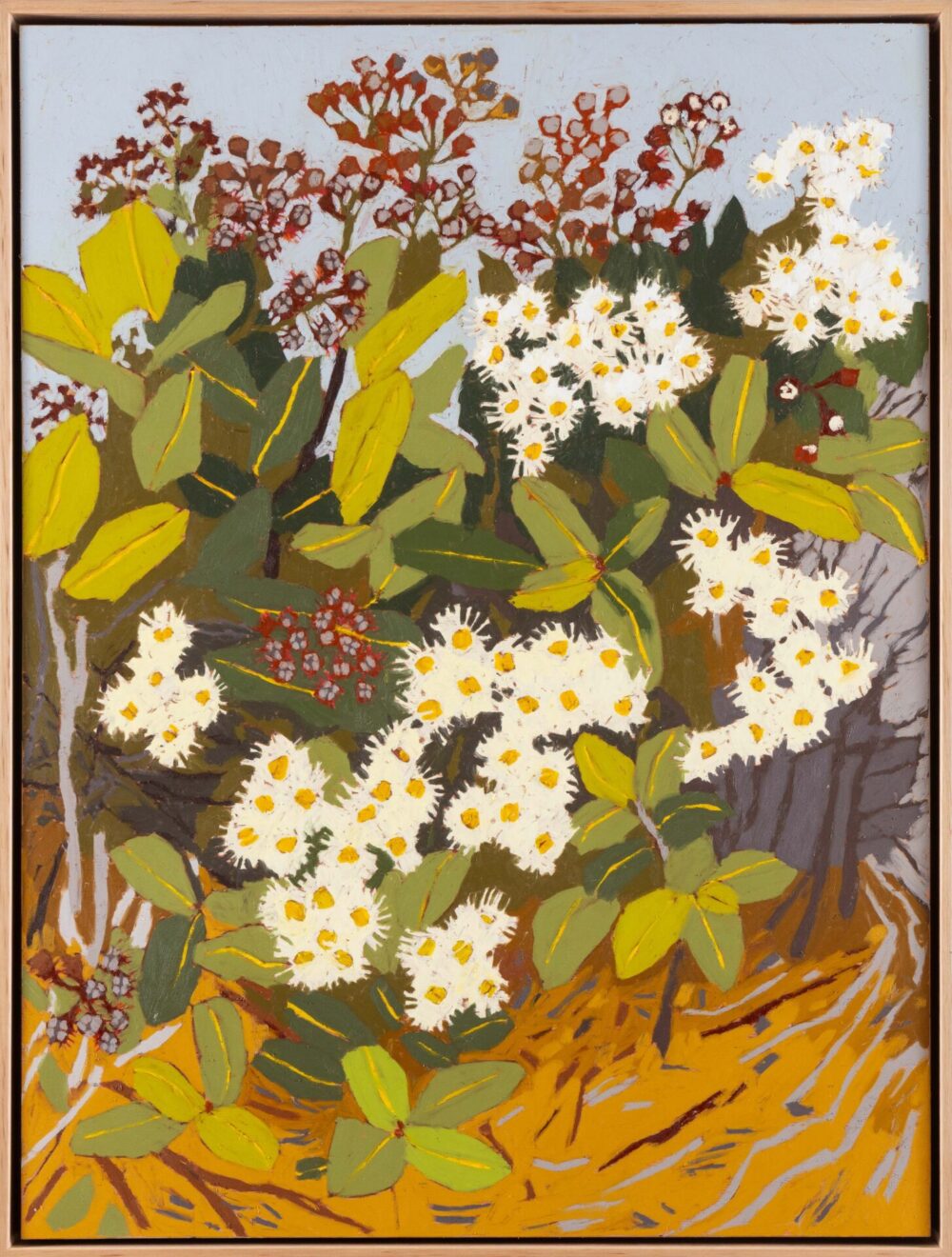
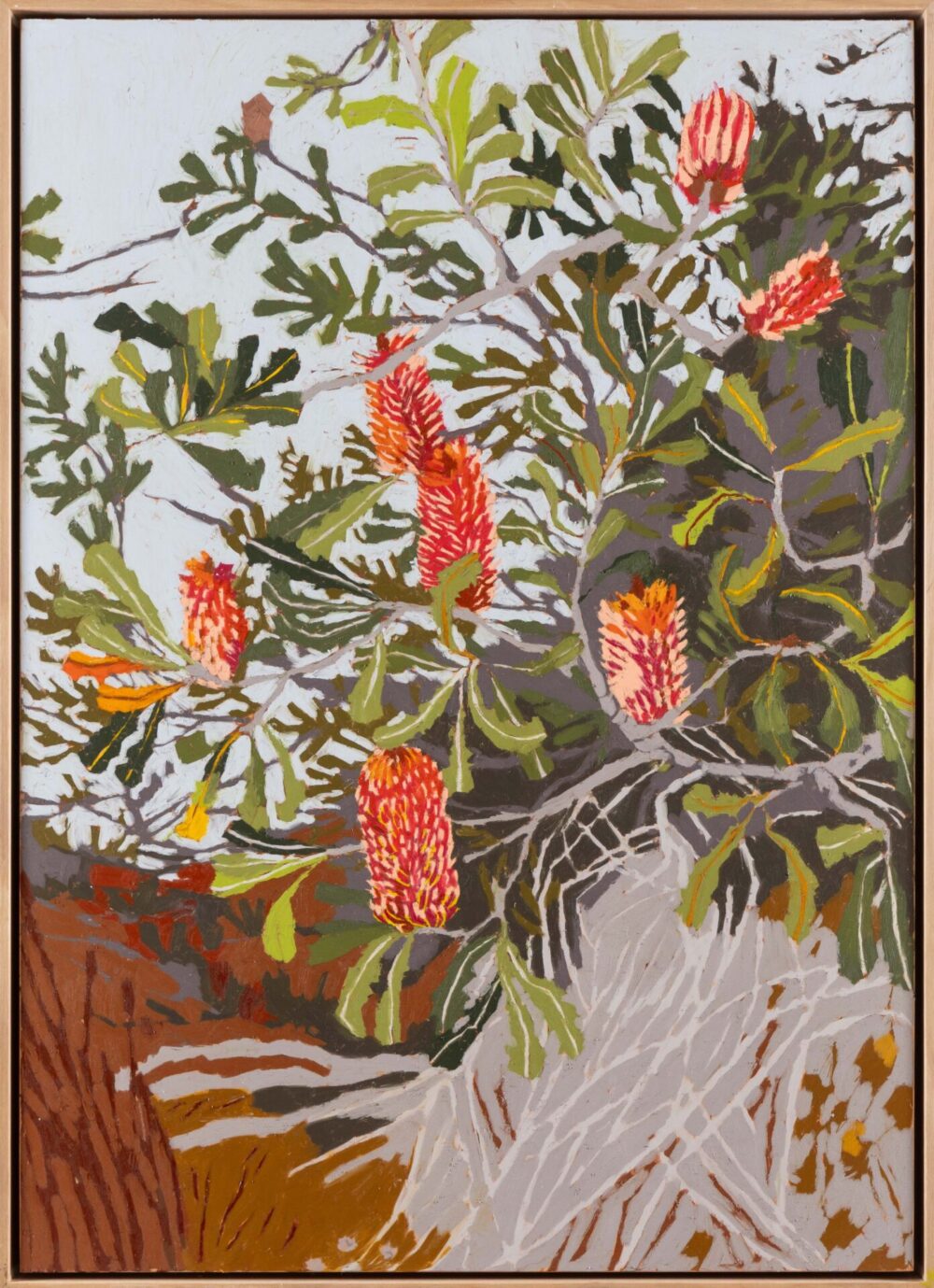
Long captivated by Australia’s native flora, Woodcock has developed a distinctive painterly language that translates the tangled exuberance of the bush into luminous still lifes and richly textured botanical studies. In Bush Vignettes, the artist turns her attention to the pockets of vegetation fringing Sydney Harbour, finding beauty in the curious forms, vivid colours and so-called ‘unpretty’ wildflowers that have become enduring muses in her practice.

“I love how otherworldly they are. I’m often awestruck at their magnificence,” says Woodcock in our interview, which explores the formative experiences, creative breakthroughs and floral affinities that continue to shape her work.

Works from Bush Vignettes can be explored and acquired below or by request. To discuss works from the series or sign up for first access to forthcoming releases by the artist, please email sophienolan@michaelreid.com.au
What were some of your early creative influences?

Art was my favourite subject in high school and I had a very supportive art teacher. I remember she took us to see Monet at the Royal Academy of Arts in London in 1990 and I can vividly recall seeing Henri Rousseau’s Tiger in a Tropical Storm (Surprised!) at the National Gallery London around the same time, probably on the same school excursion. When I look at that artwork now I can see how the lushly layered foliage, bold graphic forms and vivid colours have influenced my own approach to painting the environment.

When did you decide to pursue painting and what was informing your work at the time?

I’d dreamed of being an artist since childhood. After university, I worked in book publishing until my first daughter was born. As our family grew I decided not to return to work. During that decade I attended casual art classes here and there and when my third daughter began preschool the time felt right for me to pursue art as a serious endeavour.

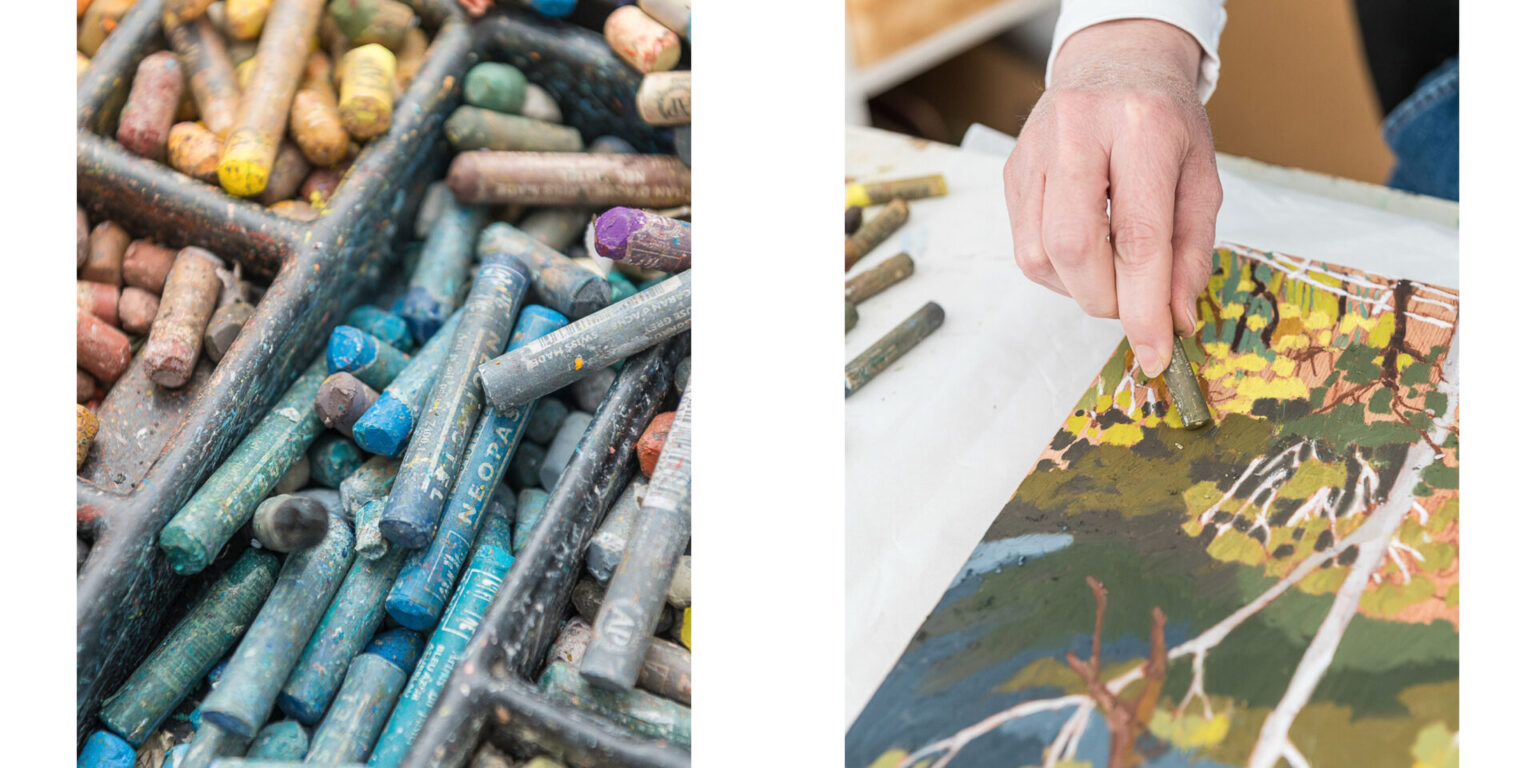
I began in 2016 with a 100-day challenge, which involved creating an artwork every day for 100 days and posting it to my newly created Instagram account. I hadn’t shown work to anyone outside of my immediate family until that point. I didn’t limit myself to a single subject, creating small 20x20cm works every day whether we were at the park, the beach or in the bush, or at home with some objects on the kitchen table. I chose oil pastels as my theme because they were portable, accessible and easy to use – I’d invite whoever was with me to join in (we were often on play dates) and it was fun to see kids and adults get to play alongside me.

My main goal was to let go of self-judgement and to become comfortable with having my work seen. It was an extremely liberating experience! I found that my choice of subject matter and use of colour became much more intuitive. At the end of the challenge I discovered that a simple flower from the garden in a glass bottle was something I could return to again and again.

How did you develop your approach to painting over time?

After the 100-day challenge I moved from working on paper to working on timber panels, which allowed me to be bolder in the physical application of colour because the panels can really tolerate much more pressure from my hand than paper can. I also love the way that the texture of the pastel is visible without the layer of glass between it and the viewer. That said, oil pastel never fully dries and this leaves the surface somewhat vulnerable. I apply many layers of fixative, which prevents smudging, and I educate collectors to be gentle with the surface.

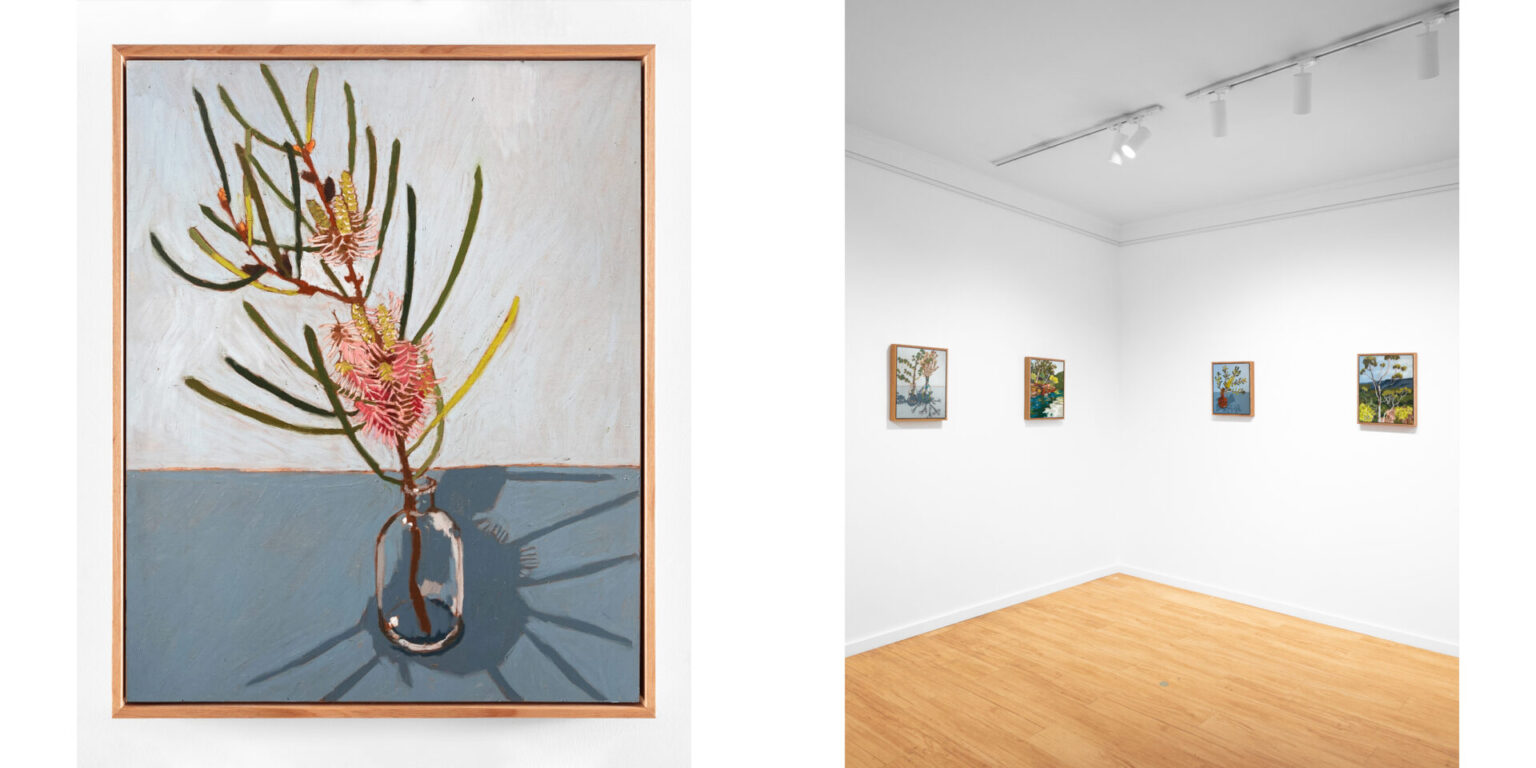
Flowers, and Australian natives in particular, have been a constant fascination. The curious and oddly shaped foliage and flowers pair perfectly with oil pastels – vivid, bold and unfussy! I’m beginning to deliberately incorporate a few stages of the flower in the work – in bud, in full bloom and in decline – a nod to the passage of time. Shadows are another important theme that I often incorporate in my still-life works. I really enjoy depicting the cast shadow shapes, and just like the flowers themselves, shadows are fleeting and temporary. I use them to lend weight to the object and to anchor the still life in a place and a moment in time.

Could you tell us about the wildflowers that appear throughout your work?

Ever since I visited for the first time as a backpacker in 1999, I’ve been drawn to Australian native flora. Back then I wasn’t creating any artworks at all and I didn’t know how to express what I was seeing, but I carried the feelings and the memories with me for years until I found a way to put them down on paper.

I love how otherworldly they are. I’m often awestruck at their magnificence, and this is what excites me to get into the studio and render them in oil pastel. I might forage from the roadside or gardens, or pick up something special from the florist. I’m lucky to have an amazing florist nearby who stocks really interesting and unusual flowers.

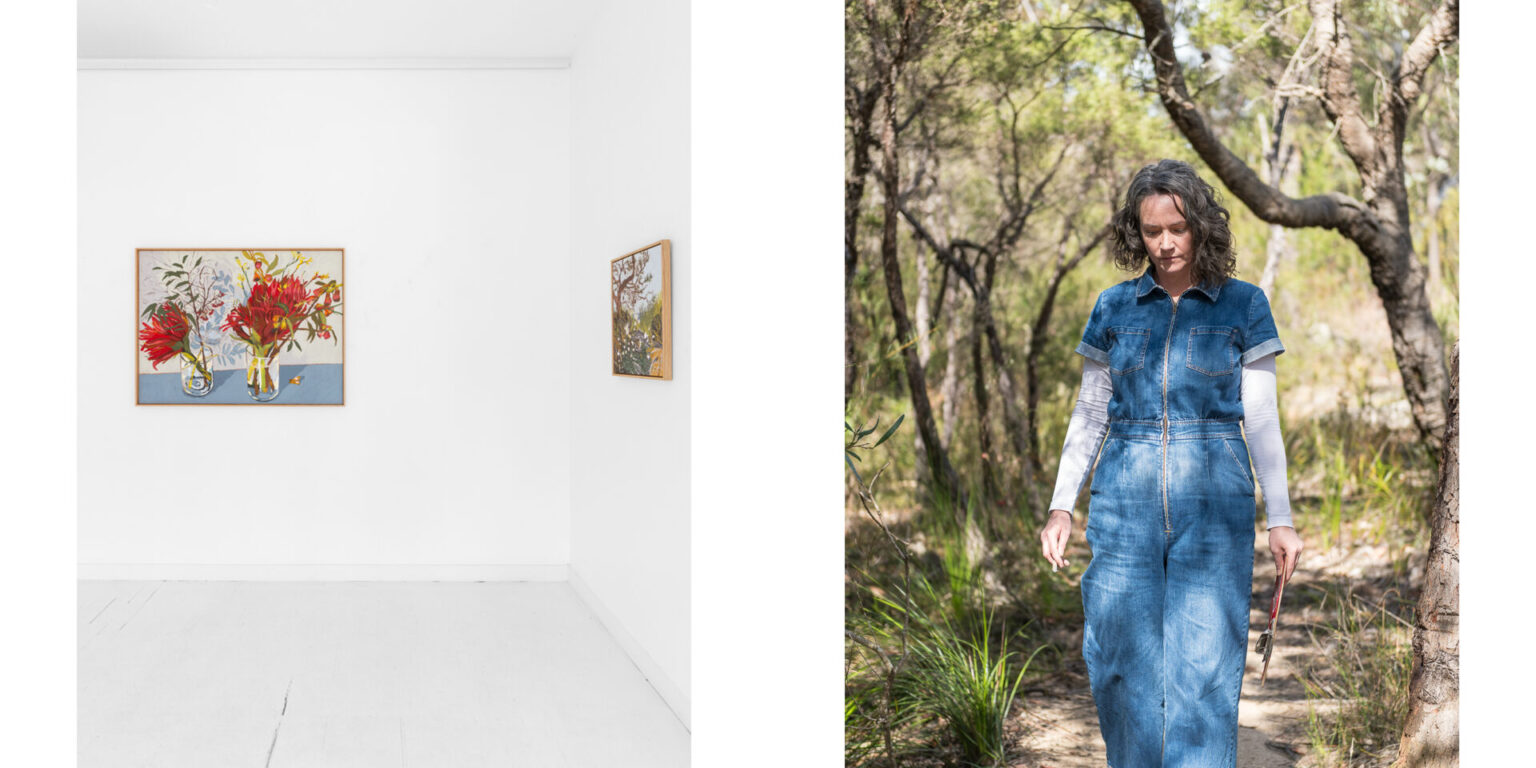
The qualities I seek out in the flowers I choose are weird shapes and crazy colours. I’m not looking for ‘pretty’. I just have to be careful not to buy too many because they fade before I have a chance to get into the studio! I’m also very lucky to live right on the edge of Ku-ring-gai National Park and I can walk into the bush from the end of my street. This offers ample inspiration for my wildflowers in situ drawings, and of course the flowers are always changing with the seasons.

How do you approach these subjects in a still-life versus in the wild?

For a still-life piece I always work from life. I usually live with the flowers for a few days on the kitchen table, observing them from different angles and in different light as I go about my day, really noticing the nuances and unexpected colours, becoming familiar with them before I start work, building up a bit of excitement and anticipation. When I’m depicting flowers in the environment I work from my own photos as a starting point, then gradually turn to memory and intuition, working with my favourite colours to describe the landscape. In both cases it is colour and form that excite me.

What have been some of your favourite career experiences or moments of creative breakthrough?

When I dreamed about being an artist and what that looked like I imagined myself creating artworks every day; I could only imagine myself in that dream. What I didn’t appreciate until I actually began putting my art into the world was how it is a conversation with viewers and that my art impacts other people’s lives. I have had the most wonderful feedback from supporters about how their lives have been enriched by living with my artworks. There’s nothing more satisfying than knowing that I’m sending moments of joy out into the world, and that this is having a positive impact on the lives of others.

Finding out that I was a finalist in the inaugural National Emerging Art Prize in 2021 and again in 2022 was a real highlight for me. It was a moment of recognition which gave me the confidence to keep working in oil pastels – a somewhat unusual medium, but nevertheless this showed me that they could be taken seriously!

Could you tell us about your studio space and routine?

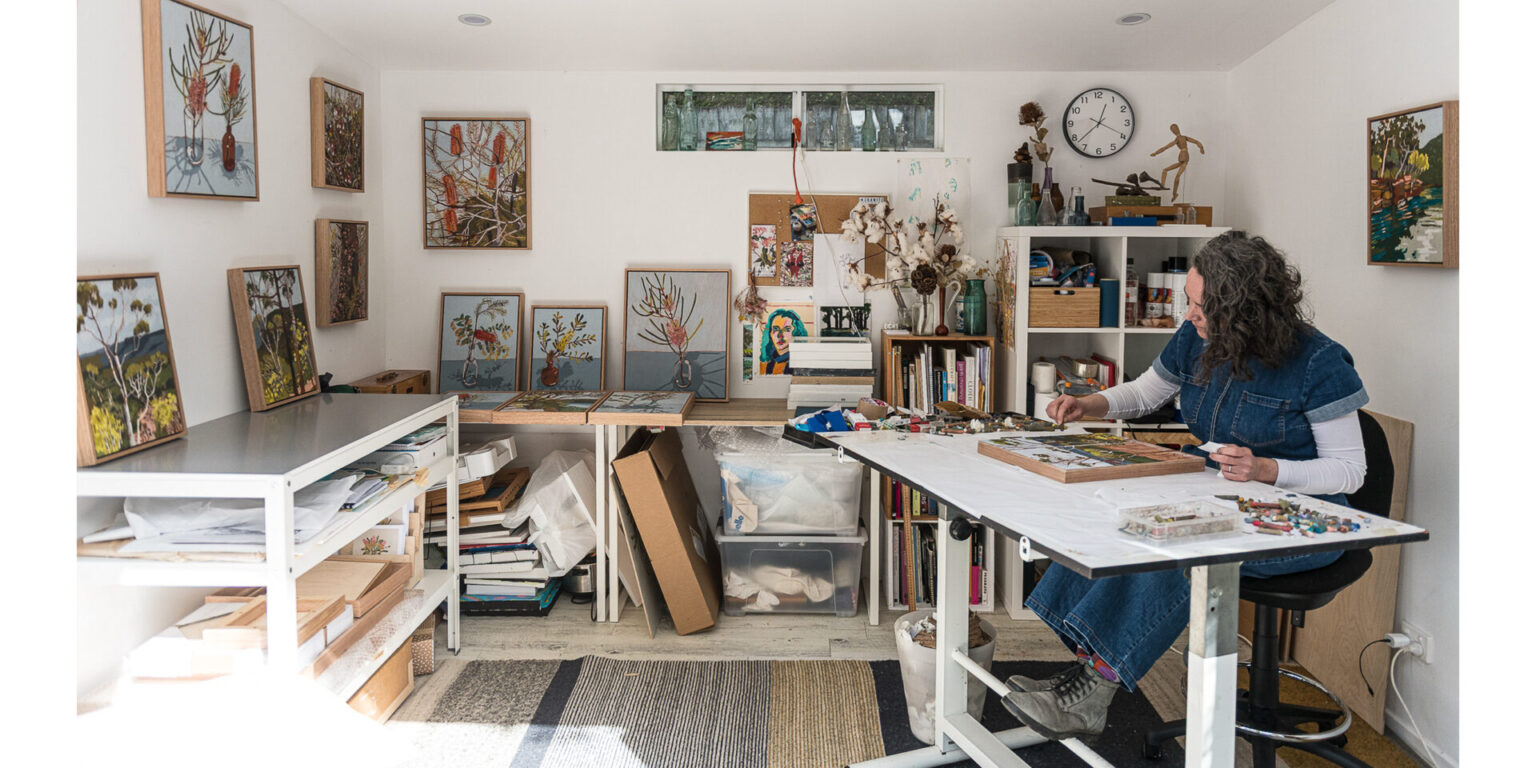
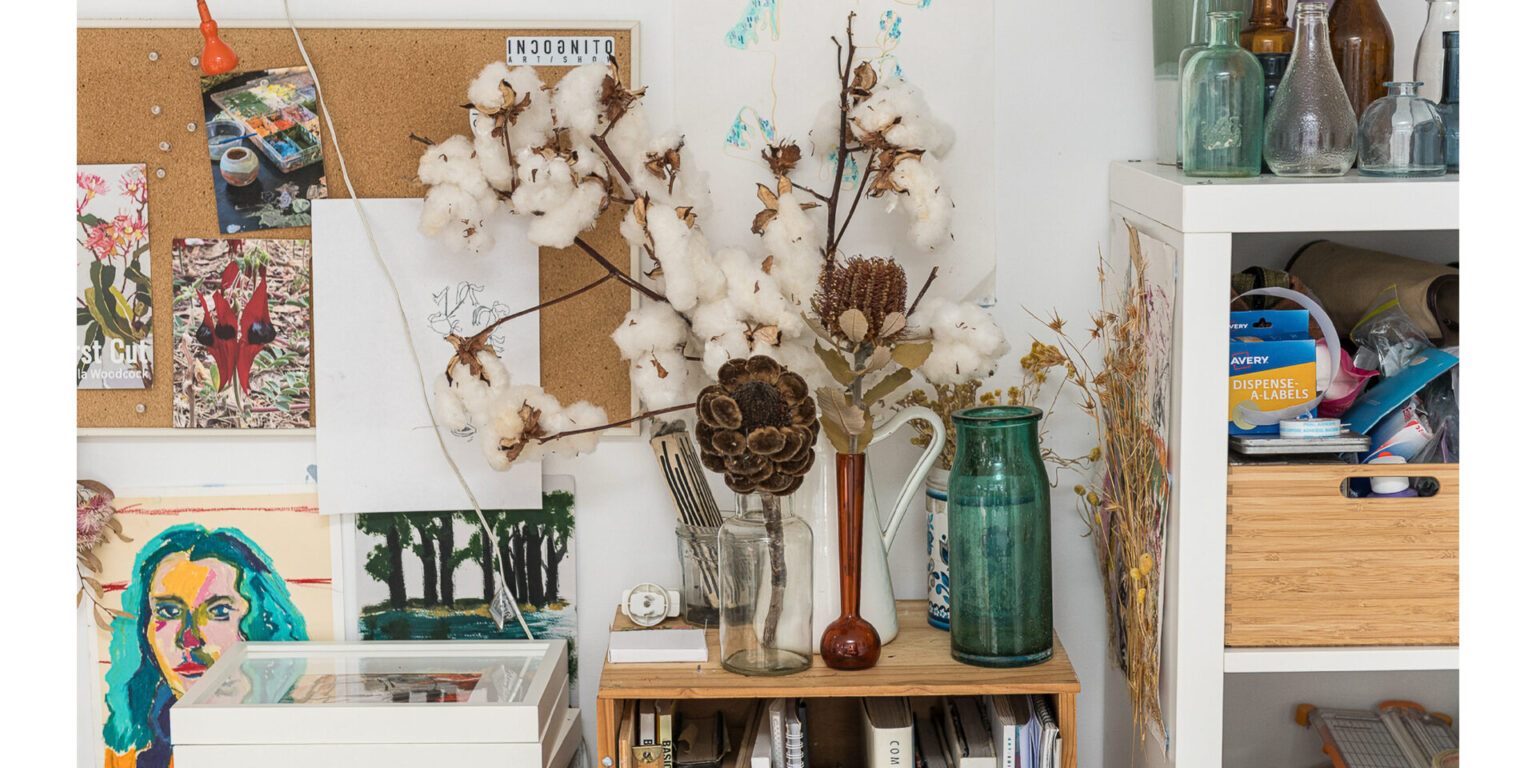
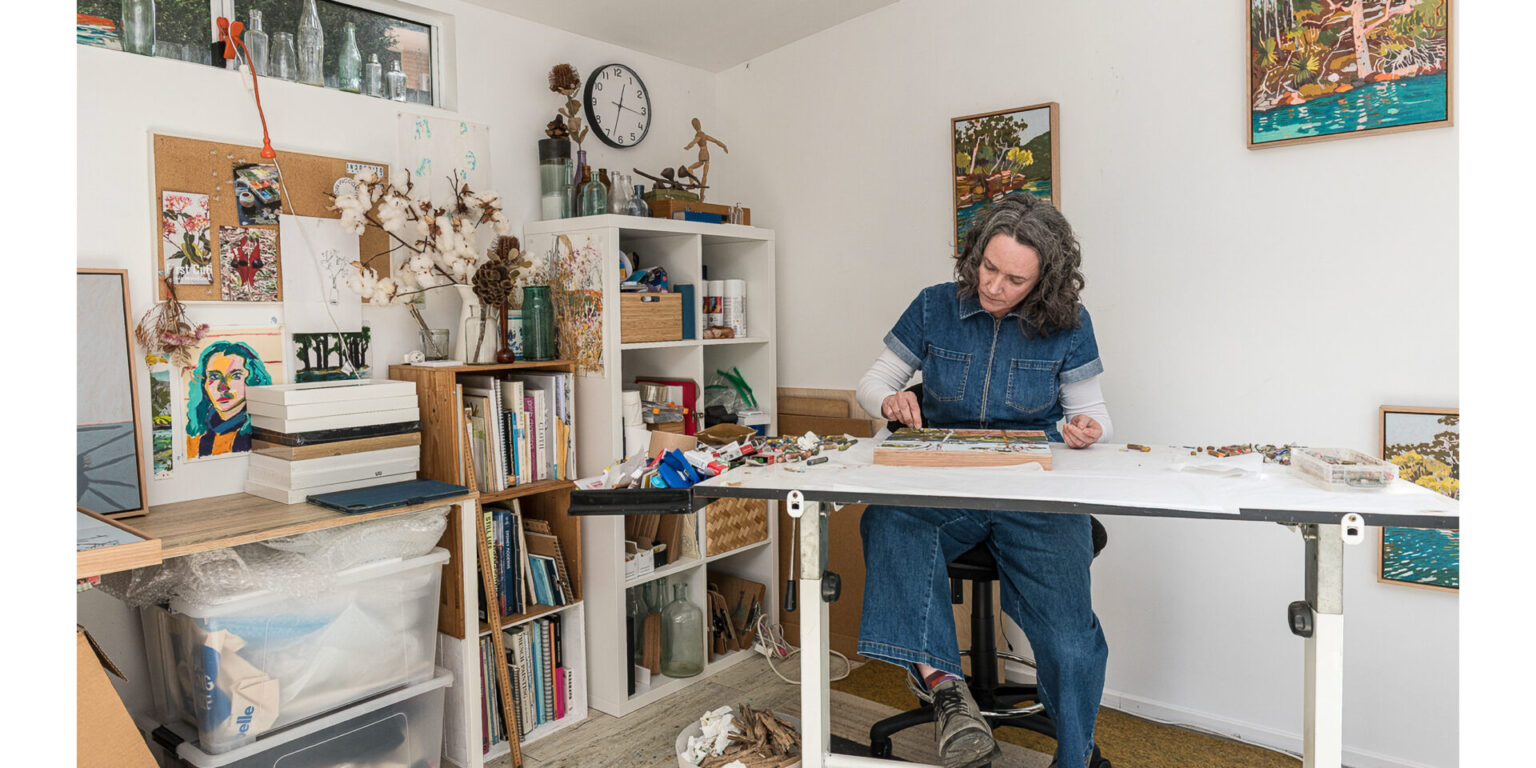
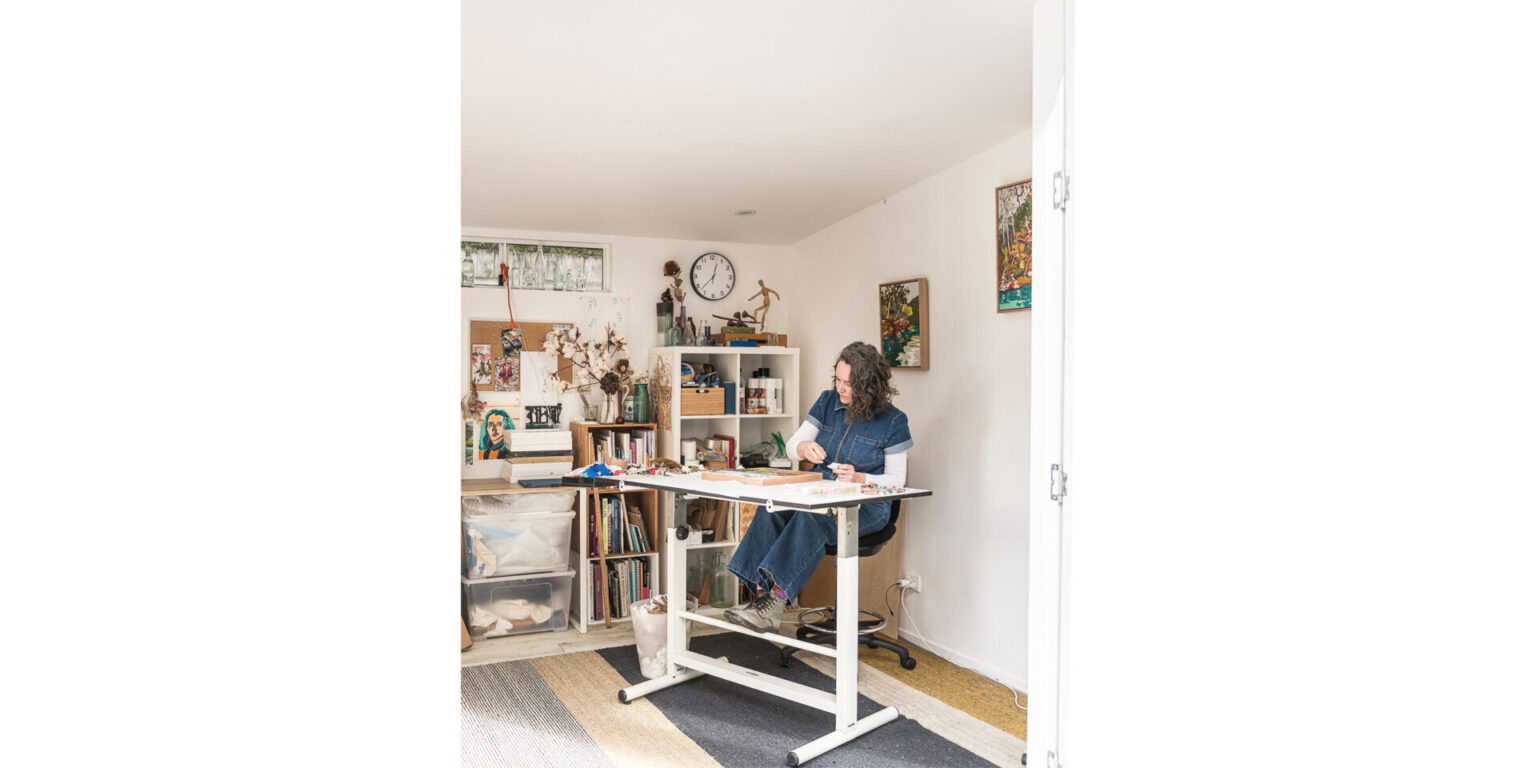
My studio space is a purpose-built cabin in the backyard. It works well for me to be close to home. As an artist and mother who began when her children were small, it was essential for me to learn how to maximise small windows of time to create work. Now my daughters are teenagers and I am needed less, I still find this early training in efficient use of creative time serves me well. When working with oil pastels it’s difficult to erase marks, so another thing I learnt early on was to approach the panel boldly. I’m trying to not overthink the work and I’m looking for a sense of joy in colour combinations and forms. Once I’ve sketched out a composition on the panel – which does require a different part of my brain! – I begin to apply colour and this is when I tap into feeling my way through the picture. I listen to audiobooks all through this stage of the drawing as it seems to work in harmony with whichever parts of my brain are being used!

What was the starting point for your Harbour Flora series and how did it develop

Harbour Flora began earlier in the year when I decided to make a weekly habit of taking long walks along the Sydney Harbour foreshore tracks. Noticing that the native flora growing along these trails was similar but not exactly the same as the flora that grows just slightly inland where I live, I decided to create a body of work devoted to documenting the tangled scrubby bushland and pockets of wildflowers particular to this area.

Are there ideas or approaches that you’re excited to explore?

I’m excited to explore working on a larger scale! This will give me more room to explore nuances and colour, to add more depth but at the same time I want to remain true to my goal of not becoming overly fussy!

Light of Nature

Posted by

Light of Nature

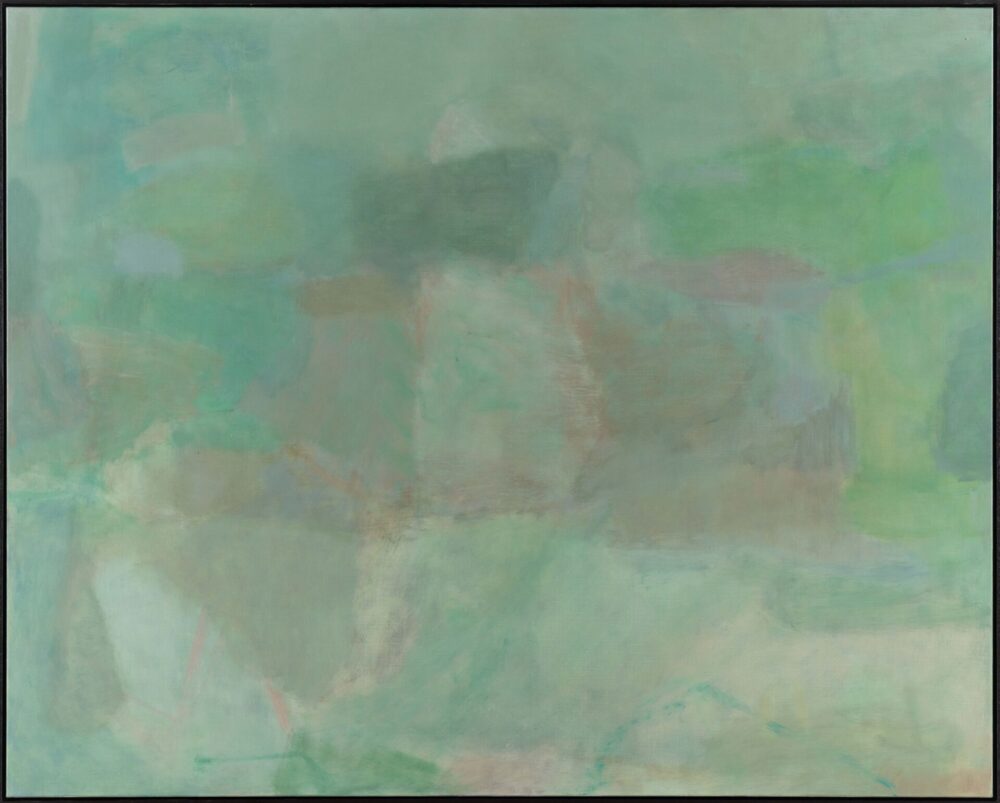
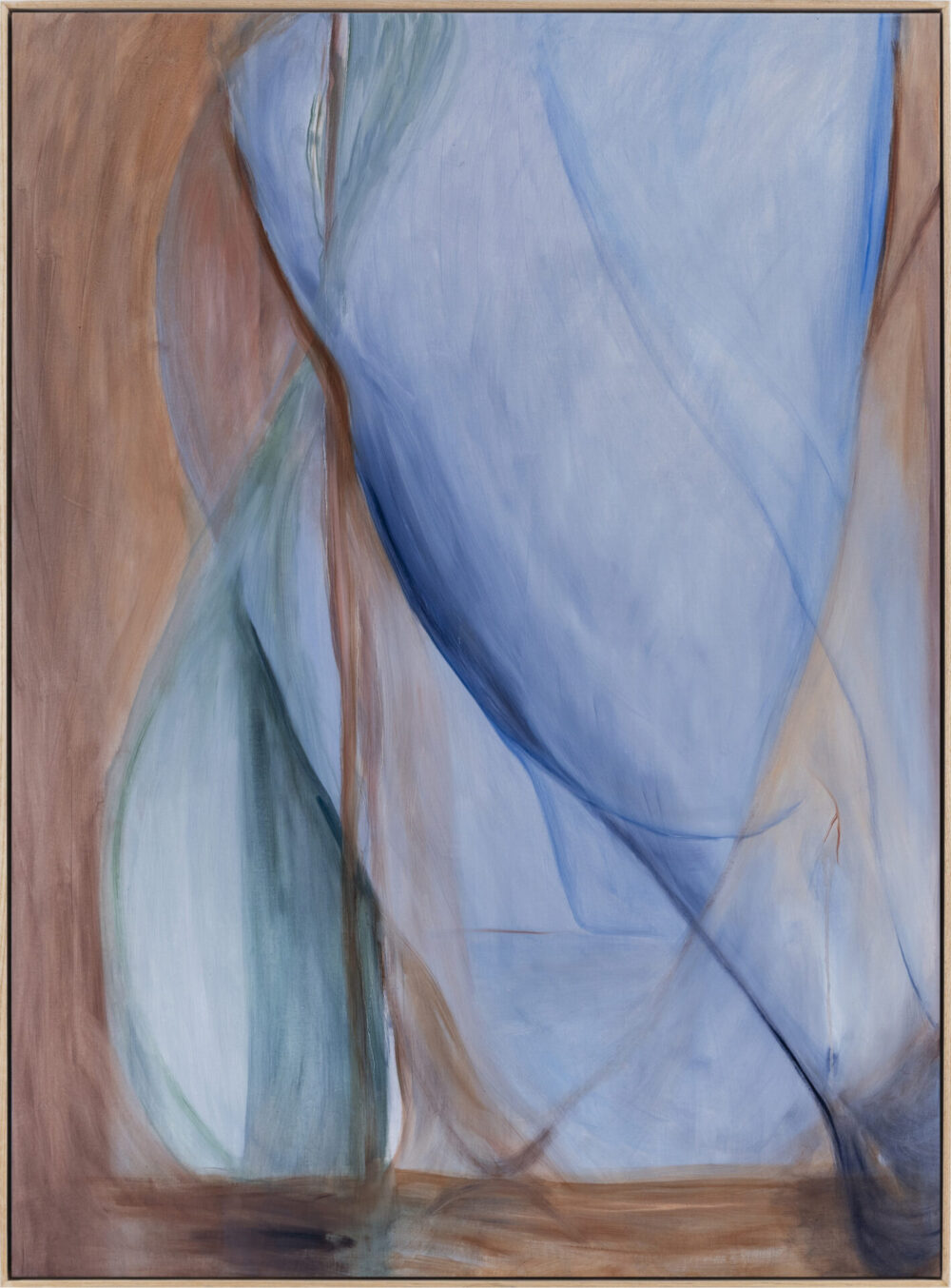
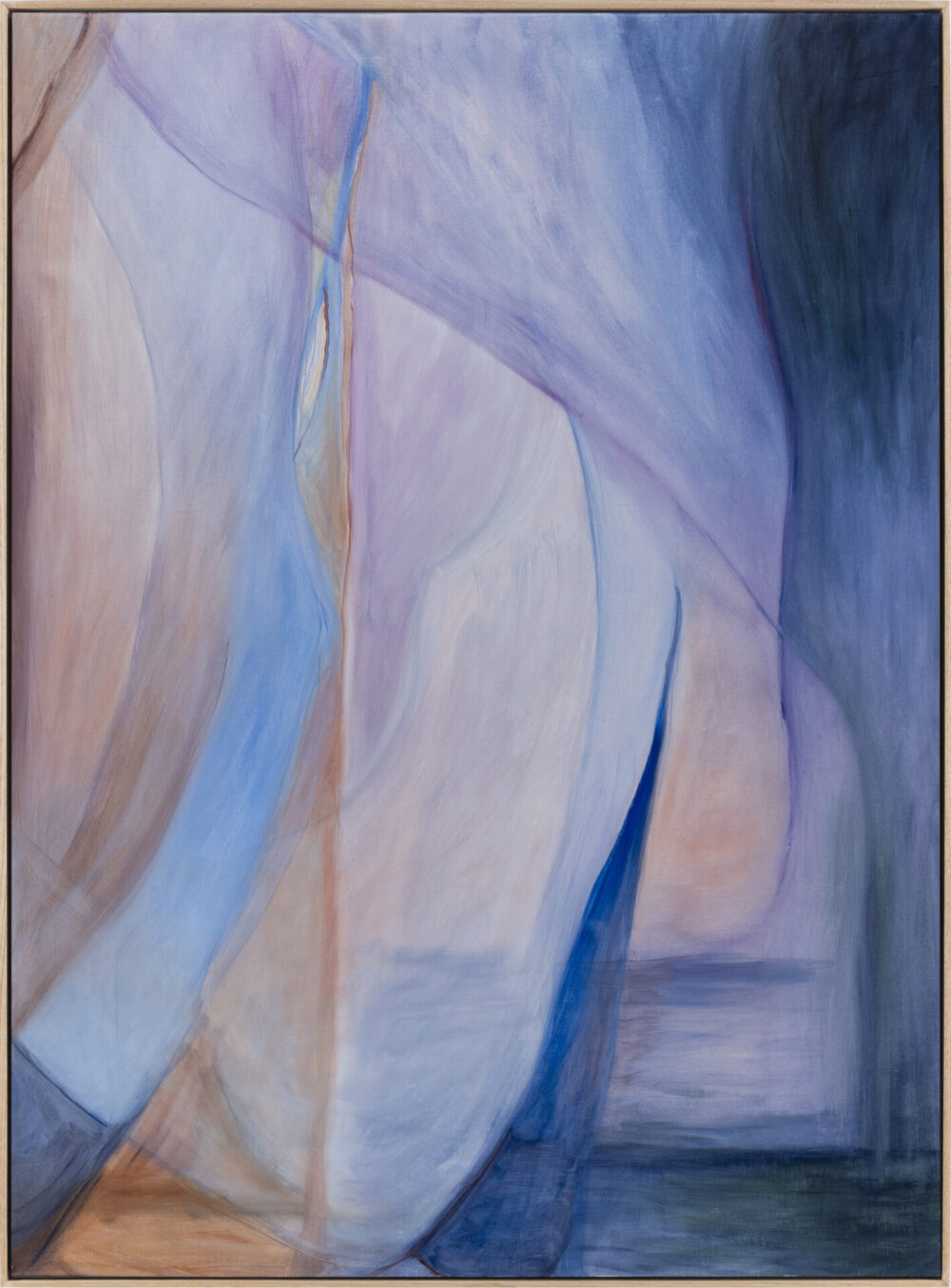
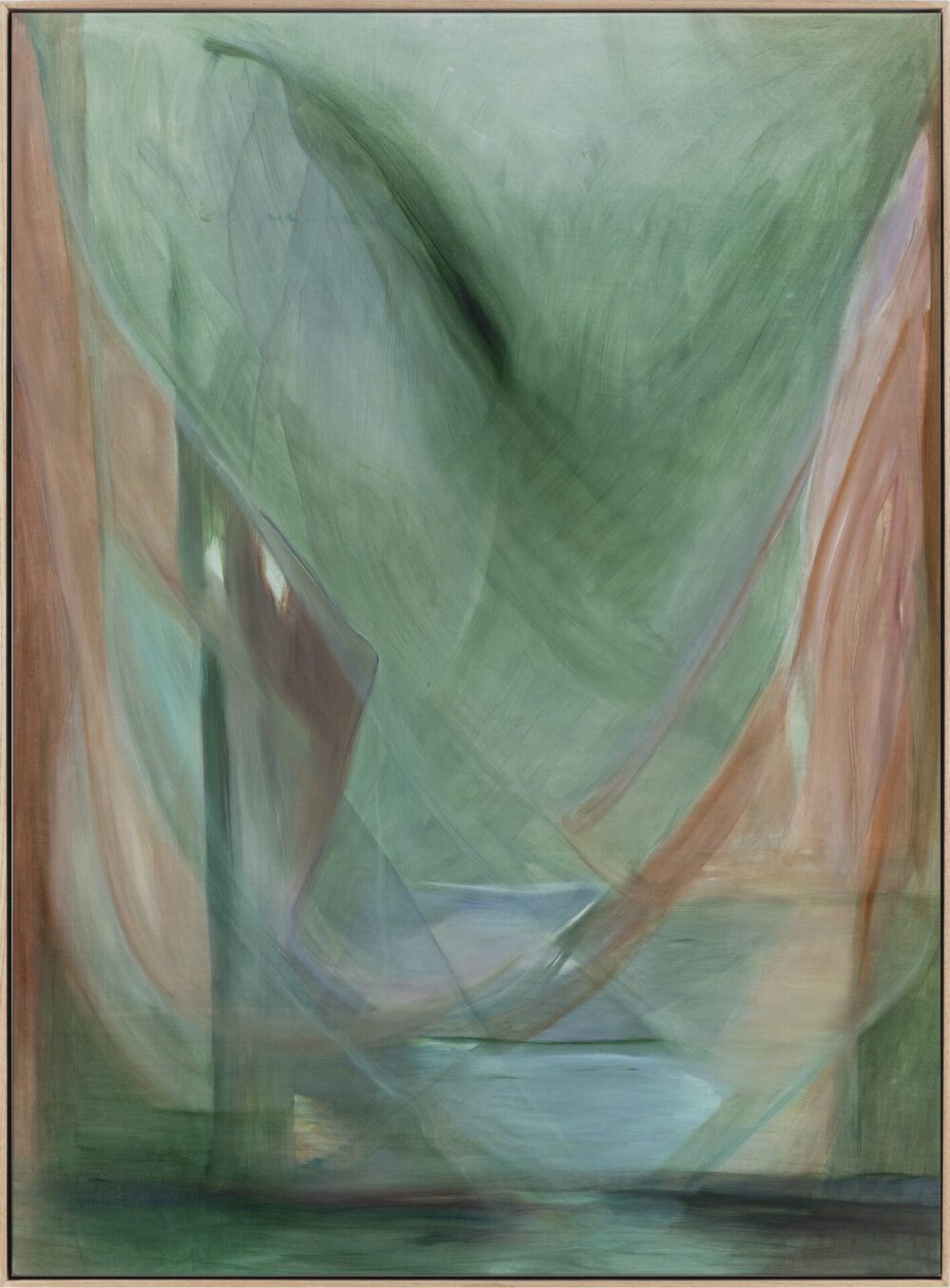
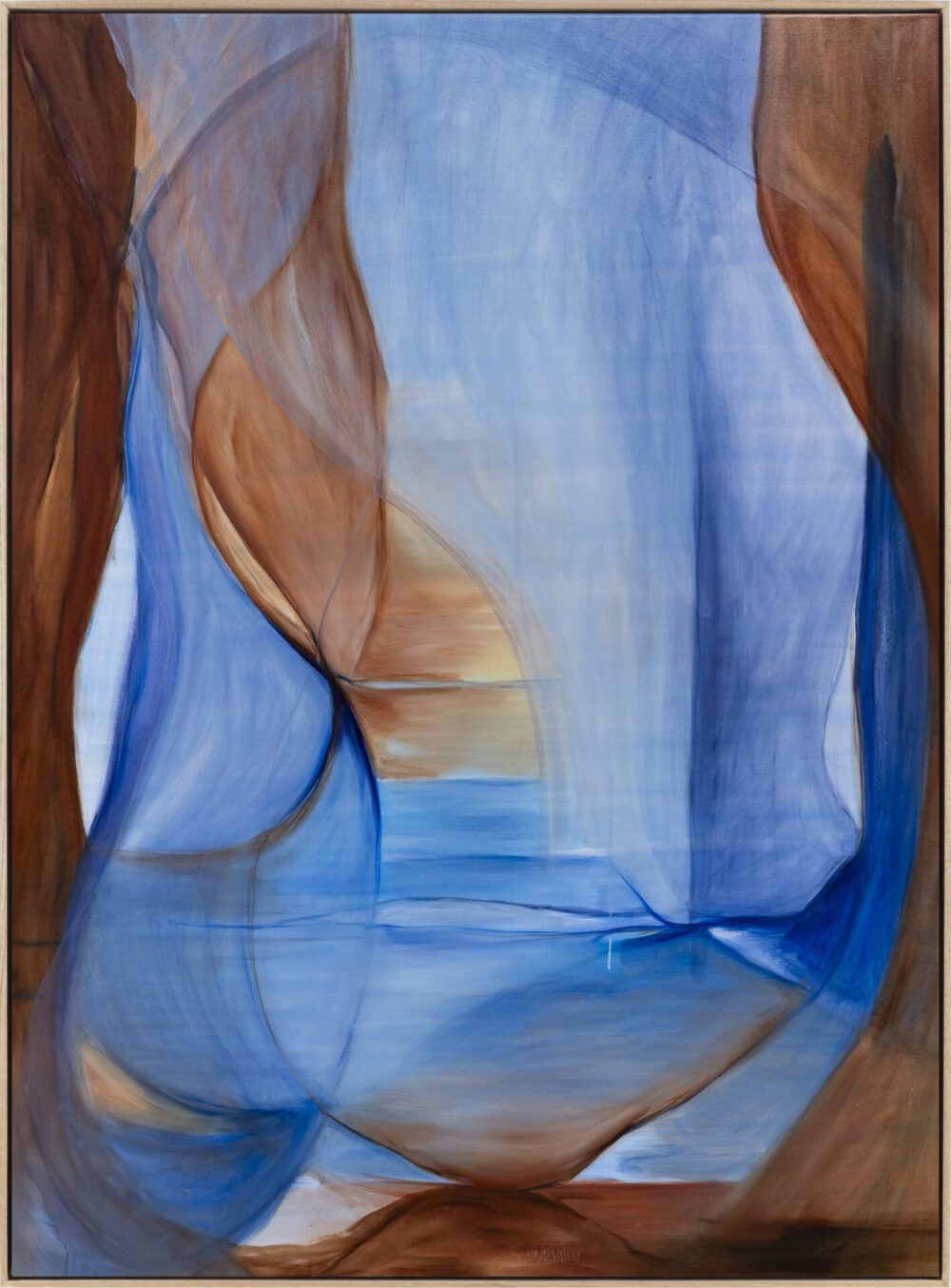
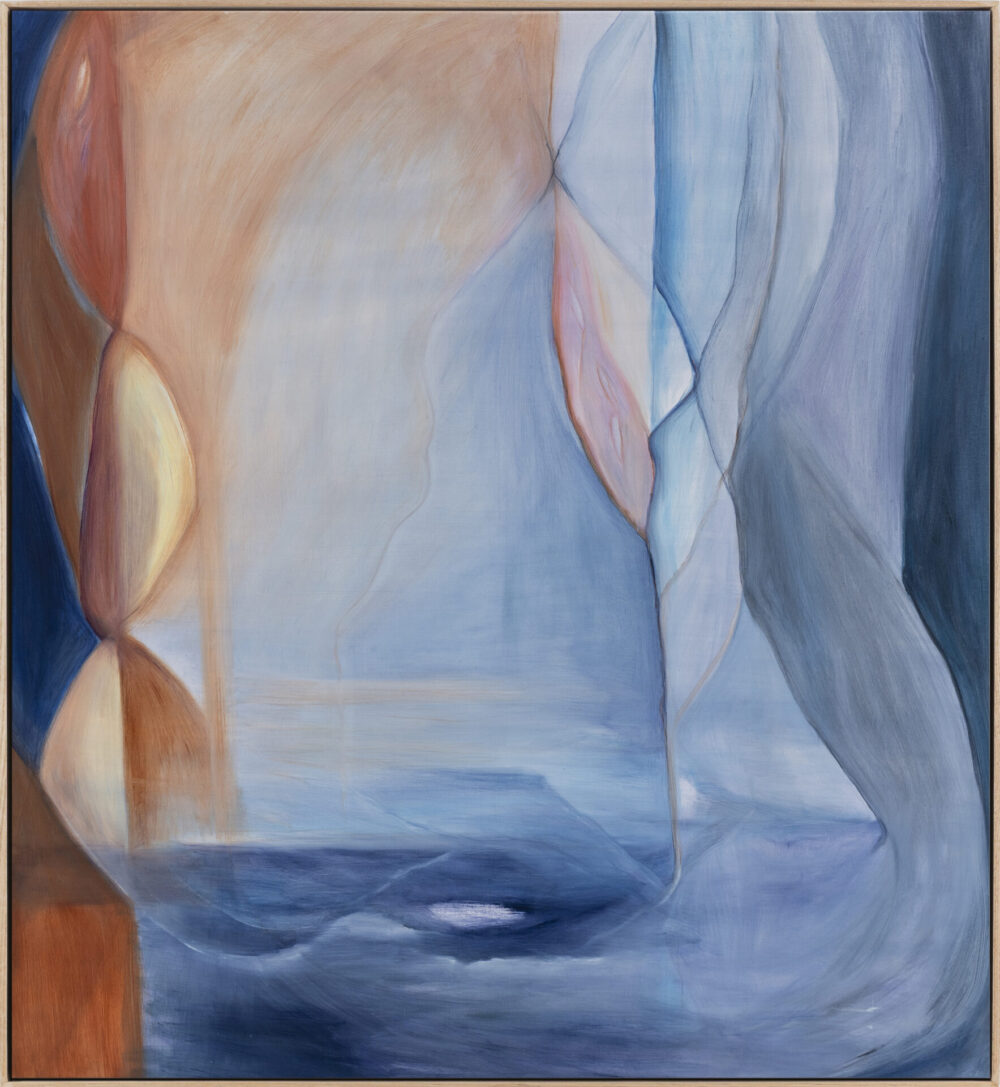
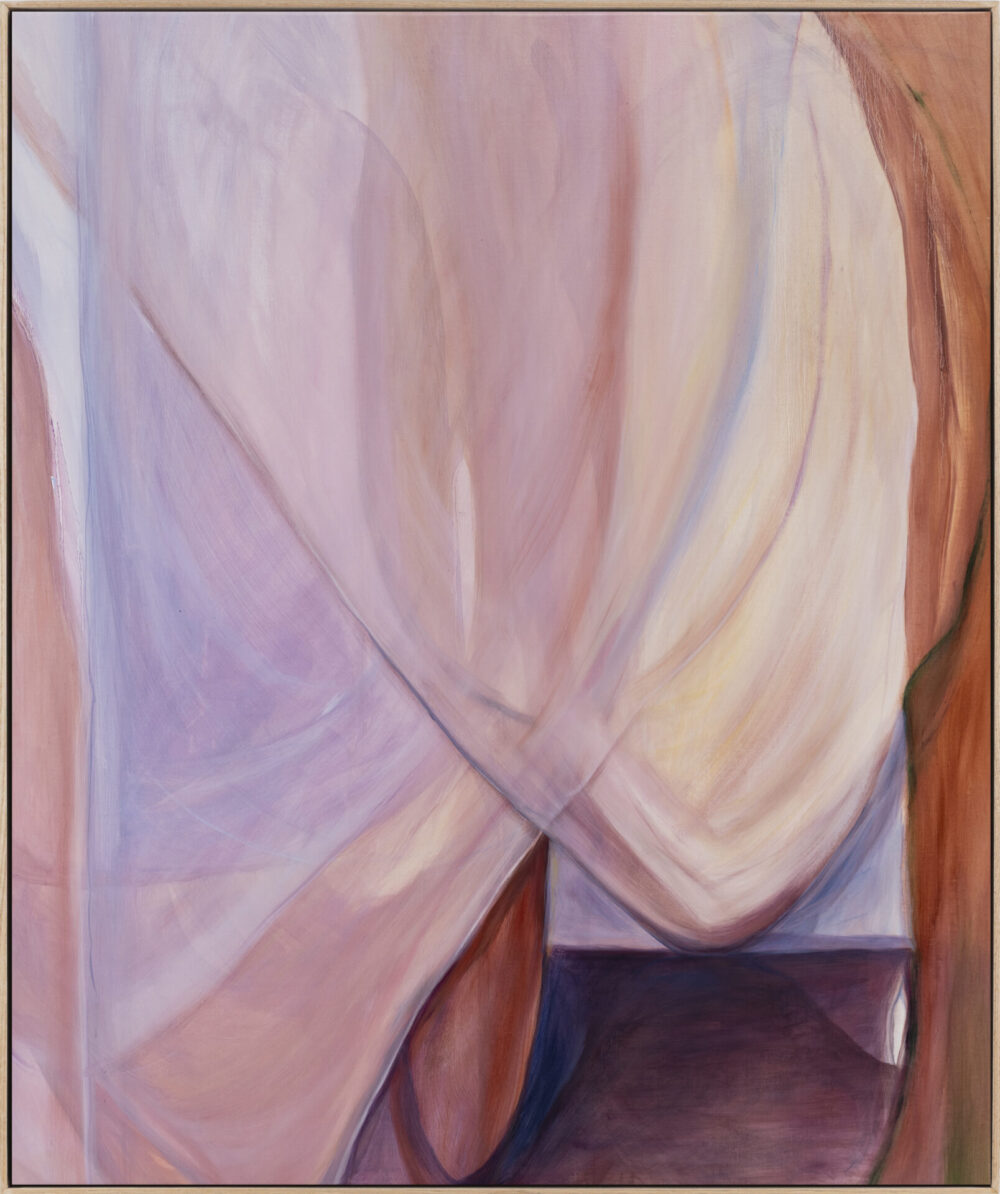
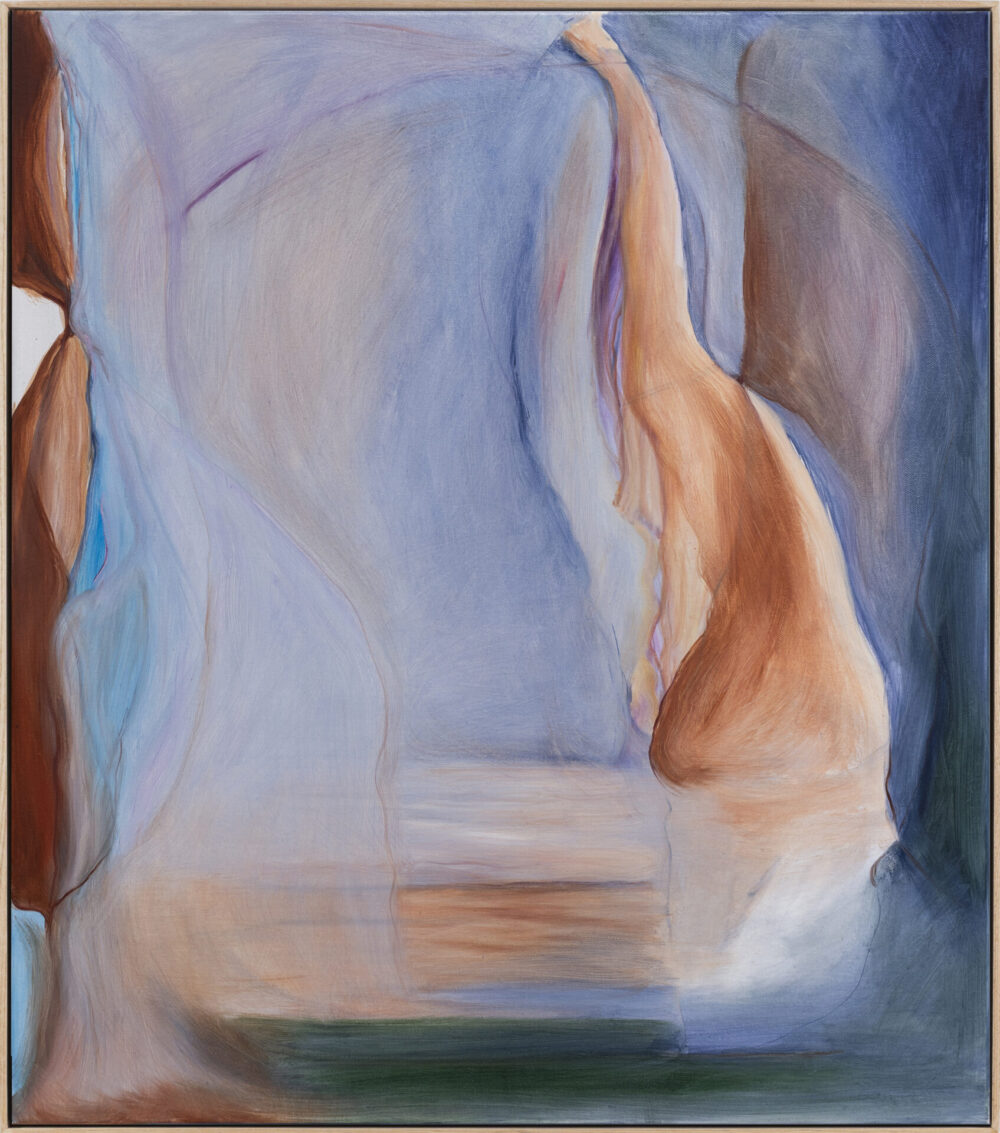
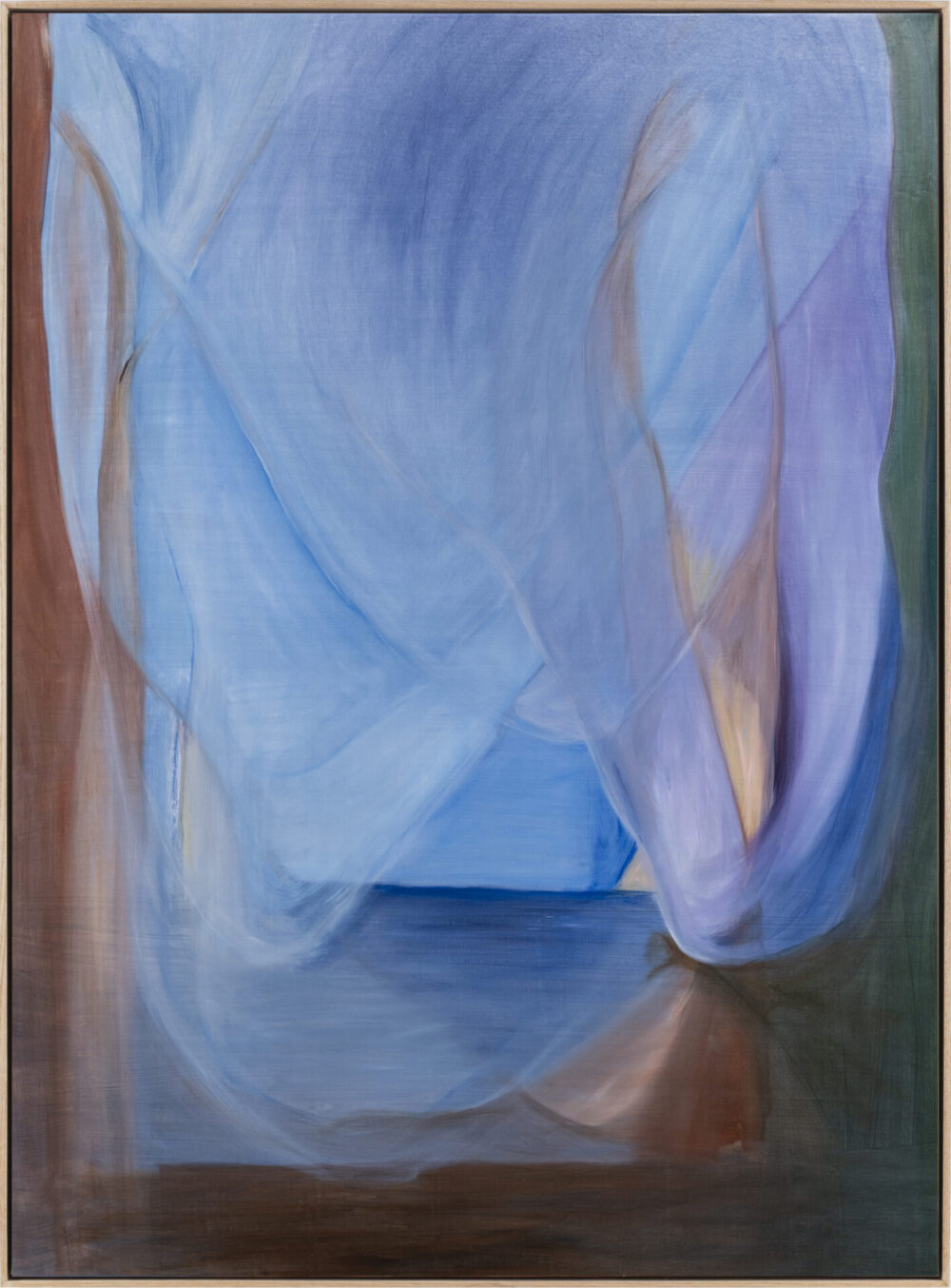
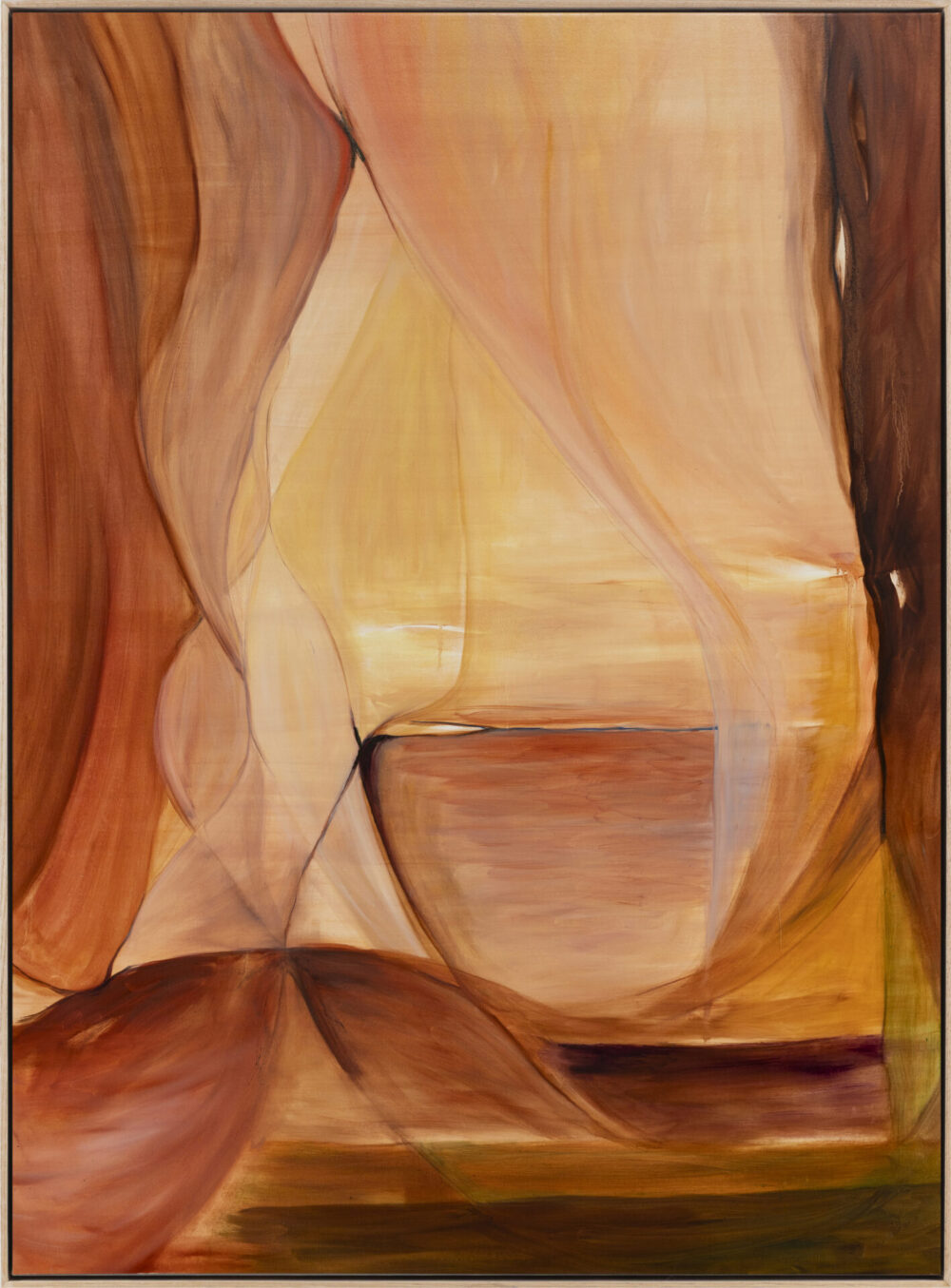
Light of Nature explores the sensory experience of light, place, and belonging in painting. The series started in Mantova, Italy, where Helle was artist-in-residence in 2025. There, she dyed/painted sheer silk works while immersing into the countryside. An awe-inspiring process that continued as Helle travelled via Denmark to Australia, before painting this luminous new series in the studio.
Embodied memories of each place are reflected through translucent layers of paint. Rather than a depiction, the work unfolds recent and distant sensations through gestural movement. Earthy tones merge with Nordic hues and a sense of fluidity. Always following the horizon—and beyond—an ever-present line connects each work, and the notion of living in, and between, light and place.

2026 EOFY Edit

Posted by

2026 EOFY Edit

  • Artist
    Emily Gordon, Kathryn Dolby, Sophie Sachs, Meg Walters and more
  • Dates
    15 Jun—1 Jul 2026

Michael Reid Northern Beaches is delighted to present our 2026 End of Financial Year Edit: a selection of paintings and sculpture chosen for the originality, energy, warmth and beauty they bring to interior spaces.

Running from 15–30 June, this curated edit brings together works by artists whose practices span abstraction, landscape, still life and sculpture. From Melanie Waugh’s sun-drenched coastal scenes to Nicole Steenhof’s atmospheric abstracted waterscapes; from Meg Walters’s richly layered surfaces to the still-life precision of Sophie Sachs, each work offers a distinctive approach to colour, light, texture and form.

Alongside paintings by celebrated artists Kathryn Dolby, Emily Gordon, Debbie Mackenzie and Lauren Jones, the edit also includes an extraordinary ochre-pigmented cottonwood sculpture by Jeremiah Bonson, bringing a powerful sculptural presence to the collection. Together, these works offer a range of approaches, moods and materials, presenting opportunities to acquire original pieces by some of the most compelling artistic voices working today.

For all enquiries, please email sophienolan@michaelreid.com.au
Join our mailing list
Interests(Required)
This site is protected by reCAPTCHA and the Google Privacy Policy and Terms of Service apply.
REGISTER YOUR INTEREST: 2026 EOFY Edit