


MICHAEL REID NORTHERN BEACHES & SOUTHERN HIGHLANDS
Drew Truslove
ARTIST PROFILE
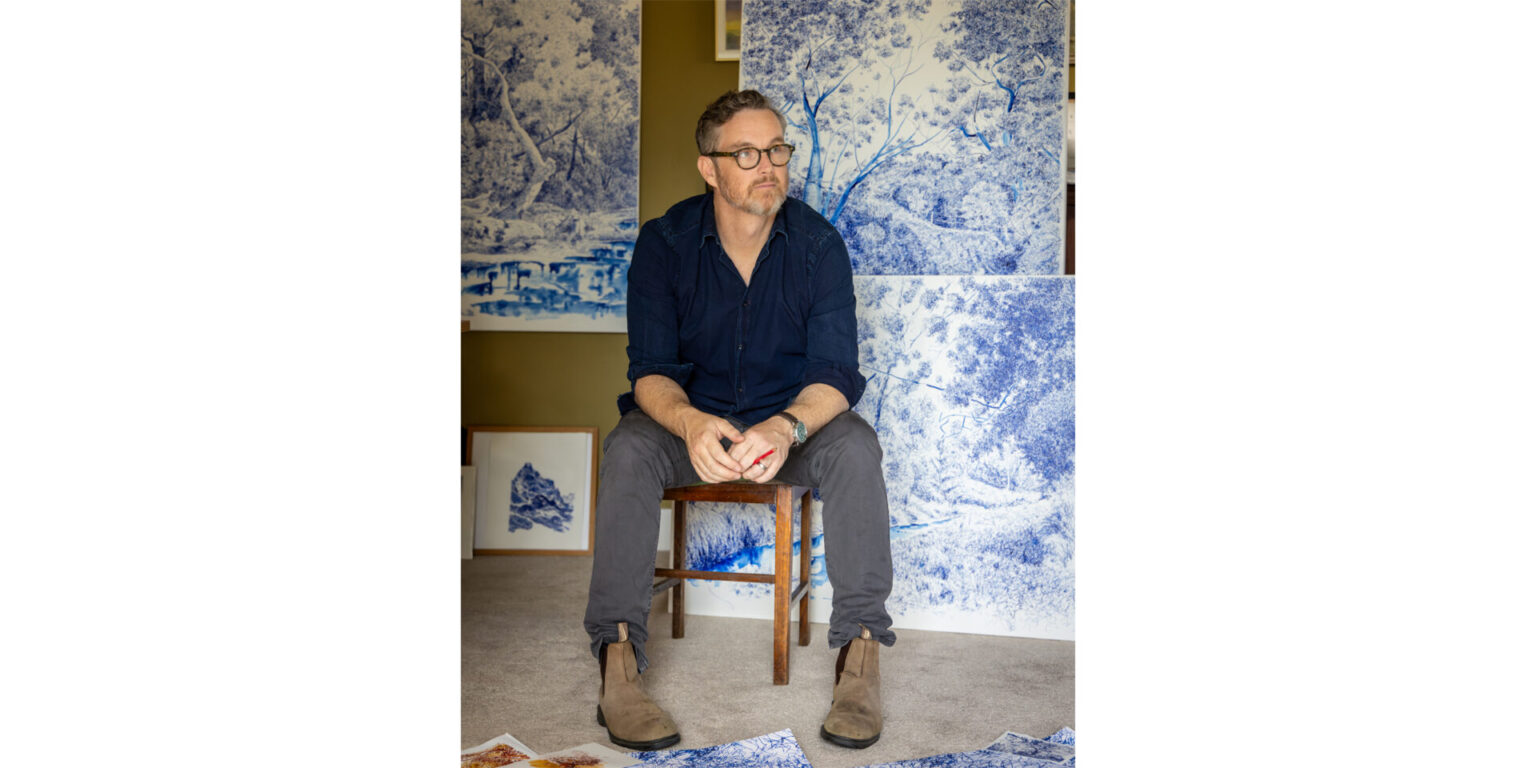
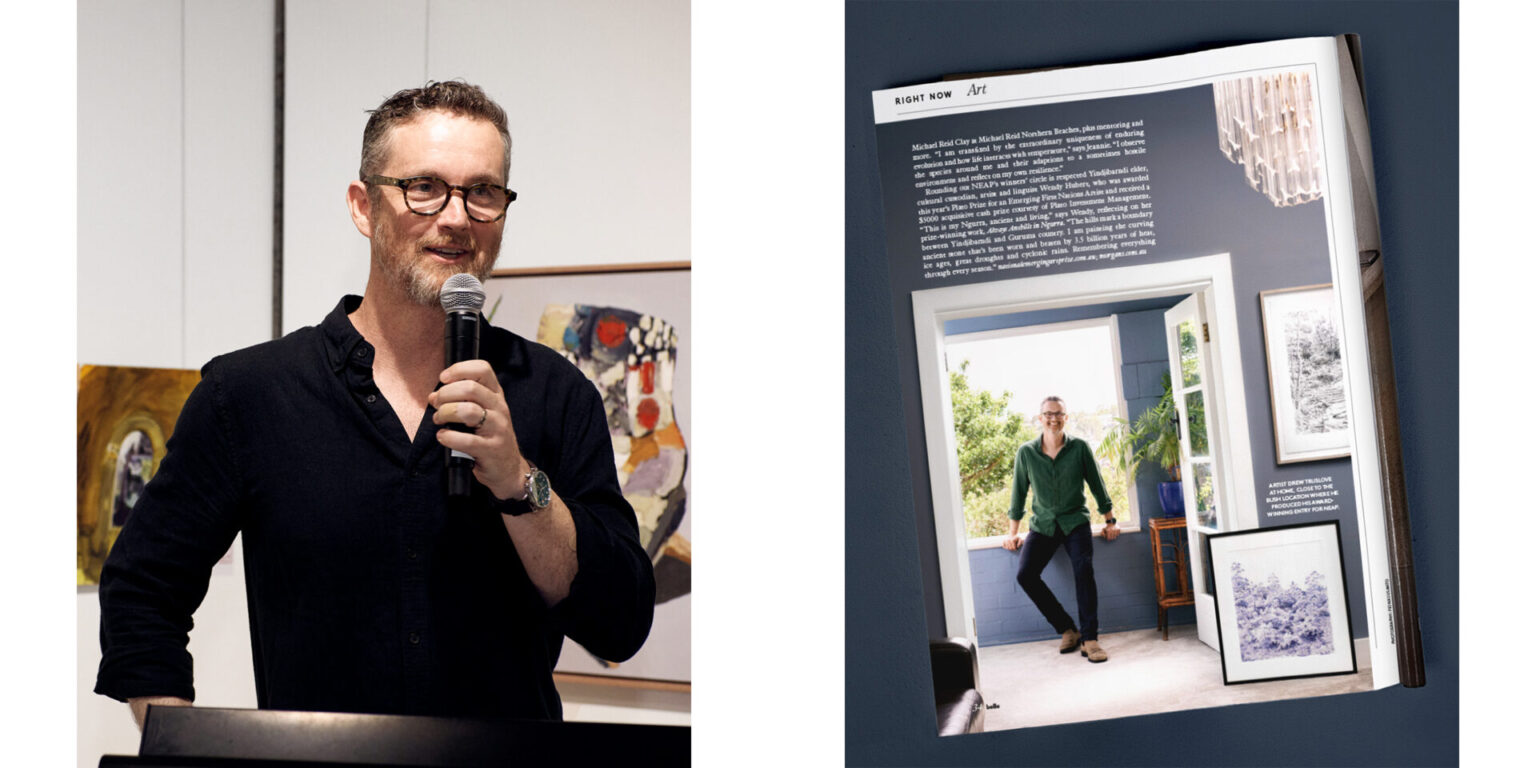
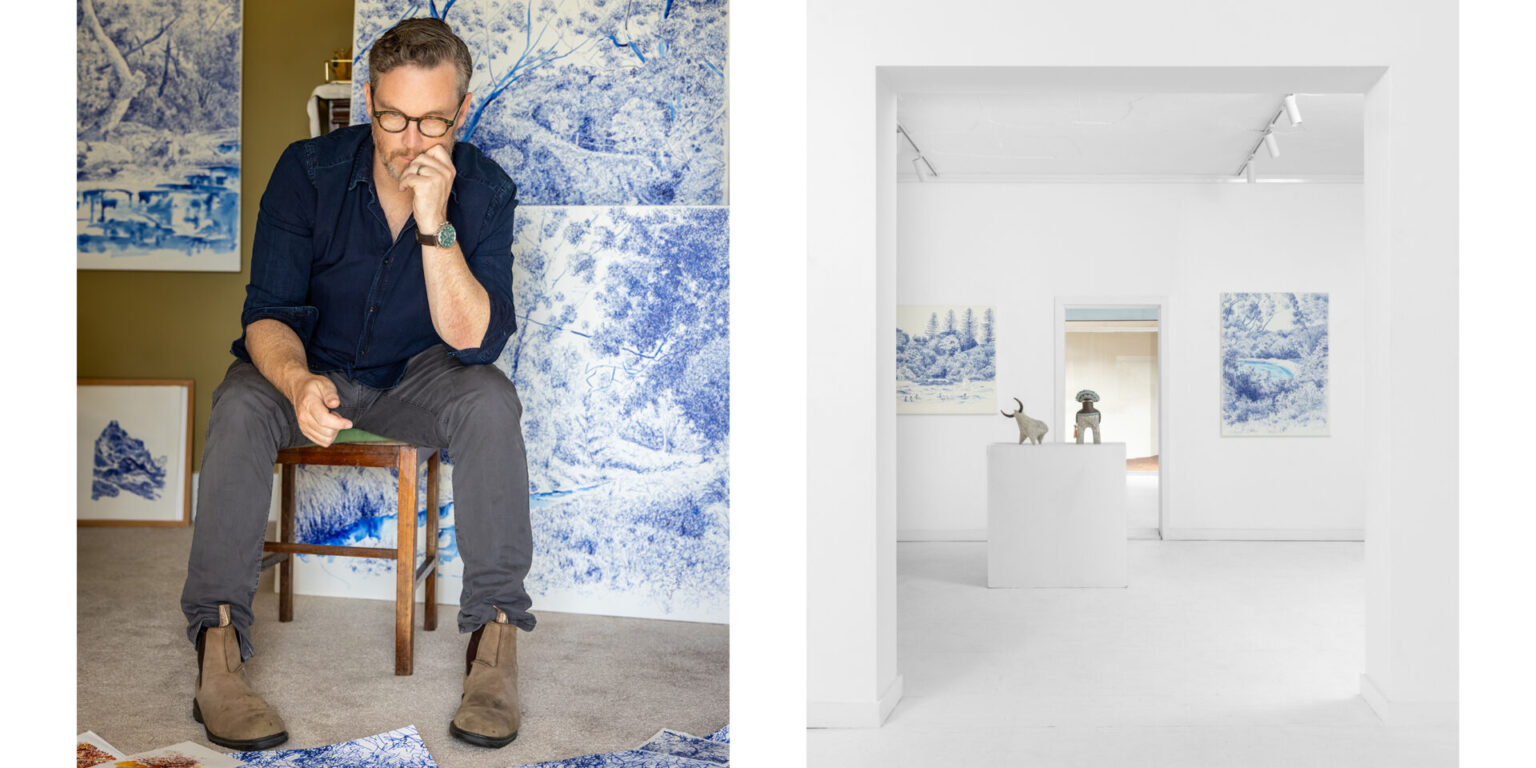
Ahead of the announcement of Drew Truslove’s representation by Michael Reid Northern Beaches and Southern Highlands, our gallery team visited the Eora/Sydney artist and 2024 National Emerging Art Prize Award of Excellence winner at his lower North Shore home and studio overlooking Flat Rock Gully – a site that has loomed large in his work to date.
“I will often choose a place where I can do multiple sketches – and final pieces – from the same spot, creating a series as a survey of what that land looks like right now,” says Truslove in our wide-ranging interview, which covers his formative influences, moments of creative breakthrough and the coastal enclaves at the heart of his next solo exhibition, Waterline – opening 9 October as the inaugural presentation at the expansive new home of Michael Reid Northern Beaches.
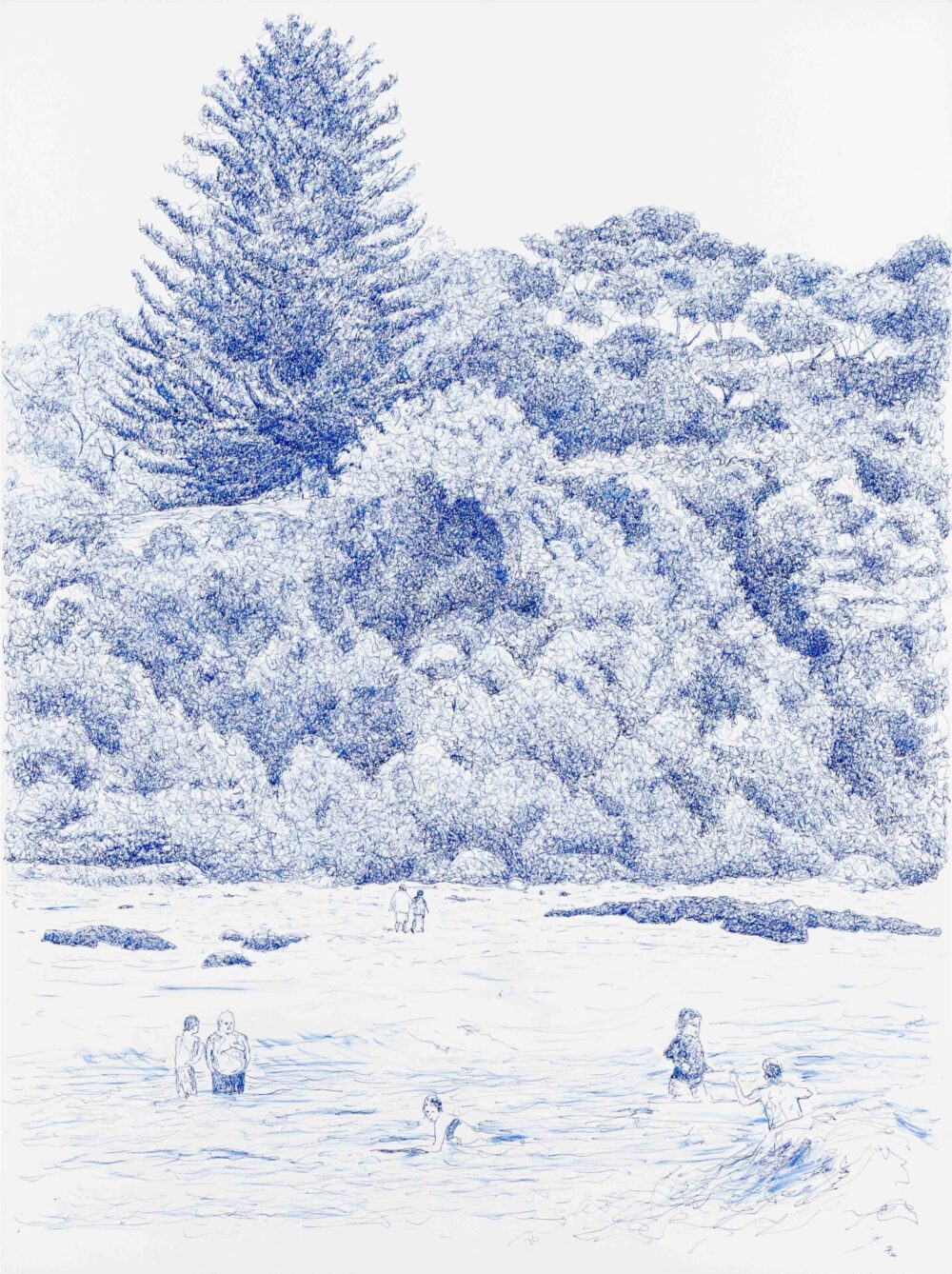
“Often beach scenes can be quite nostalgic and I hope that people see themselves in the waves or on the sand,” says Truslove. Works from Waterline can be previewed and acquired below alongside our conversation with the artist. For enquiries, please email sophienolan@michaelreid.com.au
“I like portraying people in landscapes in a fairly rudimentary way, having them dwarfed by nature. They’re cameos against the backdrop – the main star of the show.”
DREW TRUSLOVE
___
What were some of your earlier creative influences?
I had parents who encouraged me to draw from a very young age, and my father was a wonderful artist as is my uncle. I still recall my father urging me to look at the actual shape of people’s bodies, helping me to move out of drawing stick figures when I was really little. From an early age, I was inspired by the drawings and paintings of Picasso, as well as Dalí and da Vinci. Later I have found evergreen sources of inspiration in the work of Jacques-Louis David, Géricault, Caravaggio and Goya. Alongside Monet I find the work of Morisot so stunning – her paintings are an excellent lesson in composition and storytelling. Closer to home over the years I’ve loved the work of artists such as Brett Whiteley – also a fan of ultramarine blue – and Mike Parr. The intensity of Parr’s self-portraits is spellbinding.
How did you first come to pursue drawing – and what informed your work at that time and into the early stages of your career?
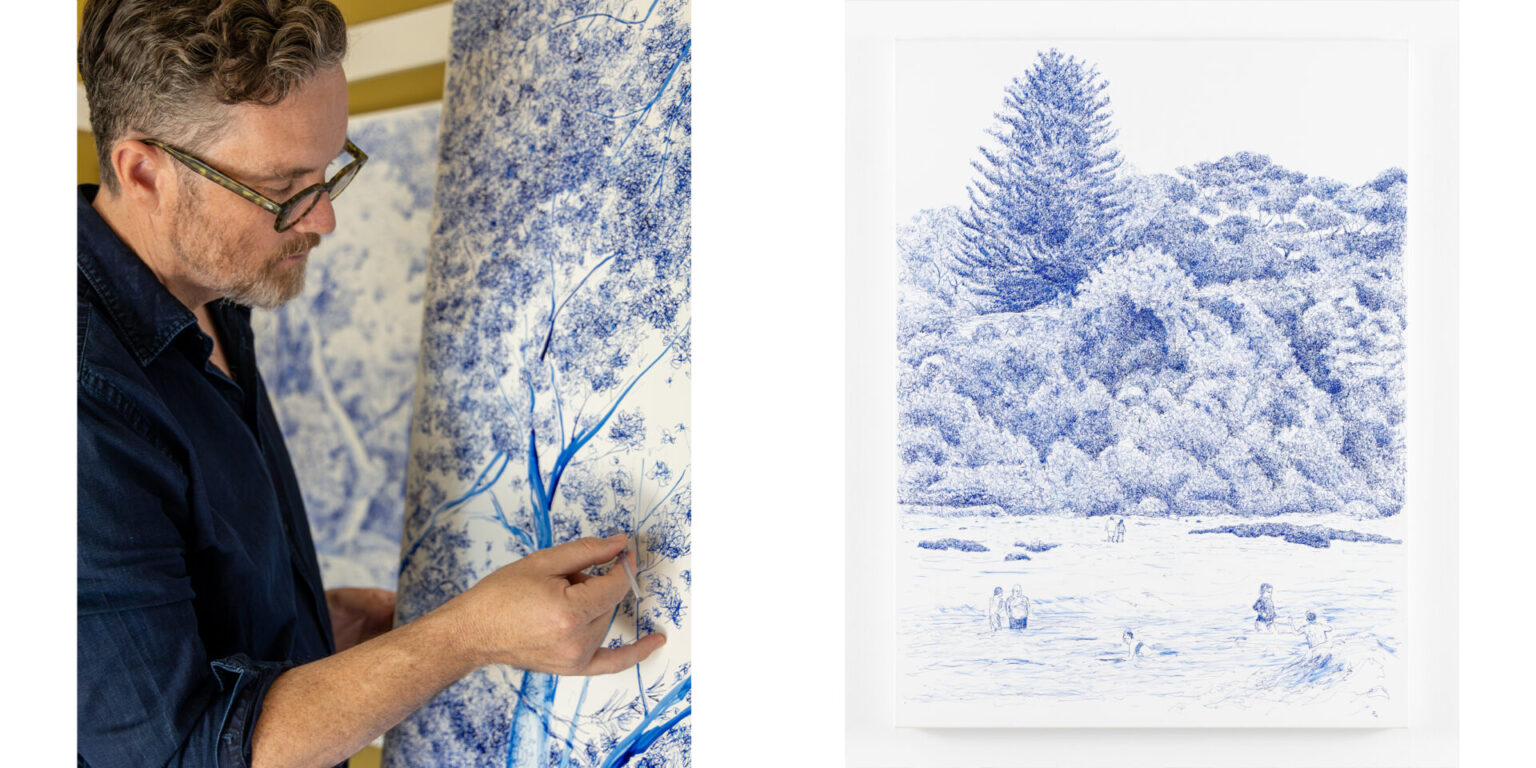
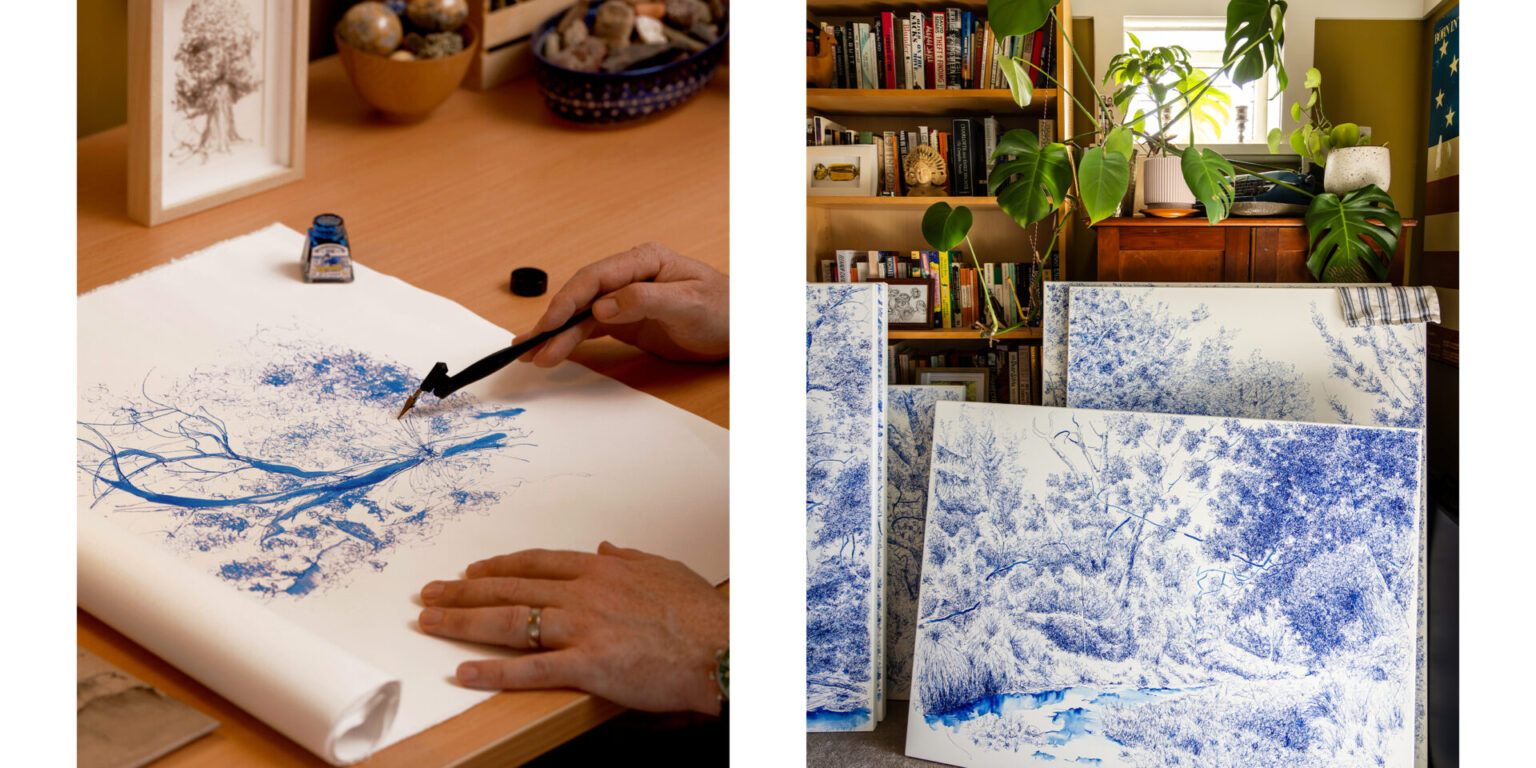
I’ve drawn all my life – nominative obligation, I suppose – and most recently I’ve been using ink on paper and canvas. About 10 years ago I was at a crossroads; I wasn’t liking much of the stuff I was generating and wanted to do something different – divorced from formality and as incomparable as possible to other practices I’d known. I wanted to carve out something for myself that I hadn’t really seen. One day I saw a glimpse of three figures sitting by the side of the road, teenagers I think, all in black, with one of them sitting on another’s lap. I was driving so it was only a glimpse and they all seemed to merge into each other – the scene was so intimate and harmonious. I thought – how might I draw that scene? That’s where the faster, more chaotic brushstrokes were born. That early influence still informs my work now – the style is being refined and developed as I go but I’m enjoying having it as a staple at the moment. The clarity and speed of that ink line is quite striking so it’s fun to work with.
How did the landscape emerge as a prevailing concern?
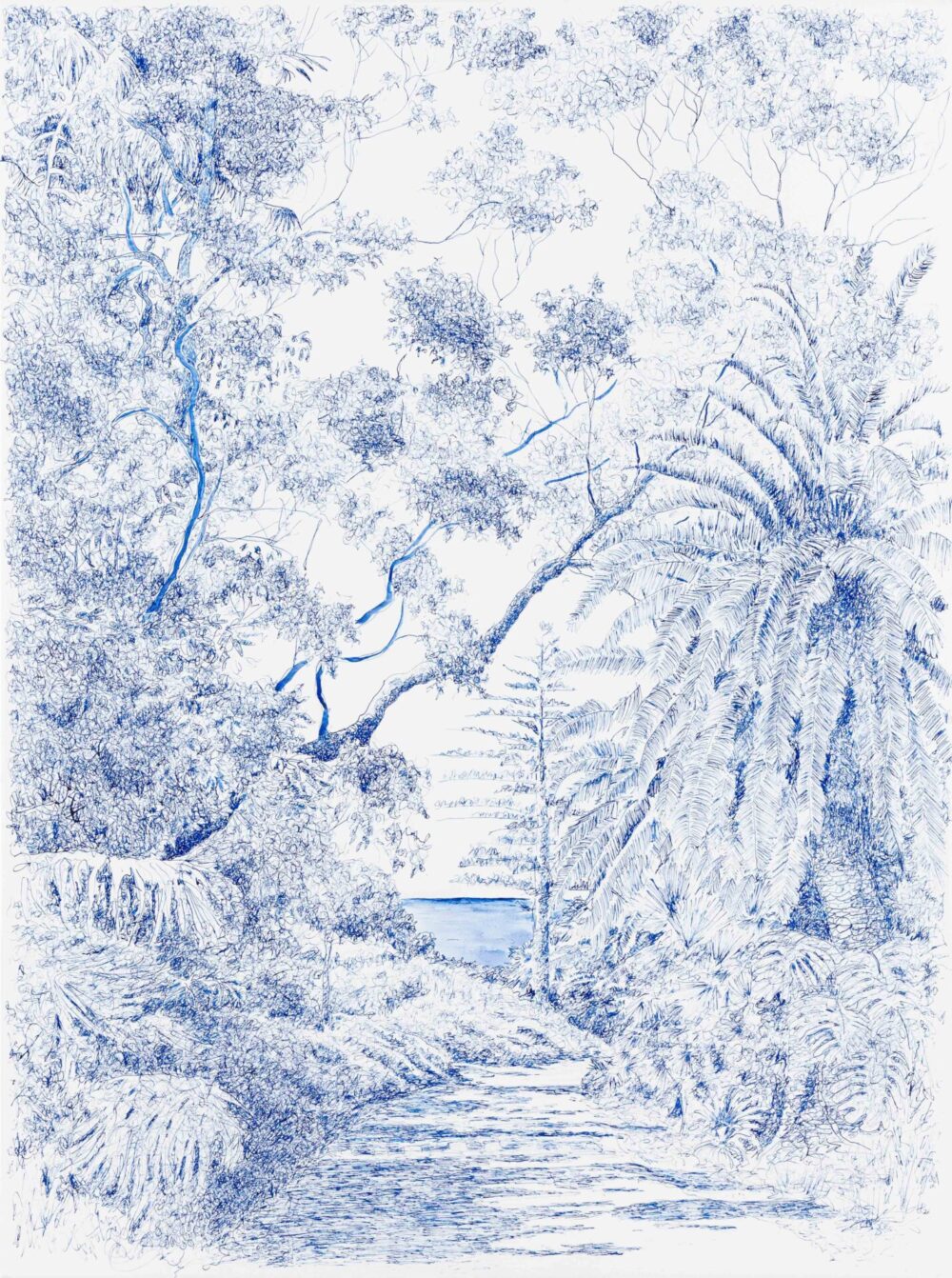
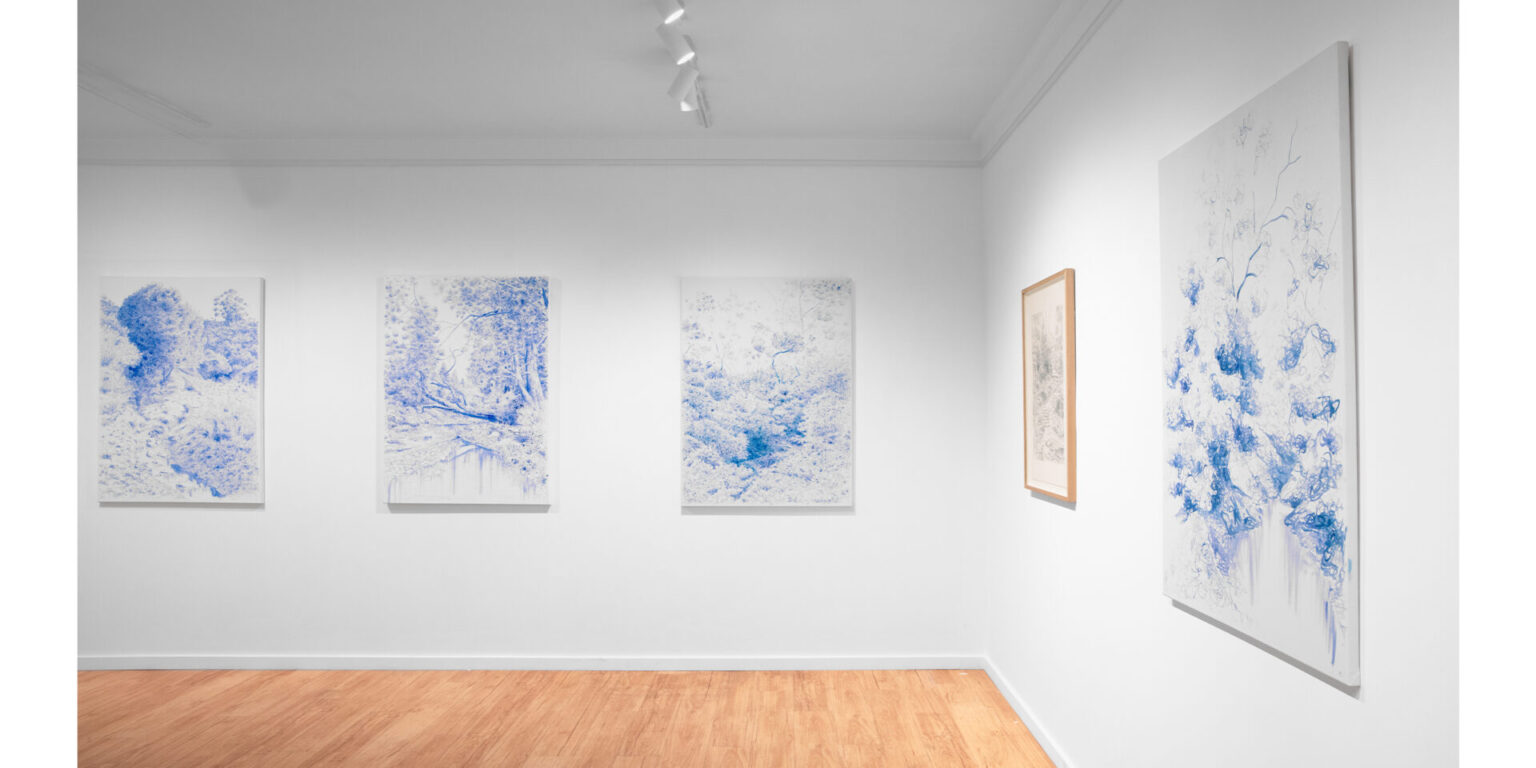
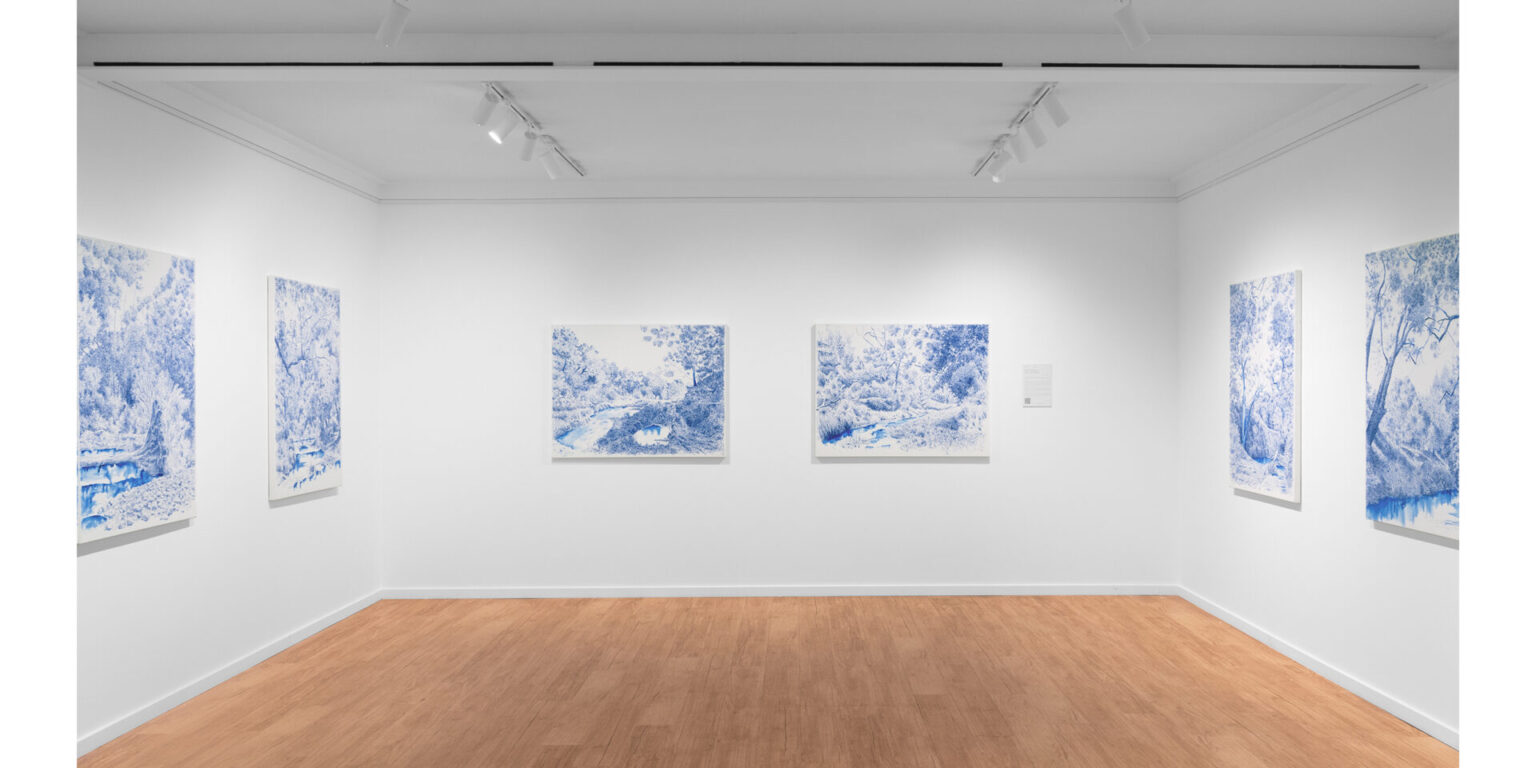
I initially used that style for portraits, but after a while turned my attention to trees and landscapes. I have a few key bushland areas I’m lucky enough to spend time in. One is right next to our house, a beautiful place called Flat Rock Gully, which has formed the basis of two of my shows in recent years. It’s a stunning piece of landscape winding down a steep hill, around which Indigenous folks hunted, played, swam and fished for many thousands of years. The other muse for me is Jamberoo. I’m lucky enough to spend time at a farm down there quite often and the property has a rainforest, a river, hills, animals and thick bushland that is ripe for painting. So these two areas have become recurring and patient sitters in my work. I managed to tear myself away from them to spend some time drawing beach scenes recently, which is probably good for me.
How has your approach to drawing developed over time?
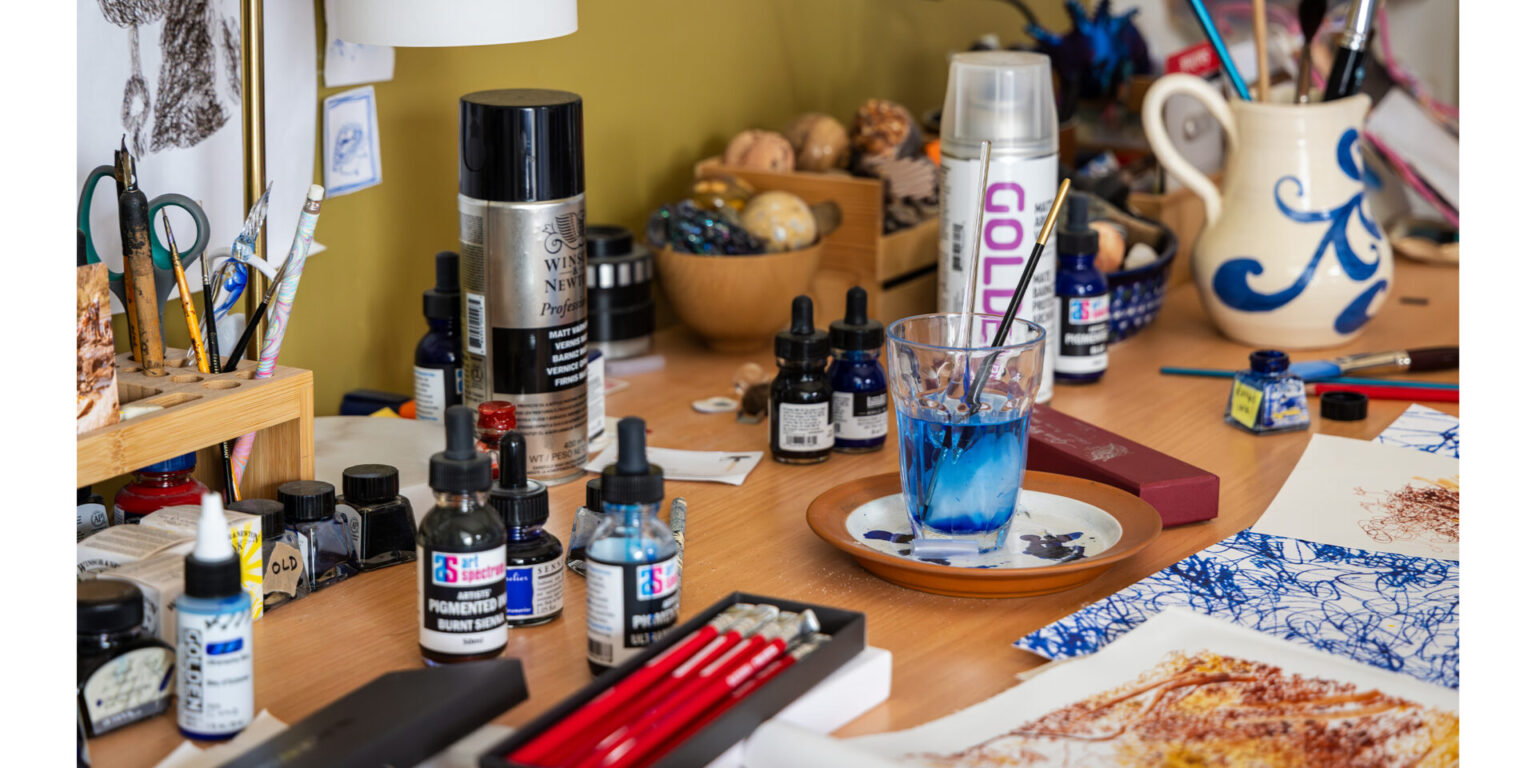
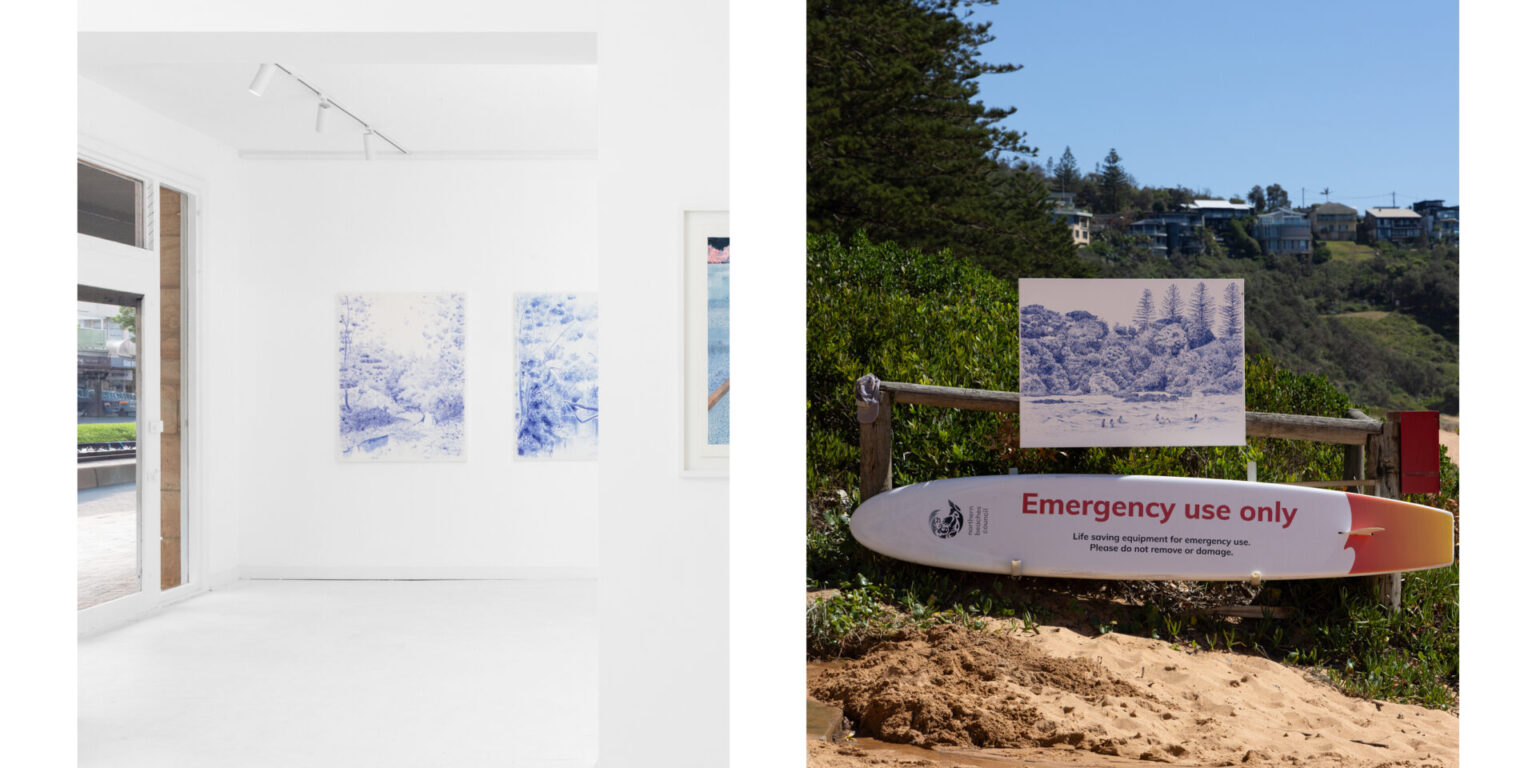
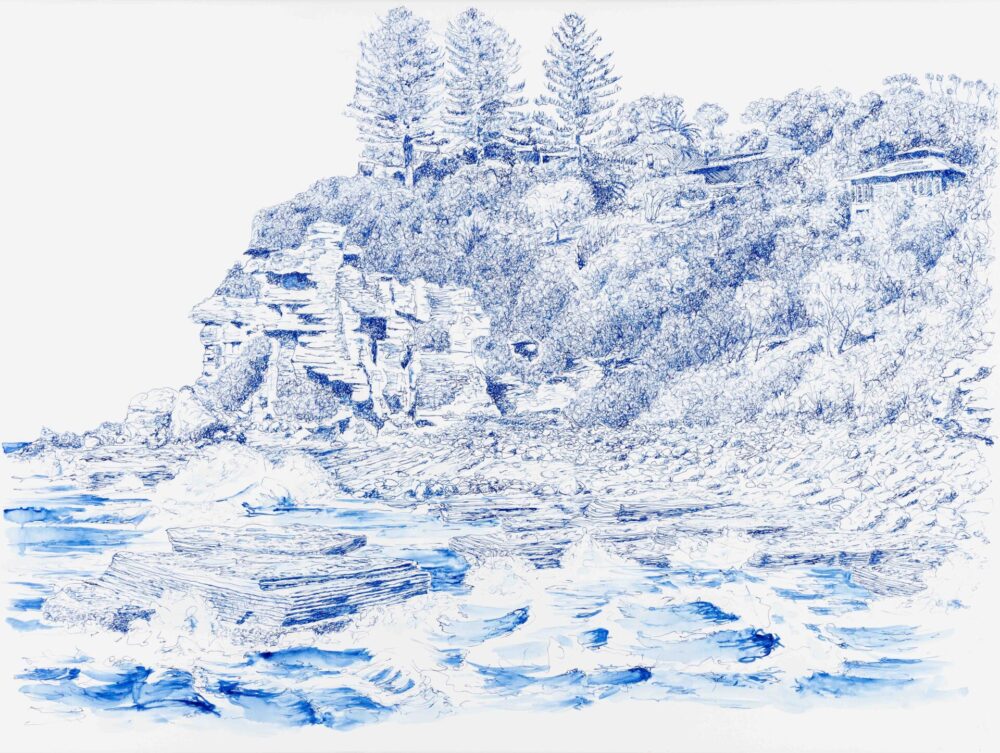
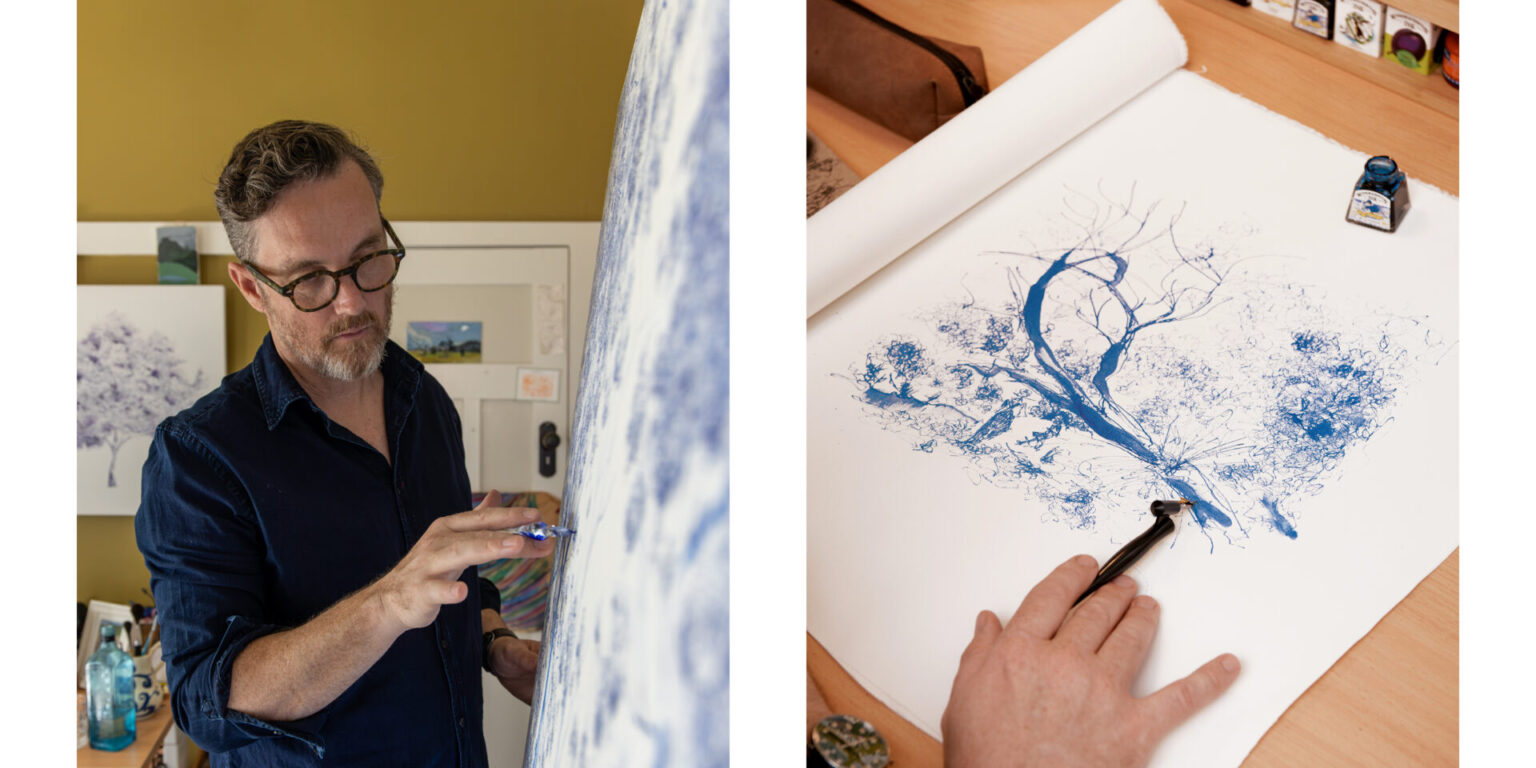
With each painting it refines a little – the pictures have become a bit more dense and I try to focus more on light and composition. I’ve added in more water courses, so the landscapes have stretched from being single trees into riverscapes and beachscapes. I’m also moving into increasingly larger pieces. I’ve been using ultramarine blue for a few years now; before that I was predominantly using black. The blue was an experiment that I’ve fallen in love with. It’s such a strong colour and it has so many different possibilities, having traces of light blue, purple and green throughout. It allows for intensely dark and soft light areas in the same artwork. Ultramarine itself is a very old colour with a history dating back to the 6th century, when monks ground it up for cave paintings in Afghanistan. The creative process usually involves sketches in situ, followed by canvas work in the studio. Depending on the size of the piece I will start the final work en plein air, but with the larger pieces it’s a little more difficult. I will often choose a place where I can do multiple sketches – and final pieces – from the same spot, creating a series as a survey of what that land looks like right now.
Could you tell us about some of your favourite career experiences?
I recall a few times as a child realising that what I was producing on paper was different to everyone else and I found that absolutely thrilling. I remember kids and teachers looking over my shoulder and calling others over to look. As an adult, I really enjoyed putting together one of my earlier exhibitions where I did a series of portraits of one tree, a gigantic Illawarra fig that sits in the farm at Jamberoo. I painted this from different angles, en plein air, and this is one of the first times that I showed that style to a broader audience. It was received well and again that was a great breakthrough for me. More recently, getting runner-up in the National Emerging Art Prize was a thrill and an honour. That moment was certainly pivotal in my career and exceptionally influential in what I’ve been doing for the last couple of years.
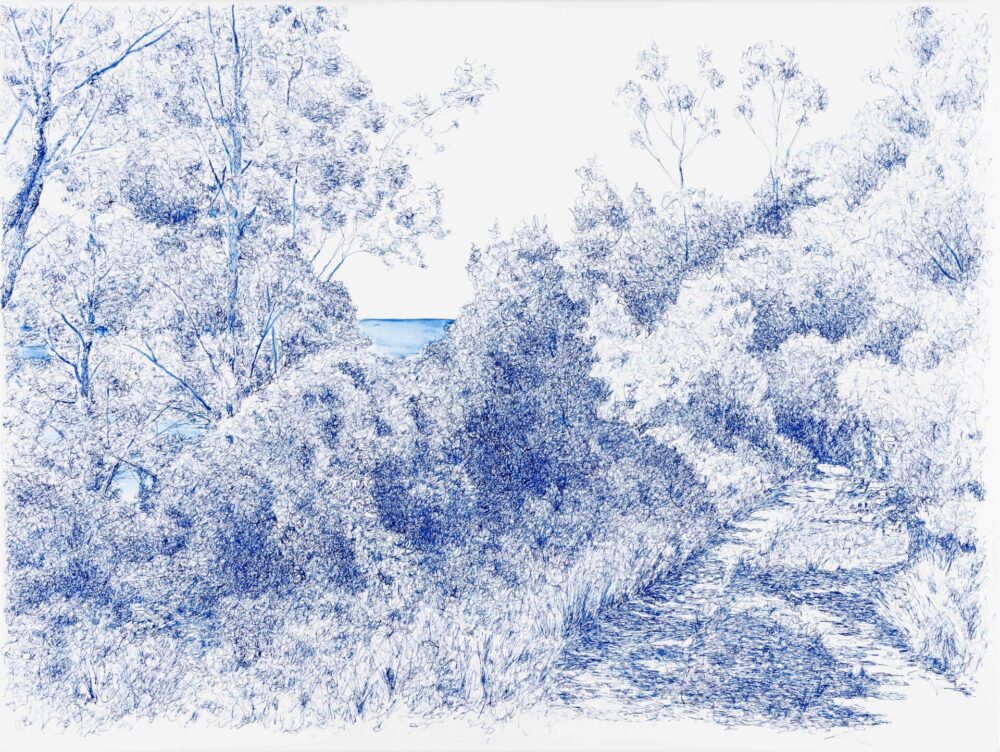
Could you tell us the story behind your work Flat Rock, River Crossing, 7th Angle from the 2024 National Emerging Art Prize?
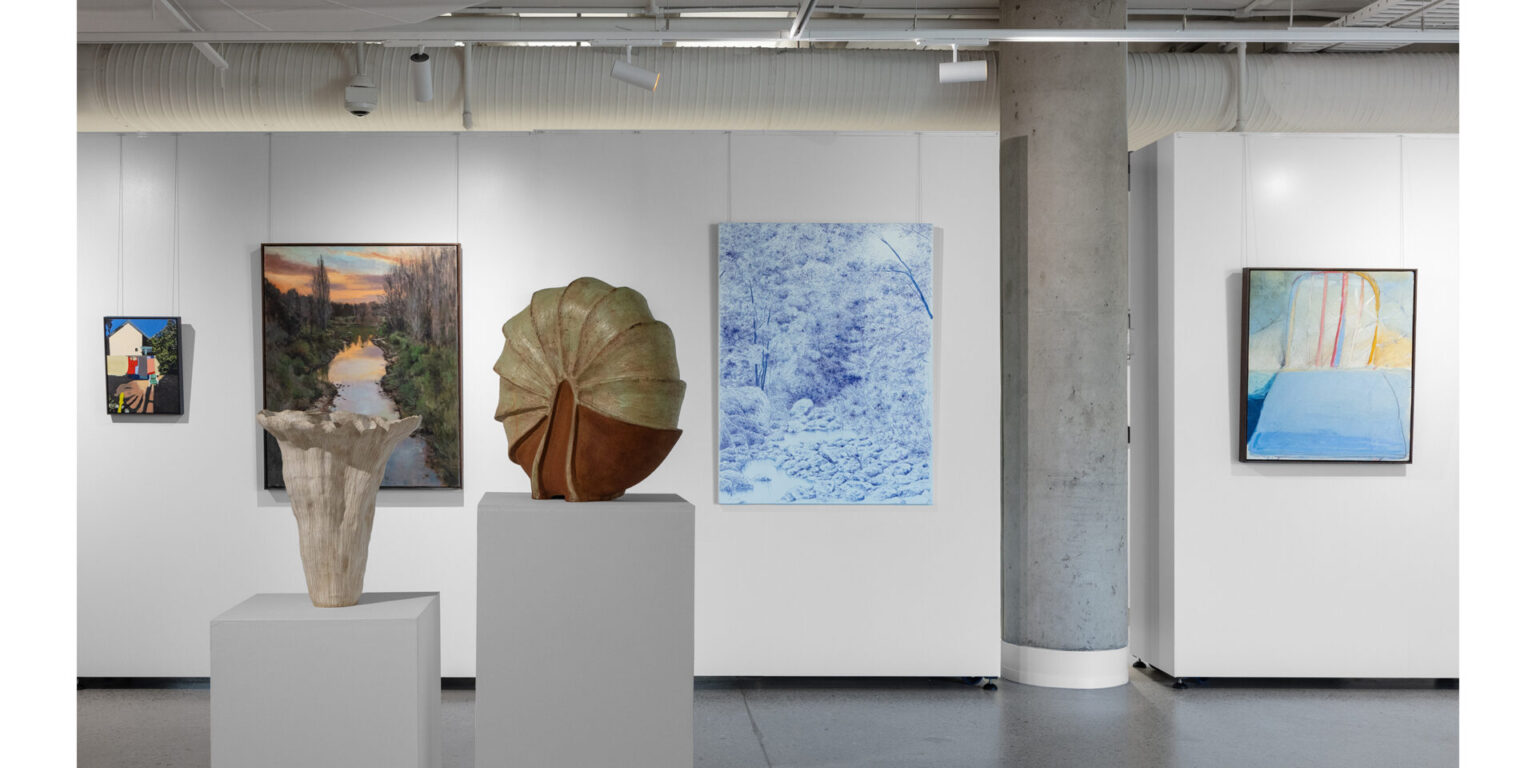
During Covid, we were lucky enough to use the Flat Rock Gully walking trail as a place to escape and get the hell out of the house. I was walking the trail once with my son and we stopped and looked around in a circle and realised that each angle that we looked at was a beautiful landscape within itself. This started my practice of doing multiple landscapes from the same spot on the ground. This was the first time I had painted something that big. It was a risk given that everything else I’d done had been on paper and this was a real experiment in terms of using canvas and trying to reproduce an effective landscape with such scale. It took a while to do but I was really happy with it. I first exhibited it in a show alongside the stunning work of the artist Mark Rowden, but while people commented favourably, no one came close to taking it home. I started to think it was too big and that something had been lost in the scale and perhaps I needed to stick with smaller pieces. As a last minute thing I decided to enter it into NEAP. On the night it was a great thrill to get the Award of Excellence in painting and I met some collectors and artists there who have become wonderful friends. This award also gave me the confidence to use that level of scale for my landscapes. In fact nowadays that’s the smallest size I use.
Your most recent exhibition, After the Flood, focused closely on the Minnamurra River and a landscape transformed by flooding. How did that body of work develop your thinking about the landscape?
Historically, I looked at landscapes at face value, really just considering the beauty of the composition and the bushland involved. This is actually not a bad thing to do. I think that often landscape paintings will ask a question of the audience: ‘do you think this landscape is beautiful’ and ‘would you like to walk around in it’? I usually try to tick both those boxes, however with After the Flood it was something different. I wanted to capture the impact of a particular event, in this case a series of floods that had severely impacted the landscape. So there was something more thematic there and, what I realised halfway through painting this, was that the series actually reflected life and death in the one motion. The pictures were filled with broken branches and flood debris, yet there was new growth trying to push its way through. Nature wanted to win in the end.
What was the starting point for your new series and how did it evolve?
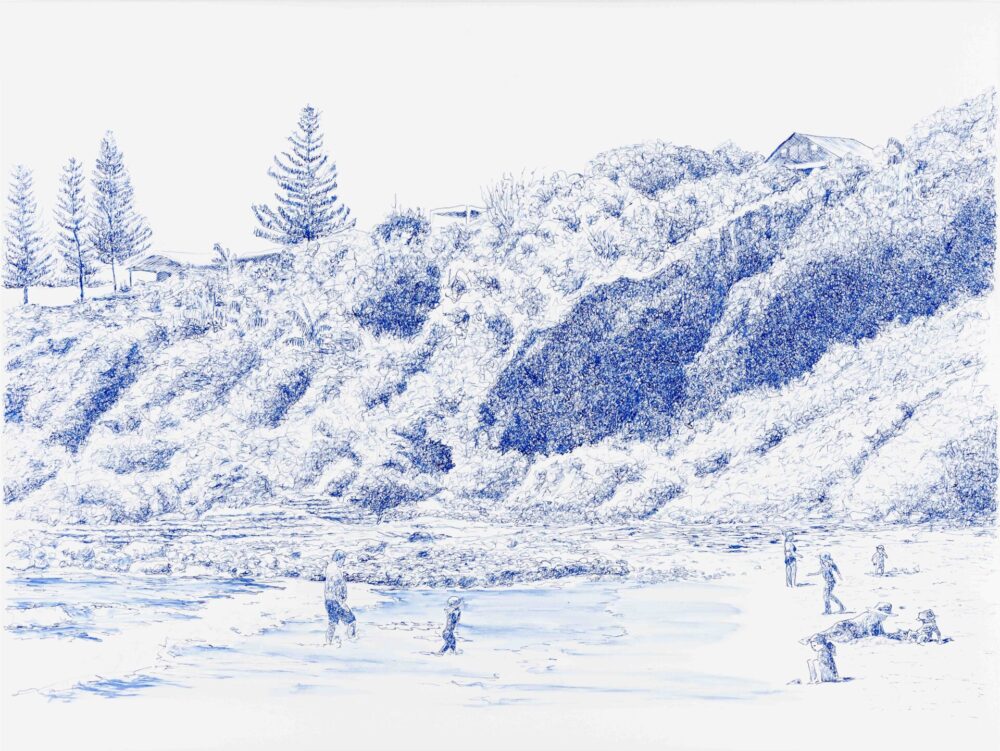
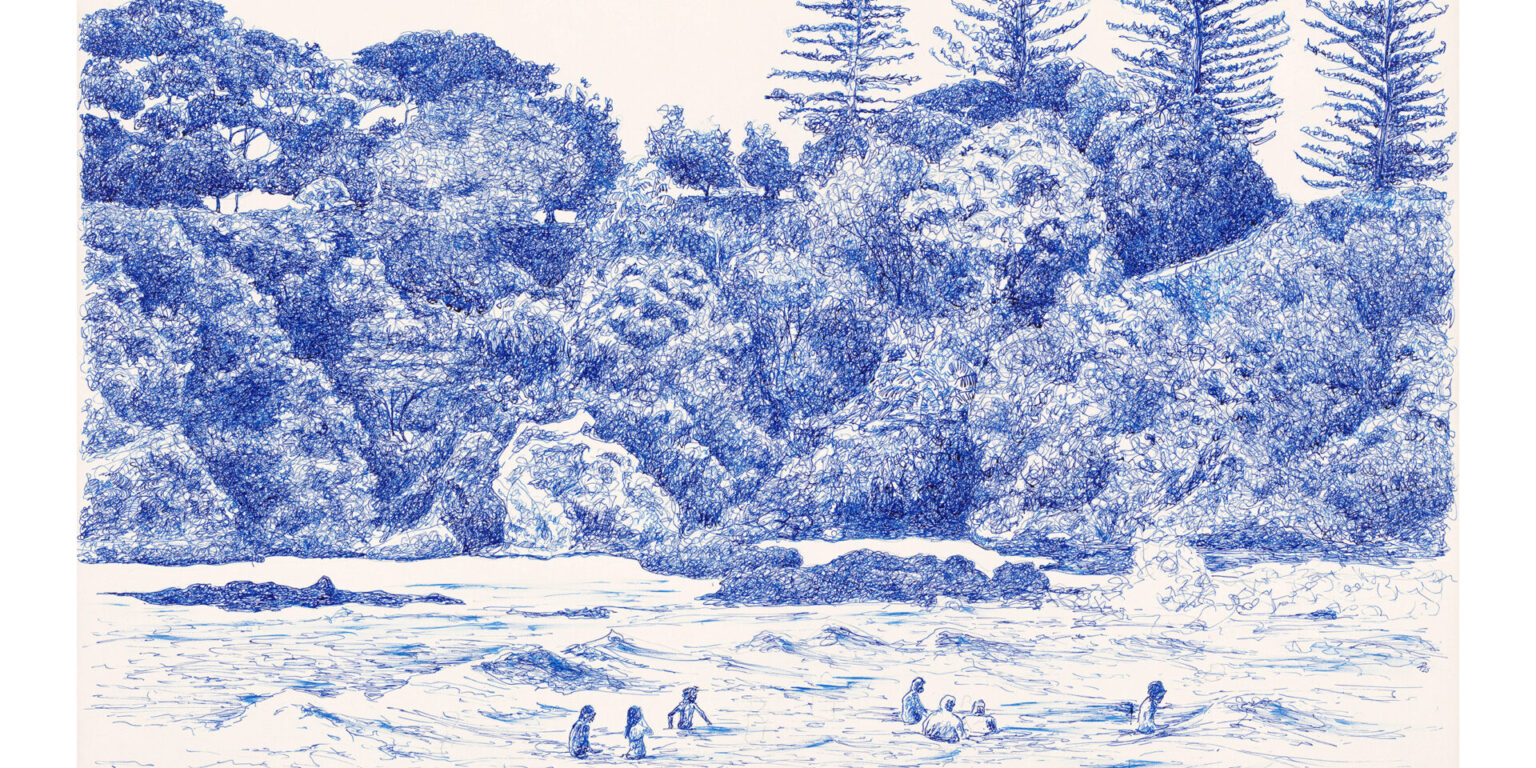
This current series looks at the human experience of beaches, with people playing in the shallows, strolling in the sand and walking towards the beach. However, these are really landscape pictures and the humans are quite secondary. I like portraying people in landscapes in a fairly rudimentary and brief way, having them dwarfed by nature. They’re cameos against the backdrop, which is the main star of the show. I’ve enjoyed looking at different ways of representing the water and at the different kinds of trees that we see on these coastal landscapes.
Is there one work from the new series that feels particularly significant?
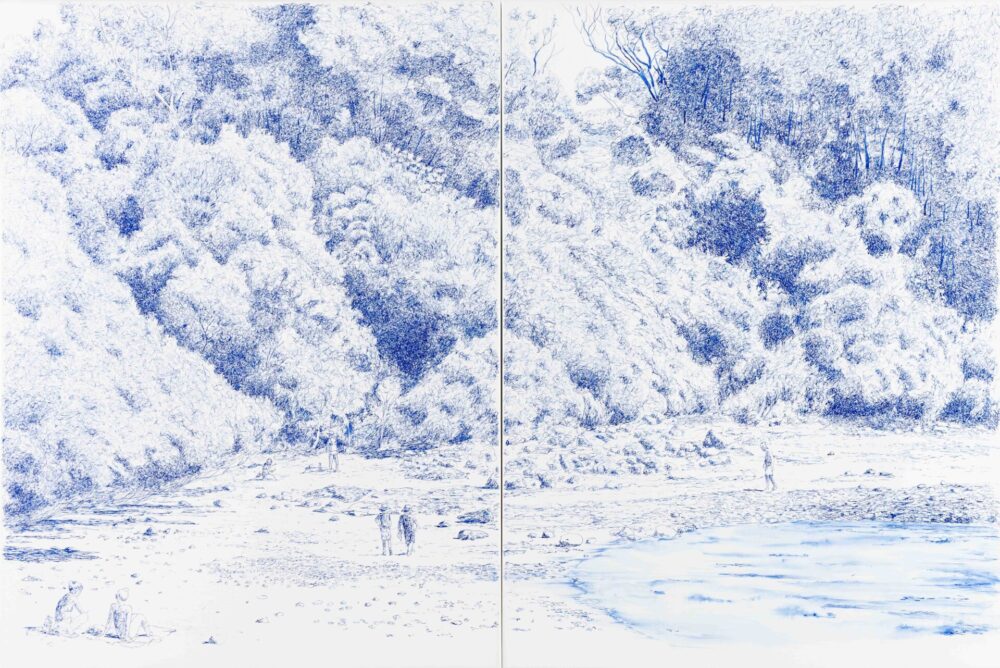
They were all quite fun to paint, although I suppose if forced to pick one I’d go for the diptych. This is a stunning beach that we’ve only recently heard about. We typically go to Gerringong or Gerroa because of the waves, but Boneyards is a beautiful flat beach with stunning blue water. It’s almost a lake and the beauty of the place was quite striking. This little beach is sun-drenched and well protected. People tend to lose themselves in the environment, fossicking among the rocks and the shells.
How do you hope viewers will experience this new body of work?
I hope they find it relatable – often beach scenes can be quite nostalgic and I hope that people see themselves in the waves or on the sand.
What other ideas, places or projects are exciting you?
As usual I have about a million ideas, it’s just a matter of figuring out what’s practical. I do like the concept of images around approaching the water, walking down to the beach – there are a couple of pieces in this series that focus on this – so perhaps that will be a good direction to follow. I’ve also been considering a hiking series, following a track as it winds along. There are a few international locations I’d like to explore as well, to see if this style and format translates to different settings. After that, who knows?


