MICHAEL REID NORTHERN BEACHES
Nicola Woodcock
ARTIST PROFILE
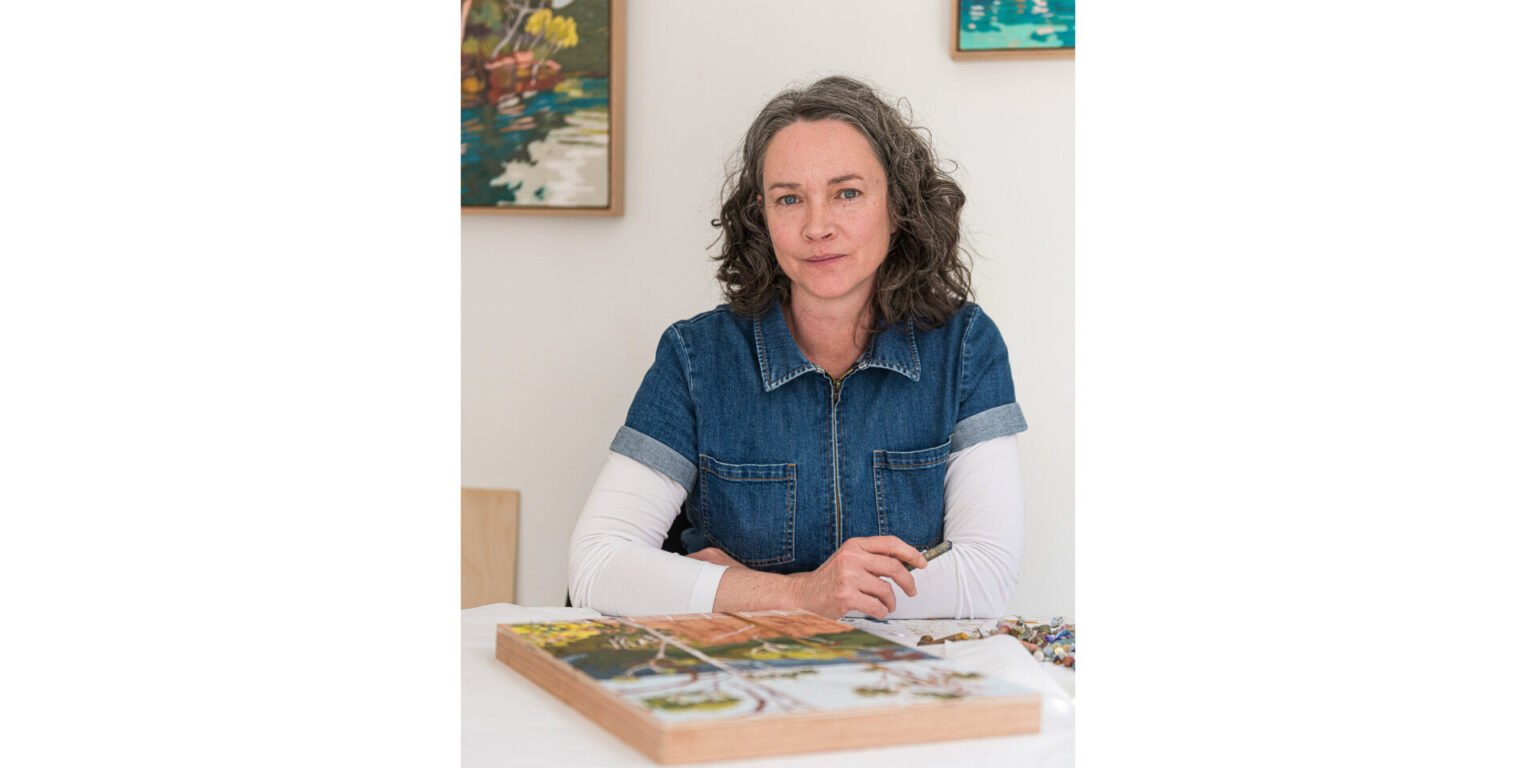
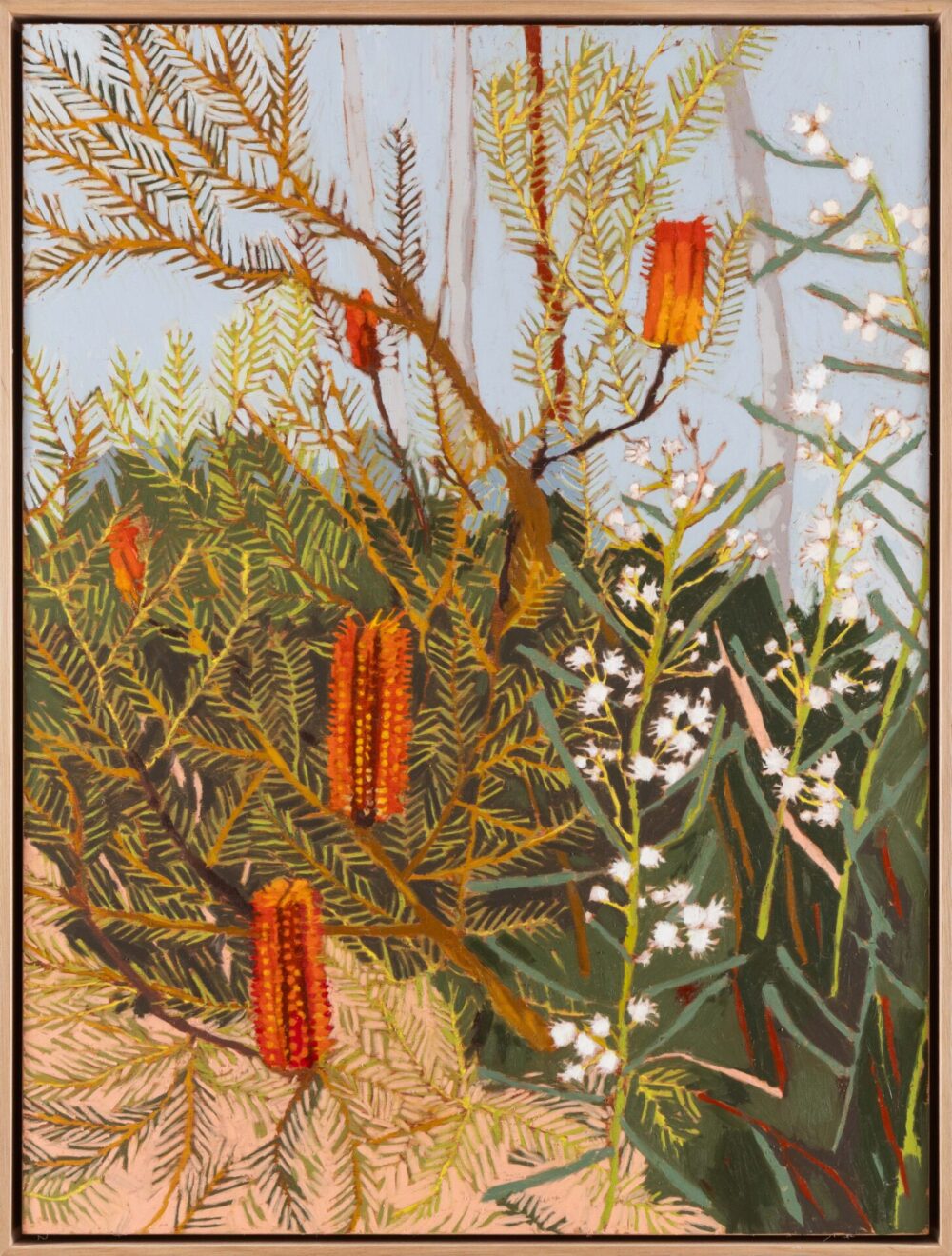
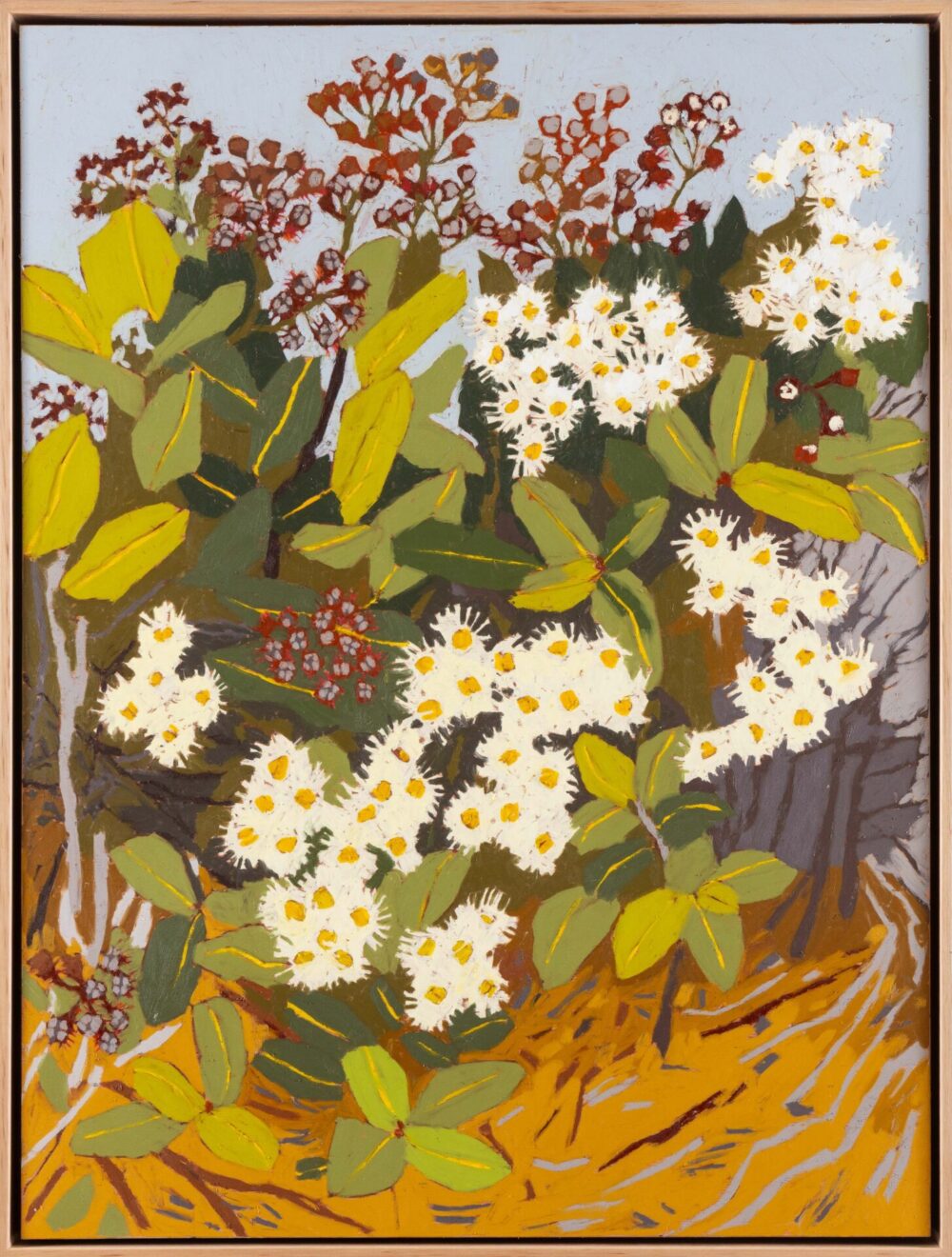
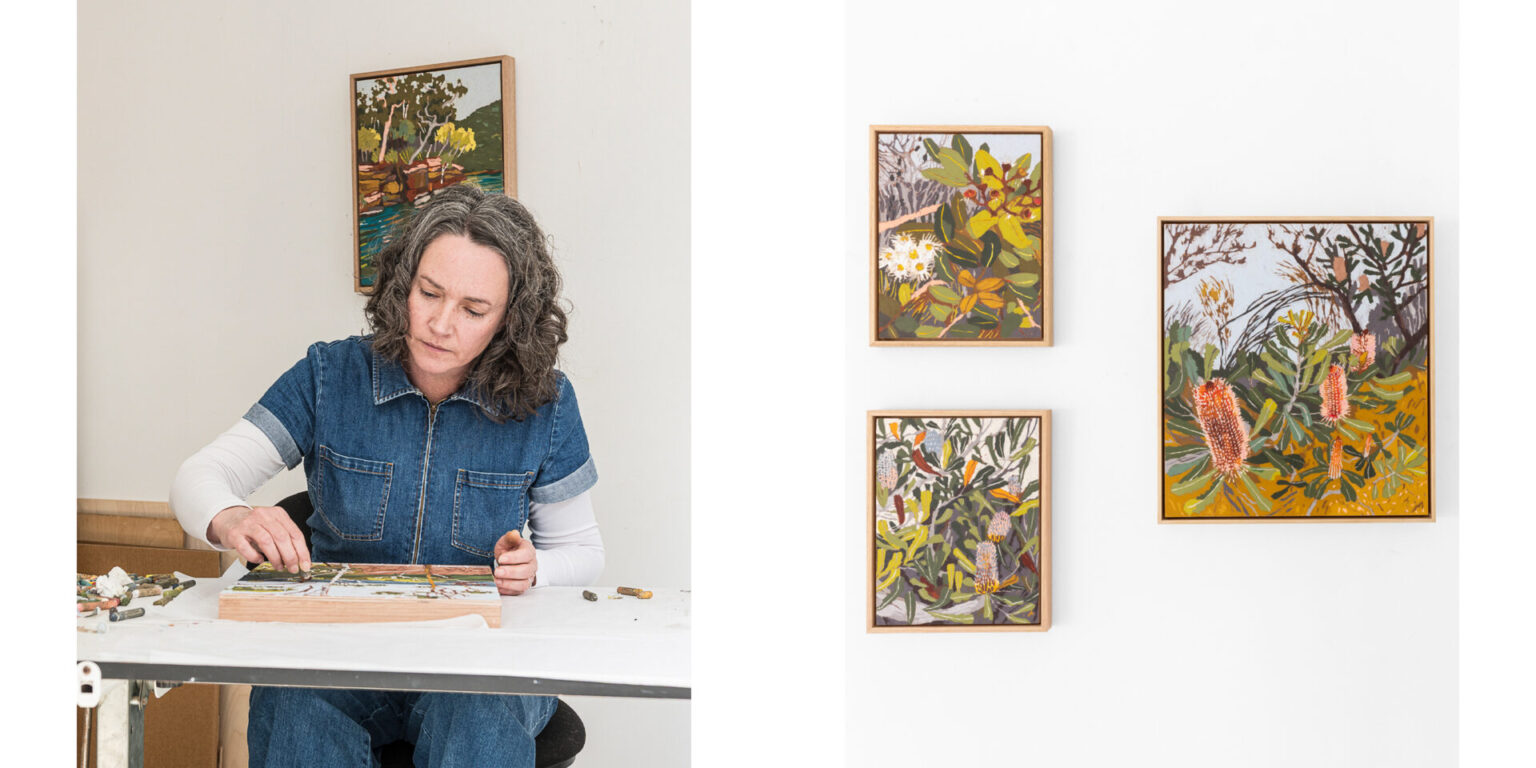
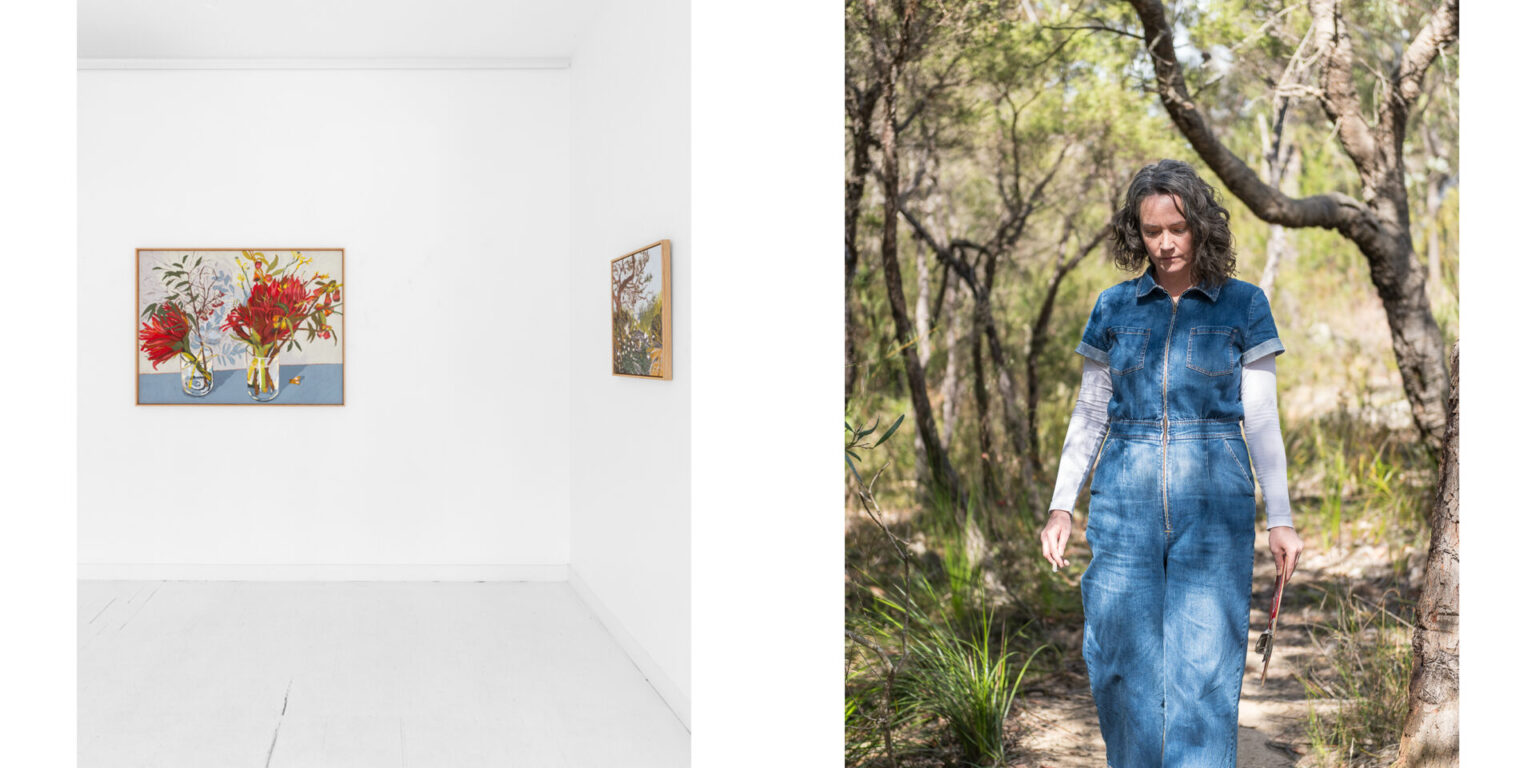
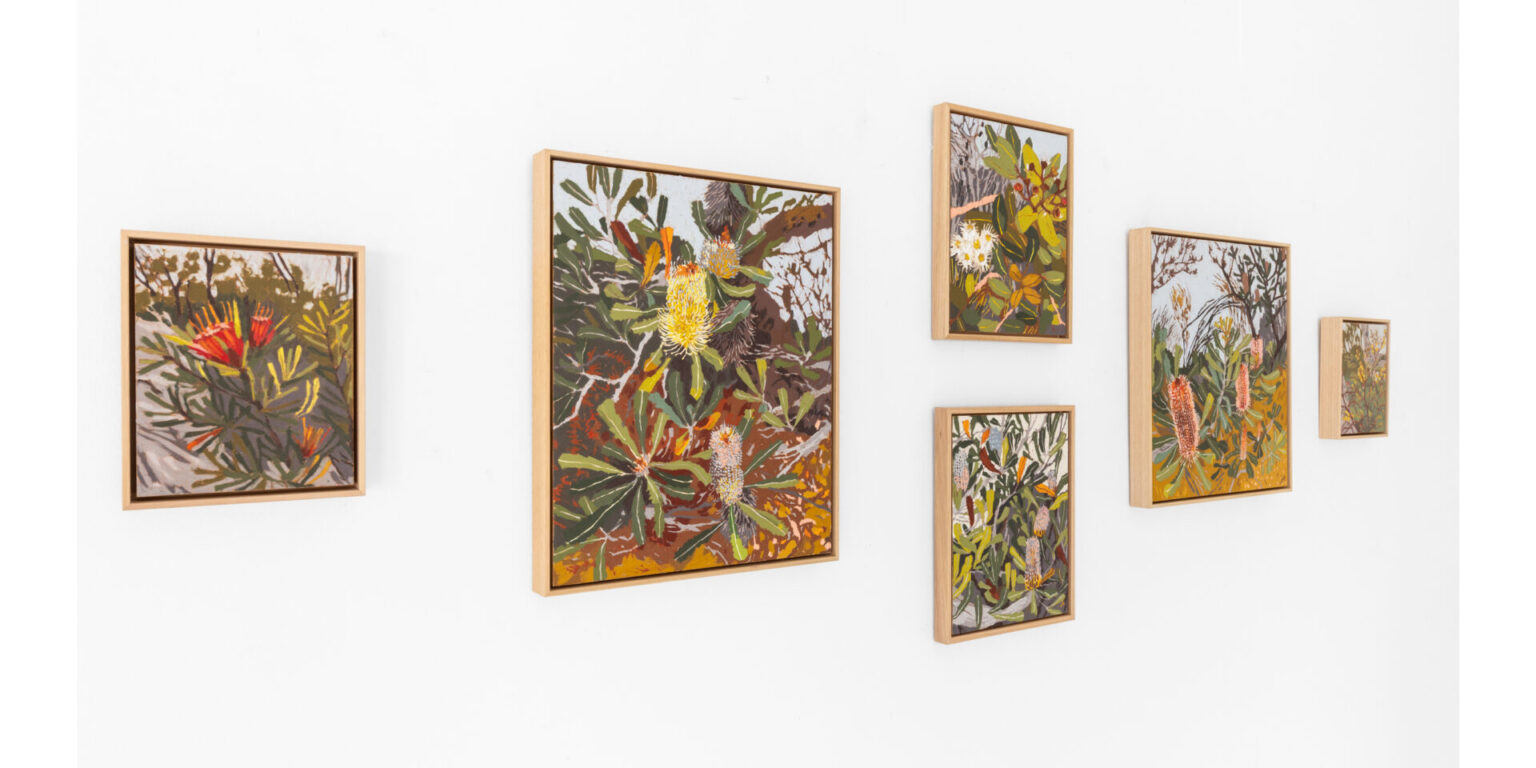
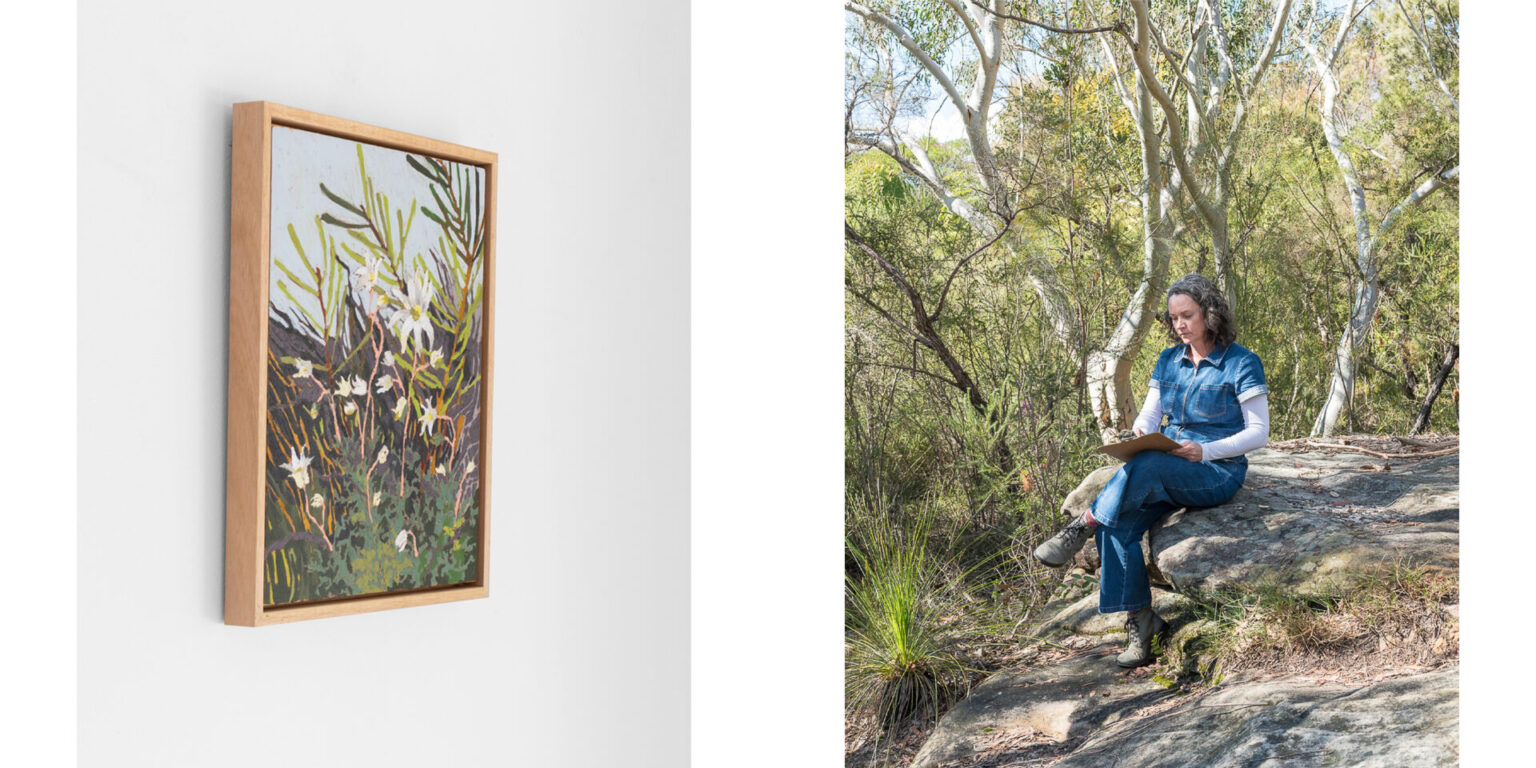
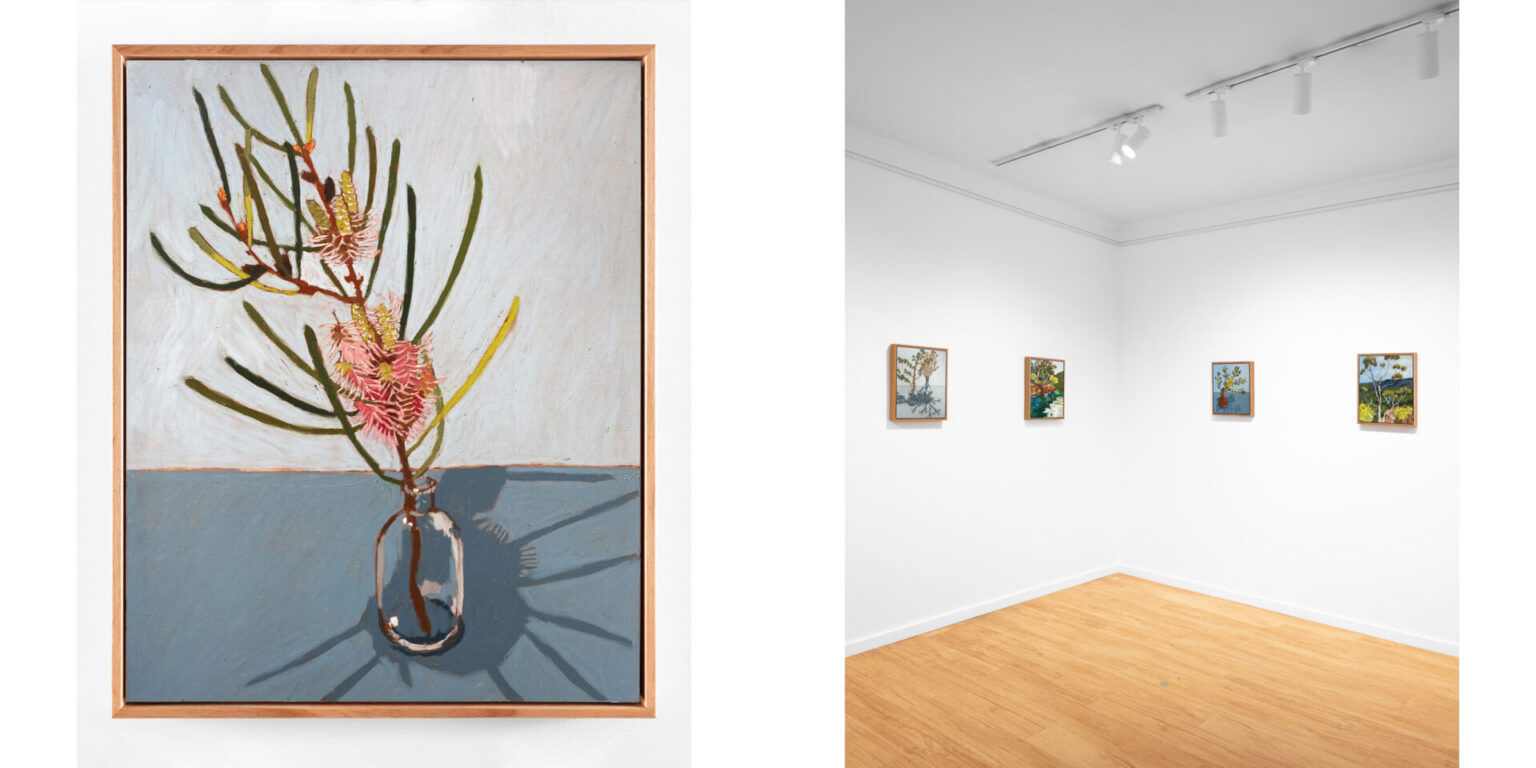
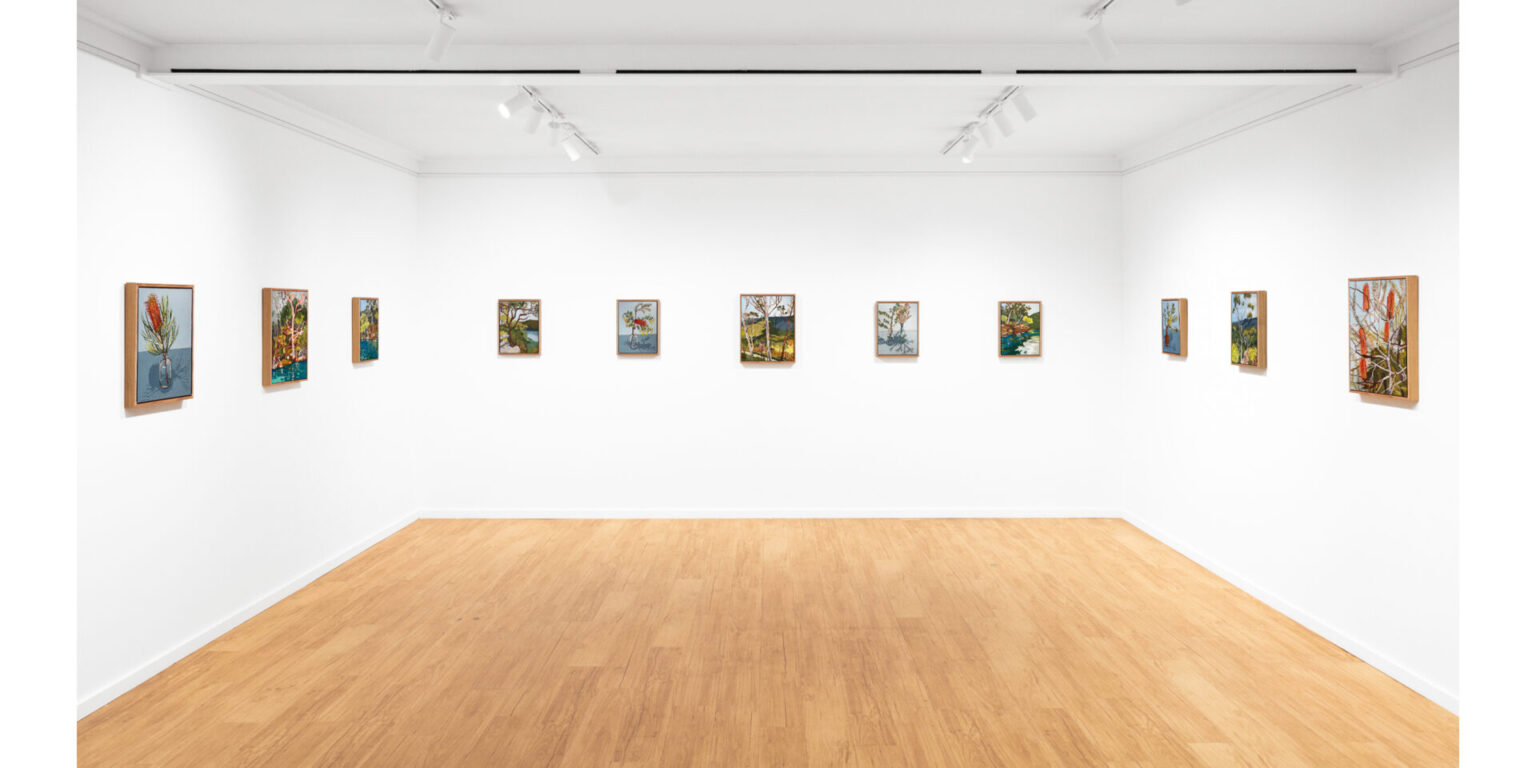
In the lead-up to the announcement of Nicola Woodcock’s representation by Michael Reid Northern Beaches, the gallery team visited the artist at her studio in Sydney’s north, a short drive from the harbour foreshore walking trails that inform her practice. Our resulting conversation is published today alongside Bush Vignettes – a newly completed suite of paintings shaped by the distinctive native flora found along Sydney Harbour.
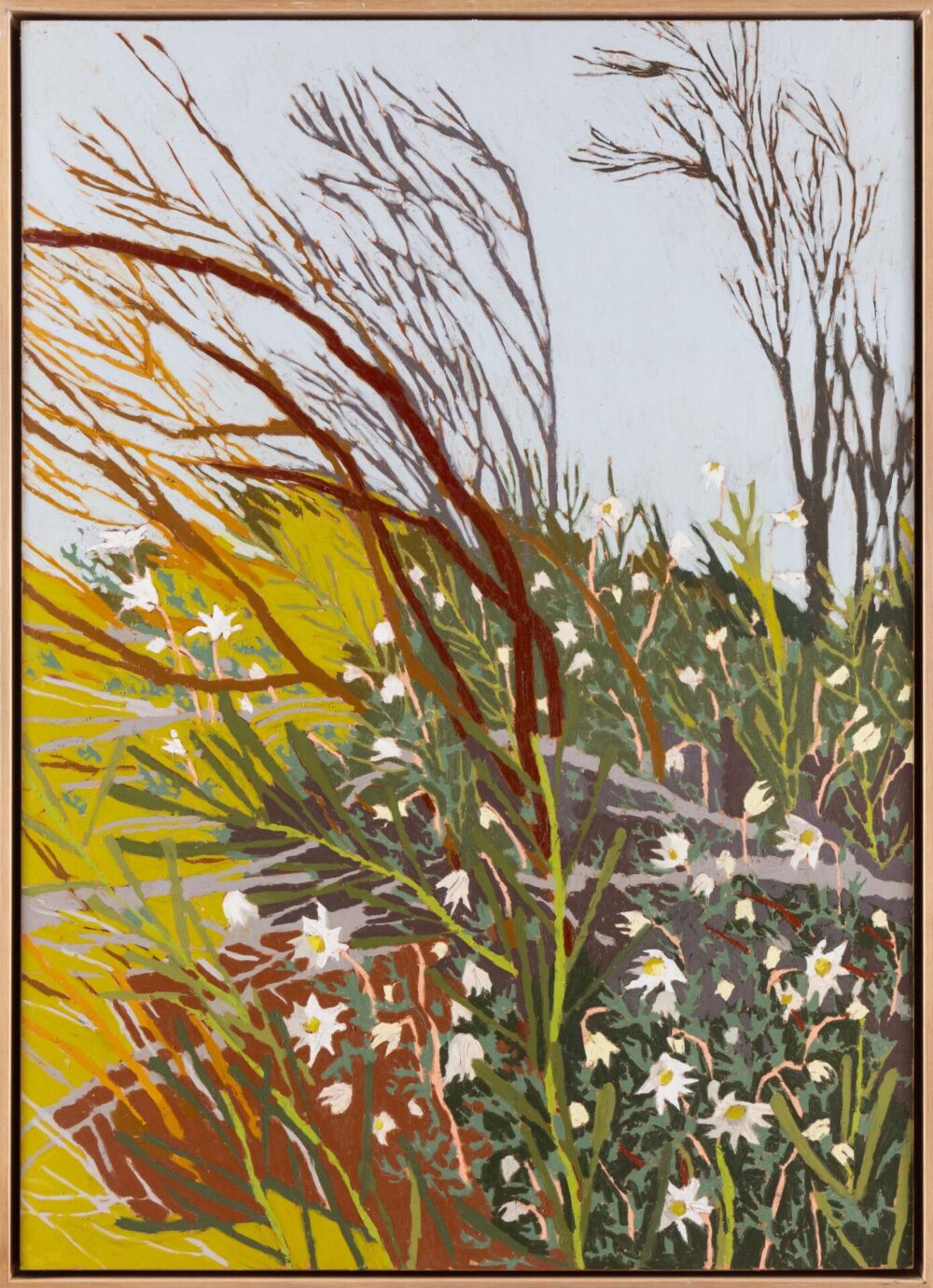
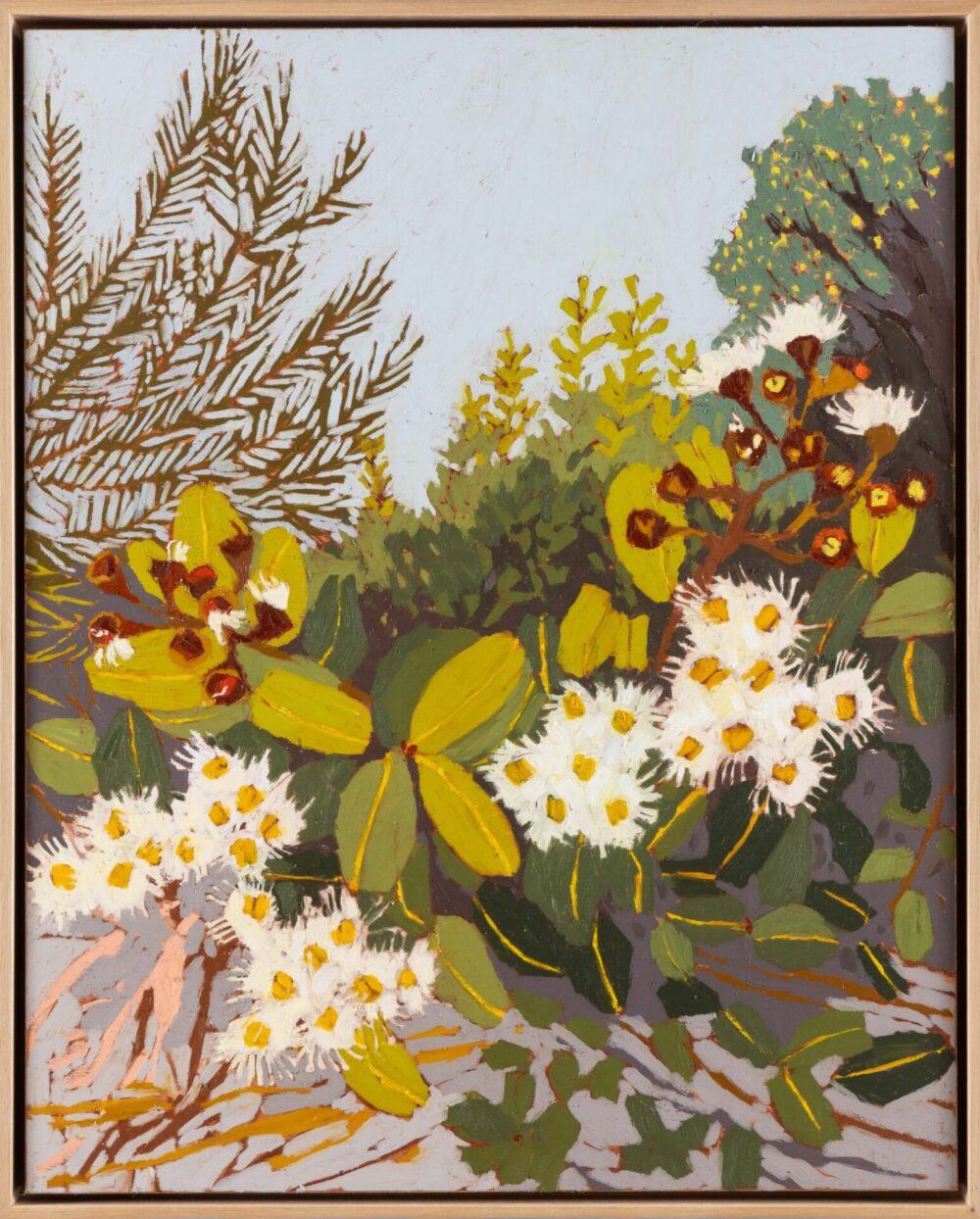
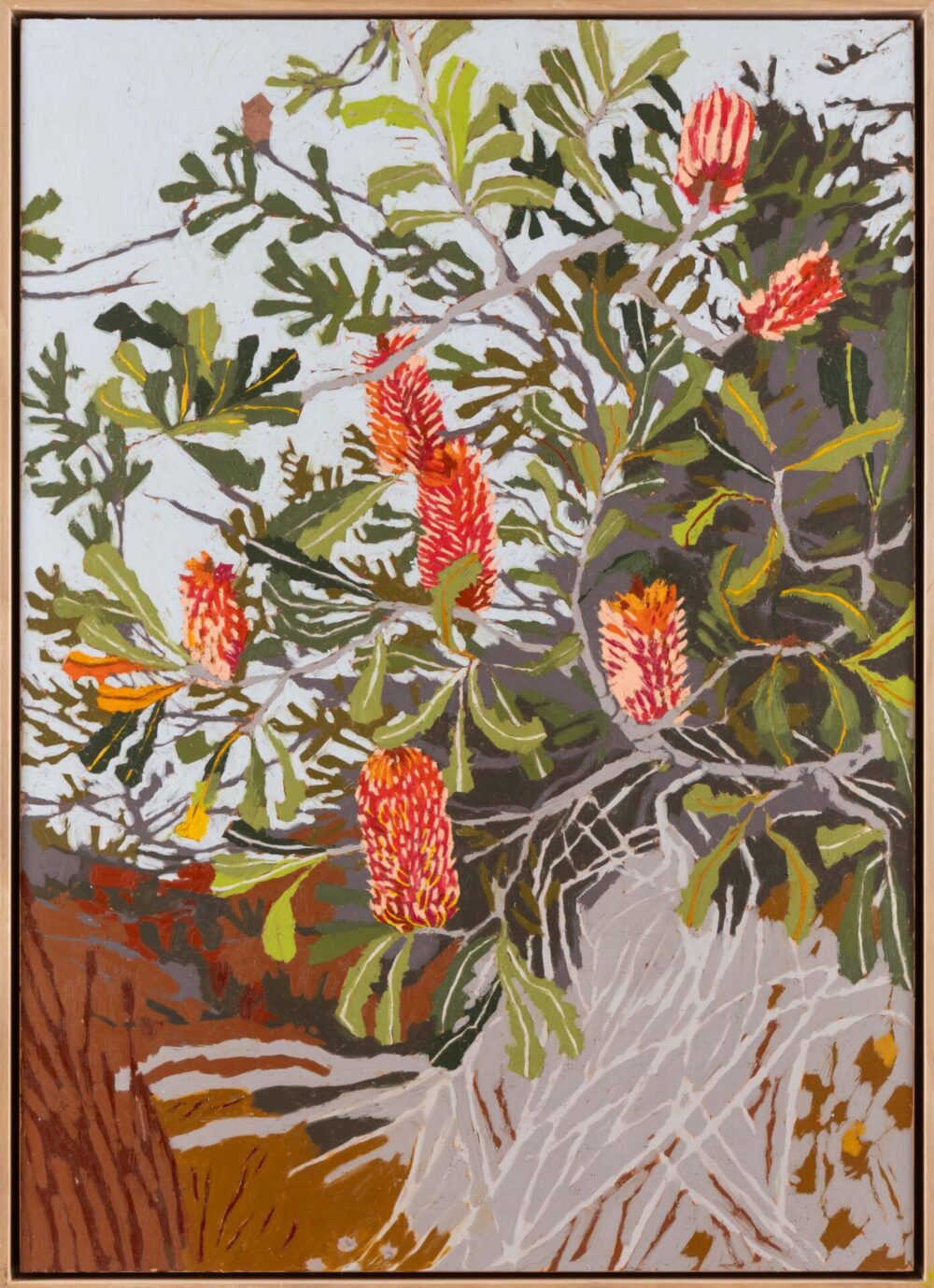
Long captivated by Australia’s native flora, Woodcock has developed a distinctive painterly language that translates the tangled exuberance of the bush into luminous still lifes and richly textured botanical studies. In Bush Vignettes, the artist turns her attention to the pockets of vegetation fringing Sydney Harbour, finding beauty in the curious forms, vivid colours and so-called ‘unpretty’ wildflowers that have become enduring muses in her practice.
“I love how otherworldly they are. I’m often awestruck at their magnificence,” says Woodcock in our interview, which explores the formative experiences, creative breakthroughs and floral affinities that continue to shape her work.
Works from Bush Vignettes can be explored and acquired below or by request. To discuss works from the series or sign up for first access to forthcoming releases by the artist, please email sophienolan@michaelreid.com.au
What were some of your early creative influences?
Art was my favourite subject in high school and I had a very supportive art teacher. I remember she took us to see Monet at the Royal Academy of Arts in London in 1990 and I can vividly recall seeing Henri Rousseau’s Tiger in a Tropical Storm (Surprised!) at the National Gallery London around the same time, probably on the same school excursion. When I look at that artwork now I can see how the lushly layered foliage, bold graphic forms and vivid colours have influenced my own approach to painting the environment.
When did you decide to pursue painting and what was informing your work at the time?
I’d dreamed of being an artist since childhood. After university, I worked in book publishing until my first daughter was born. As our family grew I decided not to return to work. During that decade I attended casual art classes here and there and when my third daughter began preschool the time felt right for me to pursue art as a serious endeavour.
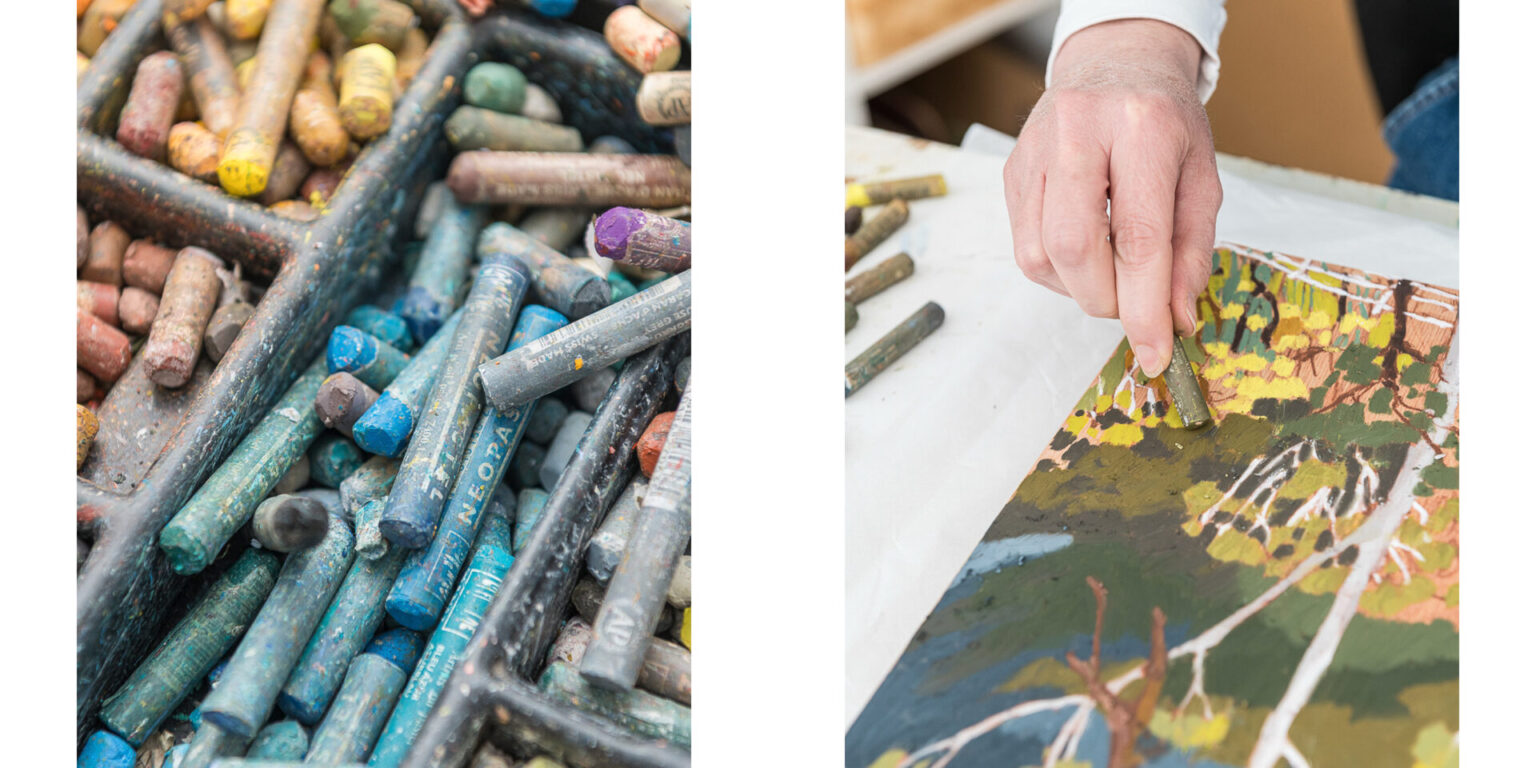
I began in 2016 with a 100-day challenge, which involved creating an artwork every day for 100 days and posting it to my newly created Instagram account. I hadn’t shown work to anyone outside of my immediate family until that point. I didn’t limit myself to a single subject, creating small 20x20cm works every day whether we were at the park, the beach or in the bush, or at home with some objects on the kitchen table. I chose oil pastels as my theme because they were portable, accessible and easy to use – I’d invite whoever was with me to join in (we were often on play dates) and it was fun to see kids and adults get to play alongside me.
My main goal was to let go of self-judgement and to become comfortable with having my work seen. It was an extremely liberating experience! I found that my choice of subject matter and use of colour became much more intuitive. At the end of the challenge I discovered that a simple flower from the garden in a glass bottle was something I could return to again and again.
How did you develop your approach to painting over time?
After the 100-day challenge I moved from working on paper to working on timber panels, which allowed me to be bolder in the physical application of colour because the panels can really tolerate much more pressure from my hand than paper can. I also love the way that the texture of the pastel is visible without the layer of glass between it and the viewer. That said, oil pastel never fully dries and this leaves the surface somewhat vulnerable. I apply many layers of fixative, which prevents smudging, and I educate collectors to be gentle with the surface.
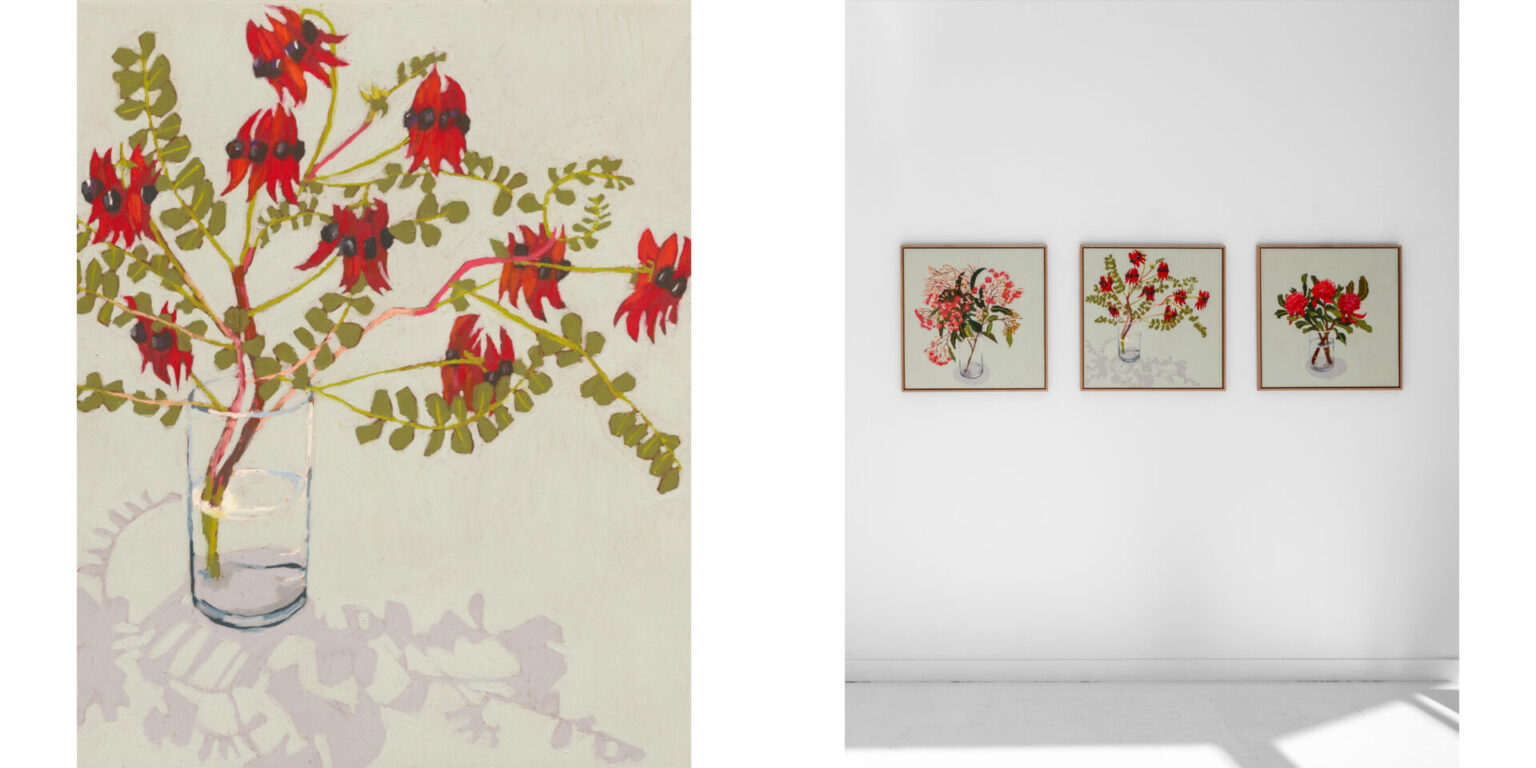
Flowers, and Australian natives in particular, have been a constant fascination. The curious and oddly shaped foliage and flowers pair perfectly with oil pastels – vivid, bold and unfussy! I’m beginning to deliberately incorporate a few stages of the flower in the work – in bud, in full bloom and in decline – a nod to the passage of time. Shadows are another important theme that I often incorporate in my still-life works. I really enjoy depicting the cast shadow shapes, and just like the flowers themselves, shadows are fleeting and temporary. I use them to lend weight to the object and to anchor the still life in a place and a moment in time.
Could you tell us about the wildflowers that appear throughout your work?
Ever since I visited for the first time as a backpacker in 1999, I’ve been drawn to Australian native flora. Back then I wasn’t creating any artworks at all and I didn’t know how to express what I was seeing, but I carried the feelings and the memories with me for years until I found a way to put them down on paper.
I love how otherworldly they are. I’m often awestruck at their magnificence, and this is what excites me to get into the studio and render them in oil pastel. I might forage from the roadside or gardens, or pick up something special from the florist. I’m lucky to have an amazing florist nearby who stocks really interesting and unusual flowers.
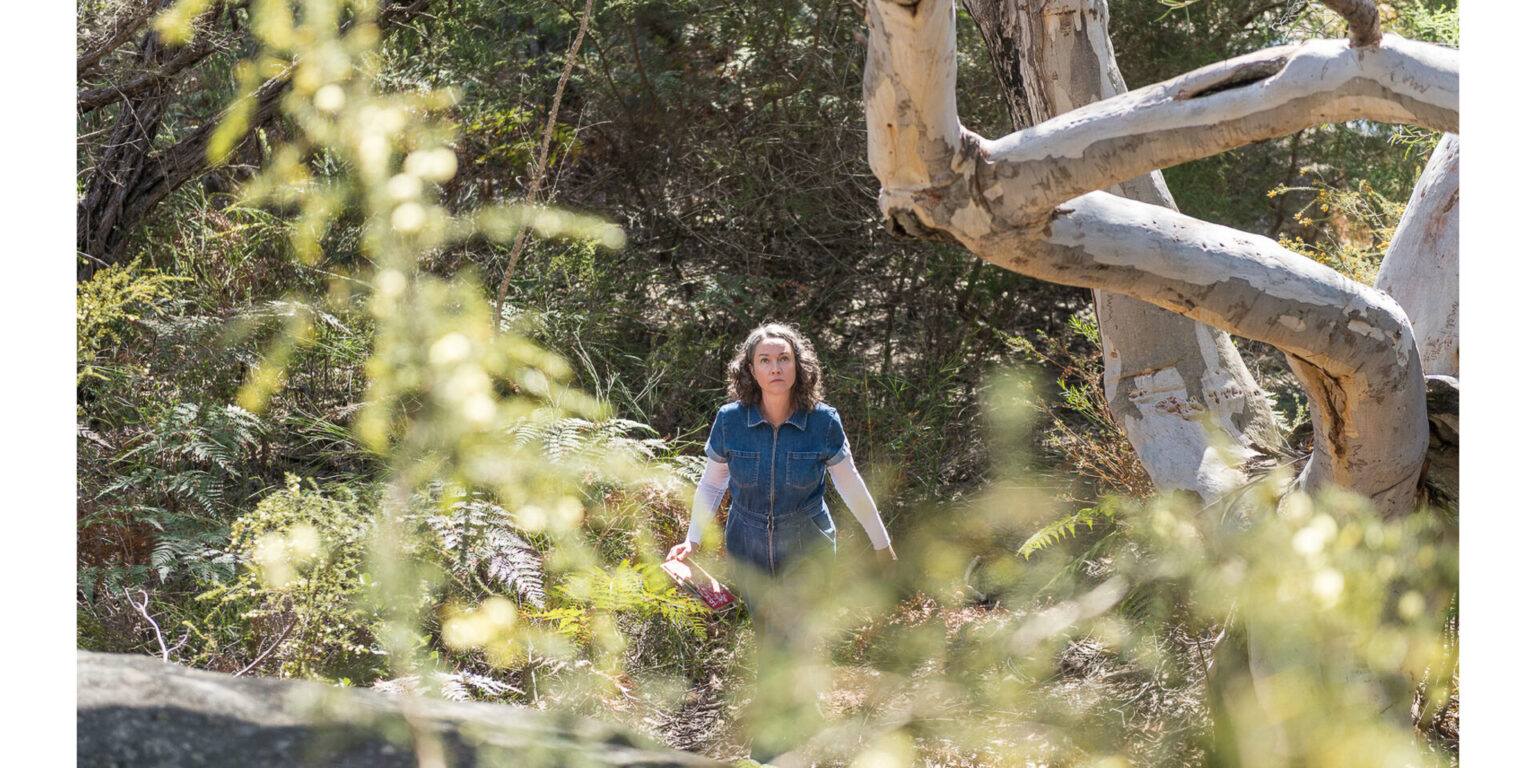
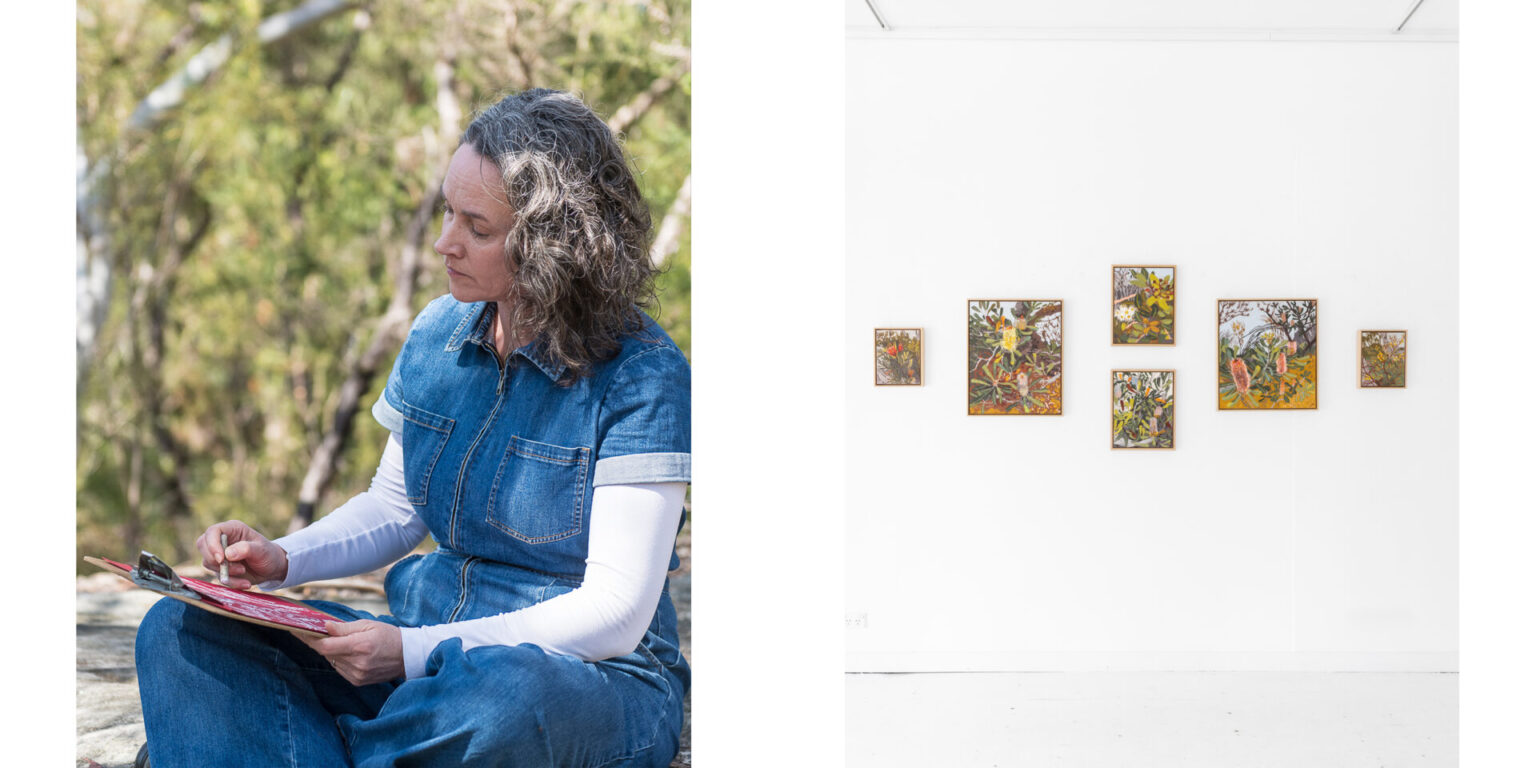
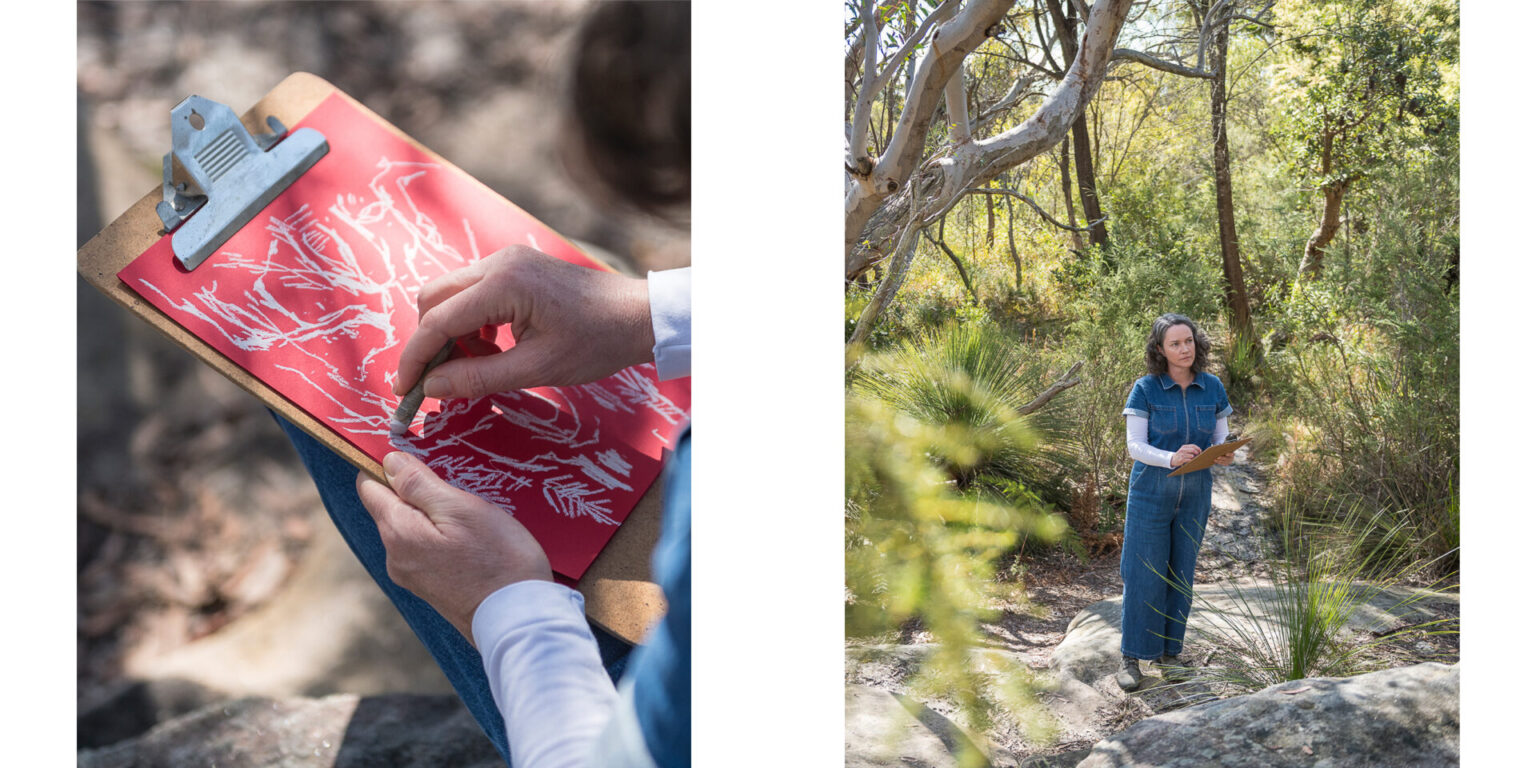
The qualities I seek out in the flowers I choose are weird shapes and crazy colours. I’m not looking for ‘pretty’. I just have to be careful not to buy too many because they fade before I have a chance to get into the studio! I’m also very lucky to live right on the edge of Ku-ring-gai National Park and I can walk into the bush from the end of my street. This offers ample inspiration for my wildflowers in situ drawings, and of course the flowers are always changing with the seasons.
How do you approach these subjects in a still-life versus in the wild?
For a still-life piece I always work from life. I usually live with the flowers for a few days on the kitchen table, observing them from different angles and in different light as I go about my day, really noticing the nuances and unexpected colours, becoming familiar with them before I start work, building up a bit of excitement and anticipation. When I’m depicting flowers in the environment I work from my own photos as a starting point, then gradually turn to memory and intuition, working with my favourite colours to describe the landscape. In both cases it is colour and form that excite me.
What have been some of your favourite career experiences or moments of creative breakthrough?
When I dreamed about being an artist and what that looked like I imagined myself creating artworks every day; I could only imagine myself in that dream. What I didn’t appreciate until I actually began putting my art into the world was how it is a conversation with viewers and that my art impacts other people’s lives. I have had the most wonderful feedback from supporters about how their lives have been enriched by living with my artworks. There’s nothing more satisfying than knowing that I’m sending moments of joy out into the world, and that this is having a positive impact on the lives of others.
Finding out that I was a finalist in the inaugural National Emerging Art Prize in 2021 and again in 2022 was a real highlight for me. It was a moment of recognition which gave me the confidence to keep working in oil pastels – a somewhat unusual medium, but nevertheless this showed me that they could be taken seriously!
Could you tell us about your studio space and routine?
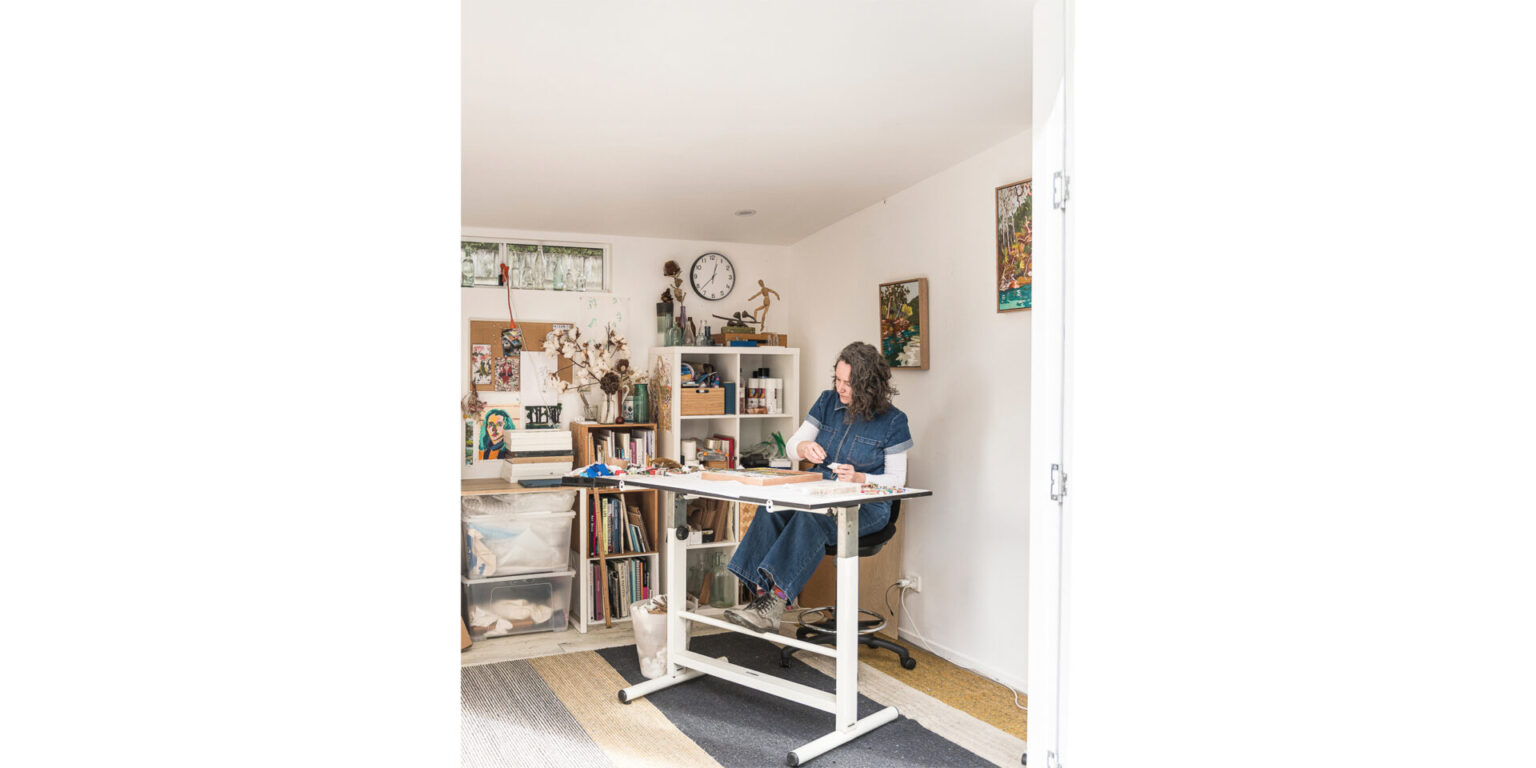
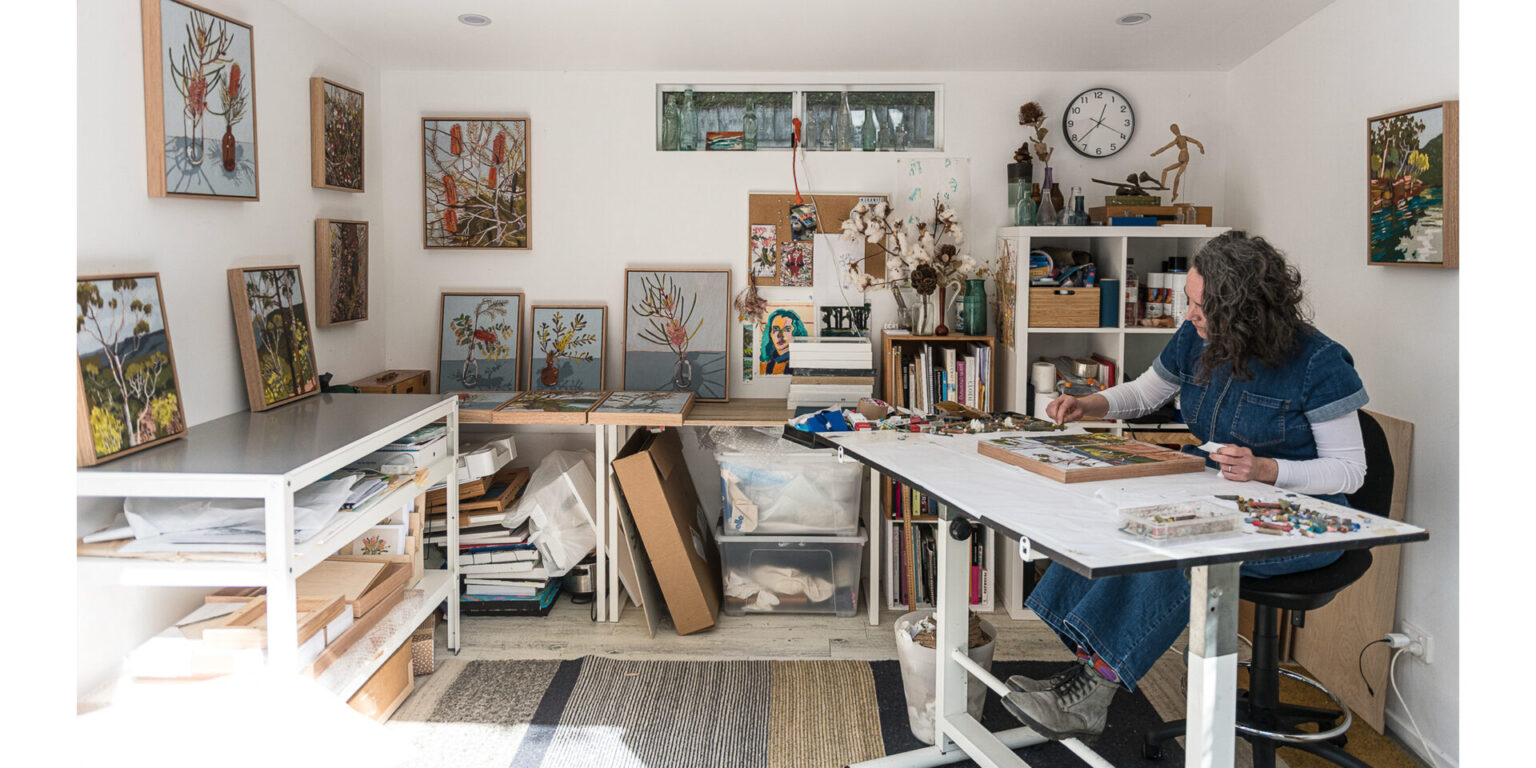
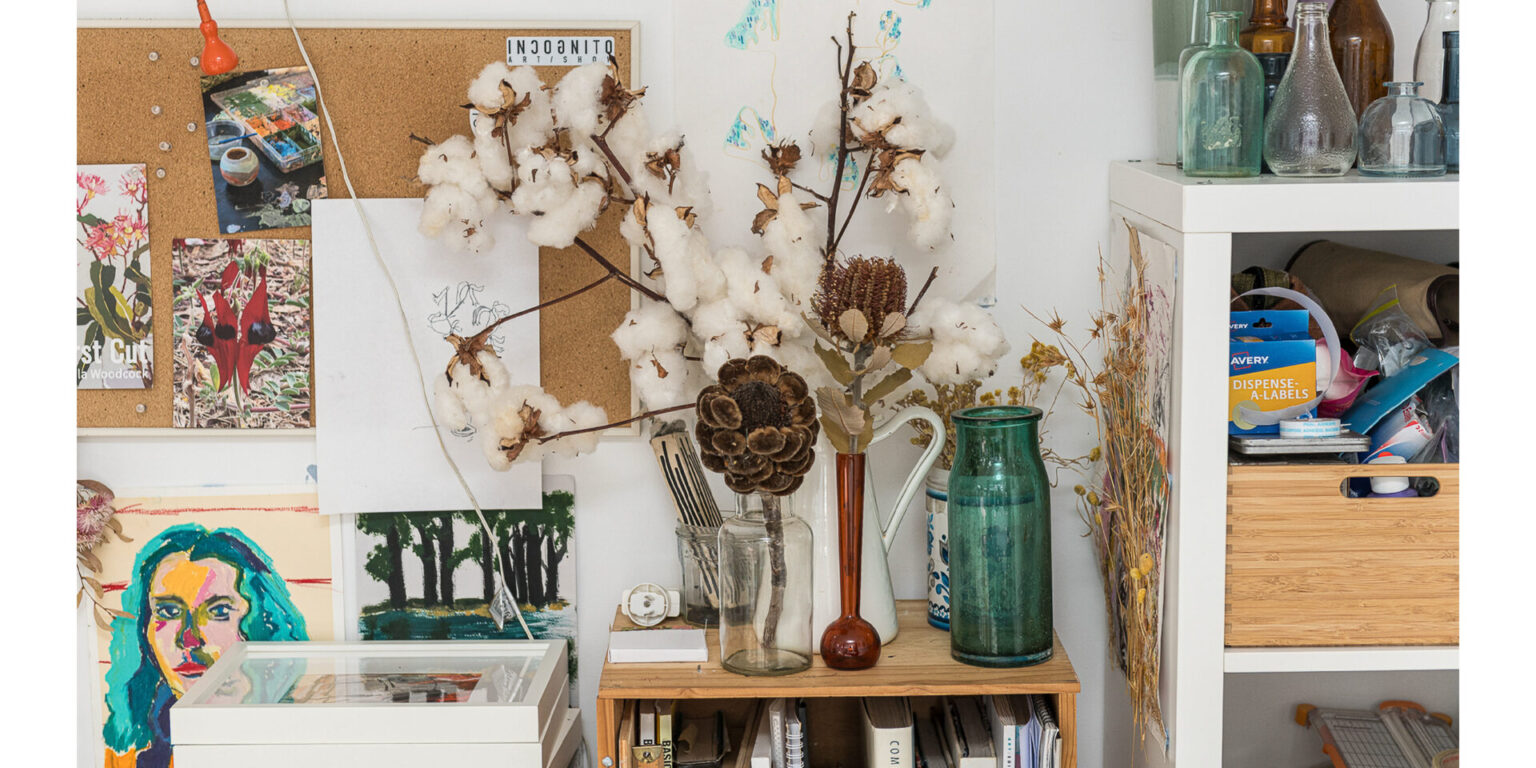
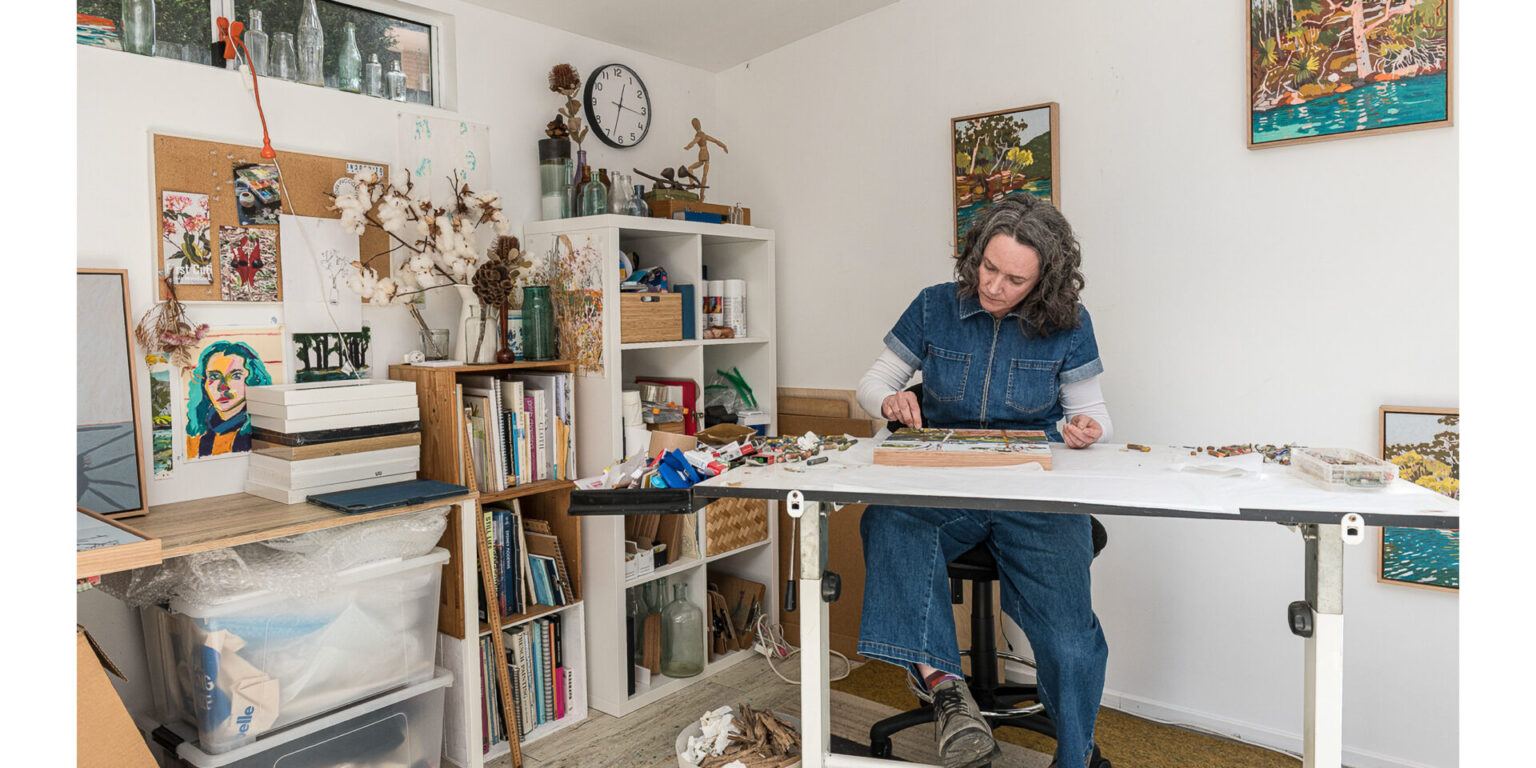
My studio space is a purpose-built cabin in the backyard. It works well for me to be close to home. As an artist and mother who began when her children were small, it was essential for me to learn how to maximise small windows of time to create work. Now my daughters are teenagers and I am needed less, I still find this early training in efficient use of creative time serves me well. When working with oil pastels it’s difficult to erase marks, so another thing I learnt early on was to approach the panel boldly. I’m trying to not overthink the work and I’m looking for a sense of joy in colour combinations and forms. Once I’ve sketched out a composition on the panel – which does require a different part of my brain! – I begin to apply colour and this is when I tap into feeling my way through the picture. I listen to audiobooks all through this stage of the drawing as it seems to work in harmony with whichever parts of my brain are being used!
What was the starting point for your Harbour Flora series and how did it develop
Harbour Flora began earlier in the year when I decided to make a weekly habit of taking long walks along the Sydney Harbour foreshore tracks. Noticing that the native flora growing along these trails was similar but not exactly the same as the flora that grows just slightly inland where I live, I decided to create a body of work devoted to documenting the tangled scrubby bushland and pockets of wildflowers particular to this area.
Are there ideas or approaches that you’re excited to explore?
I’m excited to explore working on a larger scale! This will give me more room to explore nuances and colour, to add more depth but at the same time I want to remain true to my goal of not becoming overly fussy!